1. Characteristics and sources of pharmaceutical wastewater
Since the 20th century, the rapid development of the pharmaceutical industry has brought a leap forward to human civilization. At the same time, the wastewater discharged during its production process has increasingly polluted the environment, posing a serious threat to human health. According to literature reports, pharmaceutical wastewater has complex components, high concentration and salinity, high color and toxicity, and often contains a variety of organic pollutants. Many of these substances are difficult to biodegrade and can remain in the environment for a considerable period of time. Especially for the highly hazardous organic pollutants (carcinogenic, teratogenic, mutagenic) that pose a great threat to human health, even when the concentration in water is below level 10-9, it is difficult to meet the discharge standards using traditional treatment processes. The treatment of these diverse and complex organic wastewater remains a difficult and hot topic in water treatment both domestically and internationally.
2. Treatment technology for pesticide wastewater
In order to find a more practical, effective, and cost-effective method for treating pharmaceutical wastewater, existing methods were discussed, and the development direction of pharmaceutical wastewater treatment methods was proposed from the perspective of new ideas and technologies. At present, the treatment methods for pharmaceutical wastewater can be roughly classified into the following categories.
2.1 Catalytic oxidation method
Under the action of catalysts, organic matter in wastewater can be oxidized and decomposed by strong oxidants. The double bonds in the structure of organic matter are broken, and large molecules are oxidized into small molecules, which are further oxidized into carbon dioxide and water, resulting in a significant decrease in COD, an increase in BOD/COD values, and an increase in the biodegradability of wastewater. After deep treatment, it can meet the discharge standards. The use of catalytic oxidation method to treat pharmaceutical industry wastewater can overcome the shortcomings of traditional biochemical treatment of pharmaceutical wastewater, effectively destroy the conjugated system of organic molecules, and achieve the goal of removing COD and improving biodegradability. In catalytic oxidation, the selection of catalyst and oxidant is crucial. Selecting appropriate catalysts and oxidants, wastewater treated under suitable process conditions can be discharged in compliance with standards after secondary treatment. If ClO2 is used as an oxidant to treat pharmaceutical wastewater under the catalytic action of transition metal oxide catalysts supported on activated carbon, not only is the treatment cost low and the oxidizing property much higher than sodium hypochlorite, but also carcinogenic substances such as trihalomethanes will not be generated.
2.2 Internal electrolysis method
The principle of internal electrolysis is to use iron and graphite components in iron filings to form the negative and positive electrodes of microelectrolysis. The electrolyte solution is filled with sewage, and in a slightly acidic medium, the positive electrode produces new ecological hydrogen with strong reducibility, which can reduce heavy metal ions and organic pollutants. The negative electrode generates reducible ferrous ions. The generated iron ions and ferrous ions are hydrolyzed and polymerized to form hydroxide aggregates in colloidal form, which have precipitation, flocculation and adsorption effects, and can form flocs and precipitate together with pollutants. The application of internal electrolysis method can remove some chromaticity and organic matter from wastewater, and improve the biochemical treatment performance of wastewater, increasing the removal efficiency of organic matter by biological treatment. The reaction mechanism is as follows:
anode
(Fe):Fe=Fe 2++2e
E=-0.44V
cathode
(C):2H ++2e=H 2
E=0.00V
When aerobic: O2+4H++4e=2H 2O E=1.23V
O 2+2H 2O+4e=4OH -
E=0.40V
Experimental results have shown that the biodegradability of wastewater is significantly improved after internal electrolysis. This is mainly due to the strong reducibility of the new ecological hydrogen and ferrous ions generated during the internal electrolysis process, which can undergo redox reactions with difficult to degrade organic matter in the wastewater, destroying its chemical structure and thus improving its biodegradability. In addition. During electrode oxidation and reduction, certain colored substances in the wastewater are also degraded due to their participation in redox reactions, resulting in a decrease in the color of the wastewater.
2.3 Adsorption method
The adsorption method for treating wastewater is achieved by the comprehensive action of physical adsorption, chemical adsorption, and exchange adsorption between adsorbents such as activated carbon and sulfonated coal and adsorbates (solutes) to remove pollutants. It has the following characteristics:
(1) Activated carbon has strong adsorption properties for organic matter in water;
(2) Activated carbon has strong adaptability to changes in water quality, water temperature, and water quantity. Activated carbon has a good removal effect on wastewater containing the same organic pollutant at high or low concentrations;
(3) The activated carbon water treatment device has a small footprint, is easy to automatically control, and has simple operation and management;
(4) Activated carbon also has strong adsorption capacity for certain heavy metal compounds, such as mercury, lead, iron, nickel, chromium, zinc, diamond, etc;
(5) Saturated carbon can be regenerated and reused without generating secondary pollution;
(6) Recyclable useful substances, such as treating high concentration phenol containing wastewater, can recover phenol sodium salts after alkali regeneration.
A large amount of research and practice have proven that activated carbon is an excellent adsorbent with special treatment effects in industrial wastewater treatment. However, due to the limitations of production materials and high prices, its promotion and application have been restricted. Research on using lignite, coke slag, slag, and fly ash as adsorbents to treat industrial wastewater has become very active. Therefore, whether the adsorbent regeneration problem can be solved is the key to whether this method can be accepted by manufacturers.
2.4 Coagulation sedimentation method
Coagulation is an important process in water treatment. Through coagulation sedimentation and filtration, the turbidity and color of water can be significantly reduced, and suspended solids and impurities in water can be removed. The coagulation process is a very complex physical and chemical process, which involves adding a certain amount of coagulant to wastewater under certain pH, temperature, and other conditions. Through stirring, it reacts with suspended water-insoluble and supersaturated substances in the wastewater to precipitate, making the wastewater clear from turbidity. The quality of coagulation effect is closely related to factors such as the type of coagulant, impurities in the water, turbidity, pH value, water temperature, dosage of chemicals, and hydraulic conditions. Among them, the key to coagulation treatment is the dosage of coagulant. High performance coagulants not only have good water treatment effects, but also have low costs.
2.5 Anaerobic biological treatment
Anaerobic biological treatment of wastewater utilizes the metabolic process of anaerobic microorganisms to convert organic matter into inorganic matter and a small amount of cellular material without the need for increased oxygen. These inorganic substances mainly include a large amount of biogas and water. This treatment method is an efficient and energy-saving process for low concentration organic wastewater; For high concentration organic wastewater, it is not only an energy-saving treatment method, but also a production capacity approach. Anaerobic biological treatment technology has been widely used in the treatment of various industrial wastewater worldwide. Its treatment processes mainly include ordinary anaerobic digestion, anaerobic contact process, upflow anaerobic sludge bed (UASB), anaerobic fluidized bed, anaerobic biological turntable, etc. This process combines environmental protection, energy recovery, and ecological virtuous cycle organically, which can significantly reduce organic pollutants. Anaerobic treatment of high concentration organic wastewater has a high treatment effect, with BOD removal rate of over 90% and COD removal rate of 70%~90%, and most organic matter is converted into methane. The cost of using this method to treat wastewater is lower than aerobic treatment, with high equipment load, less land occupation, and less residual sludge production. It can directly treat high concentration organic wastewater without the need for a large amount of dilution water, and can degrade organic matter that is difficult to degrade under aerobic conditions. However, it still has shortcomings, such as slow initial start-up process, sensitivity to toxic substances, complex operational control factors, and effluent COD concentration higher than aerobic treatment, which still requires subsequent treatment to achieve higher drainage standards. The UBF acidification reactor filled with iron filings and the two-phase anaerobic system composed of UASB can stably and efficiently treat Zn5-ASA wastewater. The experimental results showed that when the HRT of UBF and UASB were controlled at 5.95h and 11.43h, respectively, the OLR (calculated as COD) of UBF and UASB were as high as 58.44 and 17.01kg/(m3 · d), respectively. The total removal rates of SCOD and BOD5 are about 90% and 95% respectively, which have the advantages of stable system operation and high treatment efficiency. The iron chip packing selected for the UBF reactor in the system can effectively improve the biodegradability of wastewater through microelectrolysis, and can eliminate the usual alkali adjustment process, opening up a new path for the treatment of recalcitrant organic wastewater.
3. Haipu processing plan
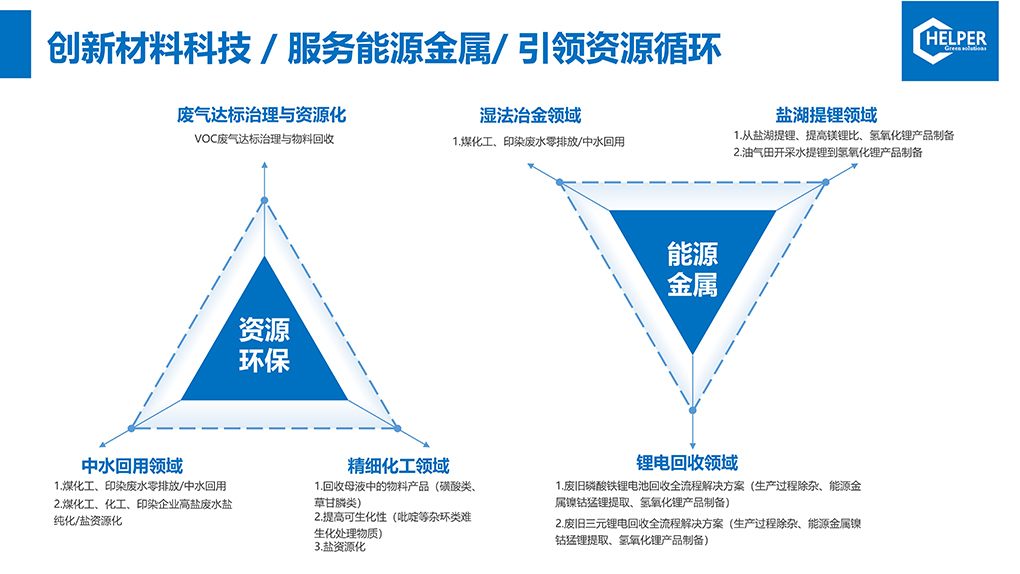
Jiangsu Haipu Functional Materials Co., Ltd. is a high-tech enterprise dedicated to the research and development of high-performance adsorbents, catalysts, and their process applications. With a series of independently developed high-performance adsorbents and catalysts as the core, combined with independently developed process technology, Haipu has become a professional solution provider in the fields of environmental governance and resource recycling. At the same time, taking it as our responsibility to help industrial enterprises meet environmental standards and achieve sustainable development through resource utilization, we adopt modular lean production and develop engineering solutions based on research and development data. Relying on independently developed high-performance adsorbents and rigorous and comprehensive process development, Haipu has accumulated many treatment cases in the field of pharmaceutical wastewater treatment, solving development problems for many enterprises and creating value.
Haipu high-performance adsorbent has the following advantages:
1. Wide applicability and good practicality
This method can be applied to wastewater concentrations ranging from a few to several thousand ppm, and the adsorption is not affected by the inorganic salts contained in the solution. It can also be applied in non-aqueous systems.
2. High adsorption efficiency, easy desorption and regeneration
For pharmaceutical wastewater, after adsorption, it can generally meet or approach the discharge standards, with a material adsorption rate of over 99%, without producing secondary pollutants, and can significantly reduce COD values. Common acid-base or organic solvents are used for desorption, and the desorption rate can generally reach 92%.
3. Stable performance and long service life
The material has high resistance to oxidation, acid and alkali, and organic solvents, and can be used for a long time below 150 ℃. Under normal circumstances, the annual material loss rate is less than 5%.
The raw material intermediates or products present in wastewater generally have higher prices. The adoption of this method can largely recycle and use, which will generate considerable economic benefits. Usually, the recycling value is equivalent to the daily operating expenses, and some have surplus
Using this technology, the process is simple, no special equipment is required, the technology is easy to master, and the consumption of thermal and electrical energy is relatively low during operation.
4. Haipu Handling Case
4.1 The waste salt of piperazine generated in the production of a certain enterprise is mainly sodium chloride waste salt, which contains a large amount of impurities and large molecular organic matter, about 1500ppm. After treatment by the Haipu adsorption process, the content of large molecular organic matter in the waste salt solution (dissolved in 10%) is greatly reduced, and the removal rate reaches 99%. The retention rate of piperazine is 98%, which can achieve piperazine recovery and turn waste into treasure.
4.2 In the production of a certain enterprise's products, the wastewater from ammonification reaction water washing and deamination contains a large amount of ammonia nitrogen and COD. After treatment with the Haipu adsorption process, the ammonia nitrogen and COD in the water are greatly reduced, and the removal rate reaches over 80%.
| Name | COD | Ammonia nitrogen |
| Absorb incoming water | 9600ppm | 1430ppm |
| Adsorbed water | 1440ppm | 216ppm |
| Removal rate | 85% | 84.90% |
 CN
CN EN
EN
 es
es