Source of phenol containing wastewater
In the production process of most food additives, a large amount of phenolic raw materials are required, so the wastewater discharged during the production of these food antioxidants will contain a significant amount of phenolic compounds. Phenolic compounds are listed as one of the 129 priority controlled pollutants by the US Environmental Protection Agency. Due to the toxicity of phenols involving the growth and reproduction of sexual organisms, they can contaminate drinking water sources and cause serious pollution to water bodies. Therefore, phenol containing wastewater is listed as one of the key solutions for toxic and harmful wastewater in China's water pollution control. In the actual treatment of phenol containing wastewater, for high concentration phenol containing wastewater or wastewater with residual phenol after recycling treatment, harmless treatment must be carried out to achieve standard discharge after phenol containing wastewater treatment, in order to achieve the unity of economic and environmental benefits.
Treatment methods for phenol containing wastewater
1. Physical Law
1) Adsorption method for treating phenol containing wastewater
Adsorption method can effectively remove highly toxic and difficult to degrade pollutants from water, and the treated effluent has good and stable water quality without secondary pollution. Therefore, adsorption method plays an irreplaceable role in wastewater treatment. This method involves mixing powders or particles of porous materials such as activated carbon and resin with wastewater, or allowing the wastewater to pass through a filter bed composed of its particulate matter to adsorb pollutants on the surface of the porous material or filter them out. Although activated carbon adsorption has a large adsorption capacity, it is difficult to regenerate, so its use is gradually becoming less optimistic. The phenol content in the treated wastewater does not meet the discharge standards and requires secondary treatment. So activated carbon is subject to certain limitations when treating high concentration phenol containing wastewater. Macroporous resin is a polymer columnar structure with an internal cross-linked network structure, which has excellent pore structure, large specific surface area, and good hydrophobicity. The experimental results show that some macroporous resins have the same adsorption capacity for phenolic substances in water as activated carbon. They have good reversibility for phenolic substances in wastewater, with an adsorption rate of 95% to 99% and a phenolic desorption recovery rate of over 95%. NaCl and NaOH regeneration have a desorption rate of nearly 100%, can be reused repeatedly, and can recover phenolic substances, with economic benefits far exceeding other traditional methods.
2) Membrane Separation Method for Treating Phenolic Wastewater
Membrane separation technology is a new type of separation technology developed in recent decades, which has the advantages of low energy consumption, simple operation, and the ability to recover useful substances. Membrane separation method uses the micropores of the membrane for filtration, and utilizes the selective permeability of the membrane to separate certain substances from wastewater. Its mass transfer rate is significantly improved, and even solute transfer from low concentration to high concentration can be achieved. Significantly reduce the number of stages required for the separation process.
3) Extraction method for treating phenol containing wastewater
The extraction method mainly uses insoluble extractants to come into contact with wastewater, so that phenolic compounds in the wastewater are transferred from the total aqueous phase to the solvent phase, thereby achieving the separation of phenolic substances from water. The extraction method mainly involves the complexation of extractants and pollutant molecules, or the entry of pollutants from water into the extraction phase through a very thin membrane layer under the action of a carrier to purify wastewater. It has a good effect on treating polluted wastewater. The extraction method is used to separate and extract pollutants from wastewater. For dyes with good water solubility, electrophoretic extraction can be used to extract the dyes first, and then solvent regeneration can be carried out using the extraction method; For dyes with good oil solubility, extraction can be used for dye recovery first, followed by solvent regeneration using electrophoretic extraction method. During the extraction process, there may be dissolution and carryover of organic solvents, resulting in loss to the aqueous phase and causing secondary pollution. The key to the extraction method is to develop selective and non-toxic extractants that are effective in treating pollutants. The gas extraction method is based on the formation of azeotropic compounds between volatile phenolic compounds and water vapor, and the separation of phenol water by utilizing the concentration difference of phenol in the two phases, thereby purifying the water. The high concentration phenol containing wastewater is treated by gas extraction method, with a removal rate of 80% to 85%. This method can recover phenols with high efficiency and simple operation, but it cannot be used for non-volatile phenols.
2. Chemical method
1) Wet catalytic oxidation method for treating phenol containing wastewater
Wet air oxidation is a method that uses air as an oxidant to oxidize organic matter in wastewater into CO2 and H2O under high temperature and pressure conditions. This method involves adding suitable catalysts to the traditional wet oxidation process to reduce the reaction temperature and pressure, improve the oxidation decomposition ability, and shorten the reaction time. If H202, 03 and other oxidants are used in combination, the removal rate of phenol, cyanide and sulfur in the wet oxidation treatment of coal gas containing phenol wastewater can reach 100%, and the COD removal rate can reach 65% to 90%. Although the wet catalytic oxidation method has high efficiency in treating organic compounds, it requires high equipment requirements (high temperature resistance, high pressure resistance, and corrosion resistance) due to the reaction under high temperature and high pressure, and the catalyst loss is large. Therefore, researching efficient and economical catalysts suitable for mild reaction conditions is an important issue to be addressed in the promotion and application of wet catalytic oxidation.
2) Photocatalytic oxidation method for treating phenol containing wastewater
Photochemical oxidation is an advanced oxidation technology that has developed rapidly in the past decade. It has mild reaction conditions, strong oxidation ability, and a wide range of applications, especially suitable for the treatment of toxic organic compounds that are difficult to biodegrade. At present, there are two main types of research: heterogeneous semiconductor photocatalytic oxidation method. The photocatalytic oxidation method can completely mineralize organic compounds with high efficiency. After a series of changes, it produces highly oxidizing OH, which oxidizes various organic compounds and mineralizes them into CO2. If TiO2 semiconductor is used for photocatalytic oxidation of low concentration phenol containing wastewater, the removal rate of phenol can reach 100% by photolysis in an environment with pH=4 for 2 hours. However, this method still faces many problems, such as low light quantum efficiency, reactor design, recovery and immobilization technology of crying catalysts, and pollution and activation of catalysts, which need to be further solved. The homogeneous photocatalytic oxidation method, which involves the addition of oxidants such as O3, H2O2, Fenton reagent and light, has a much higher oxidation ability and photolysis rate than the simple semiconductor photocatalytic oxidation method. Moreover, there are no issues with catalyst recovery and fixation, pollution and activation, making it a very simple wastewater treatment technology. However, for actual wastewater with complex composition, complete mineralization requires longer exposure to light and consumes a large amount of oxidants.
3) Supercritical water oxidation method for treating phenol containing wastewater
Supercritical water oxidation is a new and efficient waste treatment technology, especially used for the treatment of high concentration and difficult to degrade organic matter. This method uses supercritical water as the medium, utilizing the characteristic of water that does not have mass transfer resistance at the gas-liquid interface under supercritical conditions, to improve the reaction rate, and through the action of oxidants (air, oxygen, hydrogen peroxide, etc.). Realize the oxidation and decomposition of pollutants. Research both domestically and internationally has shown that supercritical water oxidation and the oxidative degradation of various other organic compounds are highly effective. The supercritical water oxidation method has attracted much attention due to its rapid reaction and thorough oxidation. Developed countries abroad have built pilot and industrial facilities and put them into operation, while China's research in this area is still in its infancy. The supercritical water oxidation method faces the main problem of corrosion of reaction materials due to its reaction under special high temperature and high pressure conditions, which requires high reactor materials and high power consumption, thus limiting its industrial application to a certain extent. The development of long-term high-temperature and corrosion-resistant reactor materials is the key to the large-scale industrial application of this method.
3. Biological methods
1) Anaerobic aerobic treatment method for phenol containing wastewater treatment
The ability to biodegrade organic matter under aerobic or anaerobic conditions has certain limitations, but the use of anaerobic aerobic combination industry can greatly improve the results. The anaerobic anoxic/aerobic (A-A/O) process is used to treat coking wastewater, which not only removes phenols, but also meets the COD and NH3-N standards in the effluent. It is an effective improvement on the existing activated sludge treatment of coking wastewater. The use of anaerobic top membrane aerobic biological treatment industry (i.e. improved A/O process) to treat coking wastewater can significantly reduce pollutants such as COD and NH3-N in the removal of phenol and cyanide, and the effect is better than aerobic biological treatment.
2) Activated sludge process for treating phenol containing wastewater
The most widely used biological method is the activated sludge process, which plays an important role in water pollution control as a traditional and mature wastewater biological treatment technology. The activated sludge process with added powdered activated carbon (PACT process) can greatly enhance the removal efficiency of phenol and reduce the concentration of phenol in wastewater to 0.01 mg/L. In the PACT process, due to the absorption of recalcitrant organic matter and microorganisms by activated carbon, the contact time of microorganisms is prolonged (equivalent to prolonging the sludge age), increasing the opportunity for biodegradation of these substances. Therefore, the removal efficiency of phenol containing wastewater by PACT process is higher than that of ordinary activated sludge method.
3) Enzyme treatment method for phenol containing wastewater treatment
Enzymes are highly efficient and specific biocatalysts, and research on using enzyme technology for wastewater treatment began in the 1980s. There have been reports on using suitable enzymes to catalyze the degradation of phenol containing wastewater, such as using tyrosinase to achieve 100% degradation of phenol; Using horseradish peroxidase to treat wastewater containing 330 mg/L phenol, the phenol removal rate can reach 97% to 99%. However, water-soluble enzymes are disposable and result in high processing costs. Therefore, the main problem to be solved is to reduce costs and improve enzyme activity.
Hepu phenol containing wastewater treatment plan
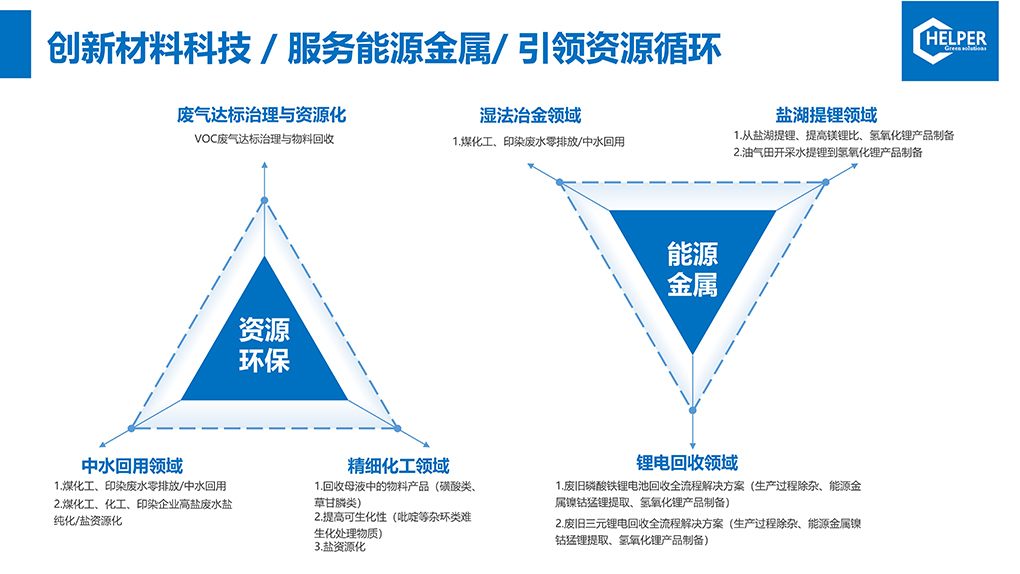
Jiangsu Haipu Functional Materials Co., Ltd. is a high-tech enterprise dedicated to the research and development of high-performance adsorbents, catalysts, and their process applications. With a series of independently developed high-performance adsorbents and catalysts as the core, combined with independently developed process technology, Haipu has become a professional solution provider in the fields of environmental governance and resource recycling. At the same time, taking it as our responsibility to help industrial enterprises meet environmental standards and achieve sustainable development through resource utilization, we adopt modular lean production and develop engineering solutions based on research and development data. Relying on independently developed high-performance adsorbents and rigorous and comprehensive process development, Haipu has accumulated many treatment cases in the treatment of phenol containing wastewater, solving development problems and creating value for many enterprises.
Haipu high-performance adsorbent has the following advantages:
This method can be applied to wastewater concentrations ranging from a few to several thousand ppm, and the adsorption is not affected by the inorganic salts contained in the solution. It can also be applied in non-aqueous systems.
For phenol containing wastewater, after adsorption, it can generally meet or approach the discharge standards, with a material adsorption rate of over 99%, without producing secondary pollutants, and can significantly reduce COD values. Common acid-base or organic solvents are used for desorption, and the desorption rate can generally reach 92%.
The material has high resistance to oxidation, acid and alkali, and organic solvents, and can be used for a long time below 150 ℃. Under normal circumstances, the annual material loss rate is less than 5%.
The raw material intermediates or products present in wastewater generally have higher prices. The adoption of this method can largely recycle and use, which will generate considerable economic benefits. Usually, the recycling value is equivalent to the daily operating expenses, and some have surplus.
Using this technology, the process is simple, no special equipment is required, the technology is easy to master, and the consumption of thermal and electrical energy is relatively low during operation.
Haipu Handling Case
4.1 The coal washing water containing phenol generated in the production of a certain enterprise contains a large amount of phenolic substances, about 1000ppm. After being treated by the Haipu adsorption process, the phenolic substance content in the raw water is greatly reduced to below 10ppm, thus meeting the conditions for biochemical treatment.
| Name | Phenolic substance content |
| Absorb incoming water | 1042ppm |
| Adsorbed water | 9.7ppm |
| Removal rate | 99.07% |
4.2 The wastewater generated during the production of a certain enterprise's products contains a large amount of phenol, isopropylbenzene, and COD. After being treated by the Haipu adsorption process, the phenol and COD in the water are greatly reduced, and the color is removed, with a phenol removal rate of over 99%.
| Name | COD | Phenol | Steamed salt color |
| Absorb incoming water | 15600ppm | 63.2ppm |
|
| Adsorbed water | 7000ppm | 0.105ppm | White |
| Removal rate | 55.10% | 99.80% |
|

 CN
CN EN
EN
 es
es