Pyridine and its derivatives are a very important class of fine chemical raw materials or products, widely used in industrial solvents, pharmaceuticals, pesticides, feed, dyes and other fields, and are known as the "chips" of heterocyclic pharmaceuticals, pesticides and veterinary drugs.
Pyridine is commonly used in the production of pesticides and intermediates such as Chlorpyrifos, Paraquat, Diclofenac, Chlorpyrifos, and Fluxafop, as well as in dye production. Its derivatives mainly include 2-chloropyridine, 2,6-dichloropyridine, cyanopyridine, pyridine chloride, methylpyridine, alkylpyridine, halogenated pyridine, aminopyridine, bromopyridine, iodopyridine, chloropyridine, nitropyridine, hydroxypyridine, benzylpyridine, ethylpyridine, cyanopyridine, fluoropyridine, dihydropyridine, etc.
Pyridine wastewater has complex water quality, containing a large amount of heterocyclic non biodegradable substances, and has the characteristics of high COD concentration, high organic nitrogen content, and high toxicity. Conventional water treatment techniques are difficult to treat, and it has become a difficult point in industrial wastewater treatment.
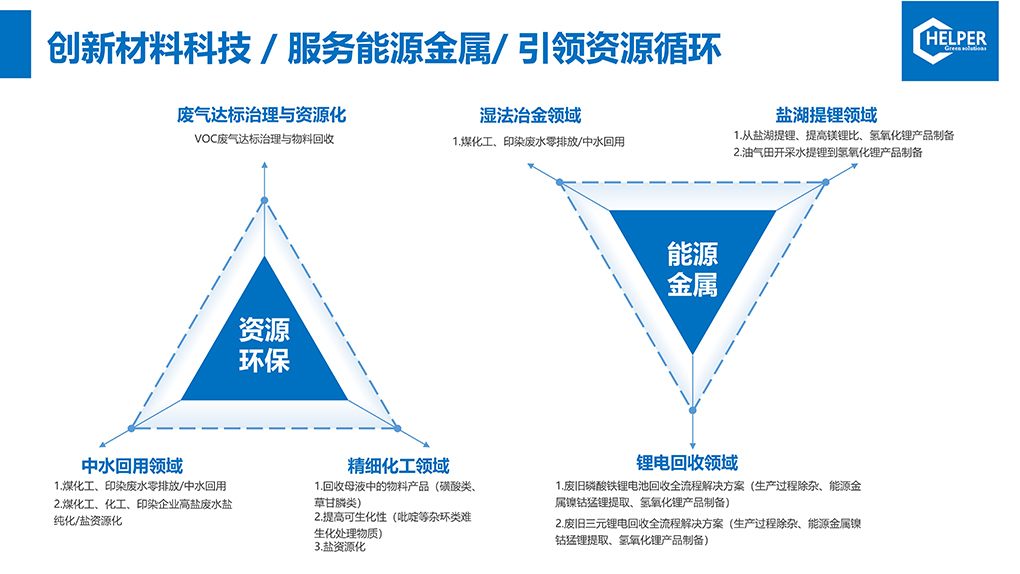
Jiangsu Haipu Functional Materials Co., Ltd. is located in Suzhou Industrial Park. It is a national high-tech enterprise that uses special adsorbents and catalysts as its core technology, supporting the development of application processes, technical services, engineering implementation, etc., to solve related environmental problems for customers.
The principle of the Haipu adsorption process is to use the special adsorption materials developed by our company to selectively adsorb the components or substances to be removed. When the adsorption is saturated, a specific desorption agent is used to desorb the adsorption material, allowing it to regenerate. This process continues in a loop.
Using adsorption technology to treat pyridine containing wastewater can effectively remove pyridine and benzene from the wastewater.
A company requires that the pyridine content in the treated wastewater be less than 2mg/L. Experimental treatment results show that using adsorption treatment can stabilize the removal rate of pyridine in the wastewater at over 99%, and the pyridine content in the effluent can be controlled below 1mg/L. While ensuring that the customer's requirements are met, a certain safety margin is left, which can effectively prevent water quality fluctuations in the incoming wastewater from causing the effluent to not meet the standard.
| Pyridine content in raw water | Pyridine content in effluent | Removal rate |
| 656mg/L | 0.68mg/L | 99.90% |
| 656mg/L | 0.59mg/L | 99.91% |
| 656mg/L | 0.81mg/L | 99.88% |
The pyridine wastewater generated during the production process of an enterprise contains pyridine, benzene, ammonia nitrogen, etc., with a COD of up to 70000mg/L. In order to meet the requirements of the subsequent treatment process, it is hoped to separate and remove most of the biochemical recalcitrant substances from it.
Simultaneously require pyridine content to be less than 2 mg/L and benzene content to be less than 2 mg/L after processing.
The experimental results show that adsorption can remove the vast majority of pyridine and benzene from wastewater, meeting the requirements of enterprises. At the same time, it has a high removal rate for COD and ammonia nitrogen in wastewater, which reduces the pressure for the subsequent treatment of enterprise wastewater.
| Name | COD | Pyridine class | Benzene class | Ammonia nitrogen |
| Absorb incoming water | 70000mg/L | 130mg/L | 600mg/L | 300mg/L |
| Adsorbed water | 2600mg/L | 1.6mg/L | 1.8mg/L | 25mg/L |
| Removal rate | 96.20% | 98.80% | 99.70% | 91.70% |
A company requires the recycling of pyridine derivatives in wastewater and the use of adsorption treatment for wastewater.
The experimental treatment effect shows that the recovery rate of pyridine derivatives in wastewater can reach over 99%, and the content of pyridine derivatives in the effluent can be controlled below 40mg/L. Subsequent wastewater containing pyridine derivatives can be directly treated by biochemical treatment.
At the same time, pyridine derivatives are almost completely recovered and reused in the production process, improving resource utilization and reducing production costs.
| Content of pyridine derivatives in raw water | Content of pyridine derivatives in effluent | Rate of recovery |
| ~6560mg/L | ≤40mg/L | 99.34% |
In many enterprises, the incineration treatment of pyridine wastewater is outsourced. With the current commission fee of 1000 yuan/ton, the treatment of wastewater is particularly high, which brings great pressure to the production of enterprises.
Therefore, it is urgent to find a cost-effective, environmentally friendly, and efficient treatment method, which is also the focus of the current pyridine wastewater treatment industry.
Using adsorption method to treat pyridine wastewater can efficiently remove pyridine and benzene from the wastewater, ensuring that the pyridine and benzene content in the treated wastewater is below 2mg/L.
Toxic and difficult to degrade substances in wastewater are almost removed, meeting the requirements of enterprises and reducing the pressure of subsequent biochemical treatment of wastewater.
The advantages of adsorption method are as follows:
(1) Efficiently removing pyridine and benzene from wastewater, while reducing COD and ammonia nitrogen content, with high removal efficiency. Strictly controlling the concentration and content of pyridine and benzene in the treated wastewater to below 2mg/L;
(2) Greatly reducing the cost of wastewater treatment for enterprises, the treatment cost of adsorption method is generally 100-200 yuan/ton, much lower than the cost of incineration treatment+1000 yuan/ton;
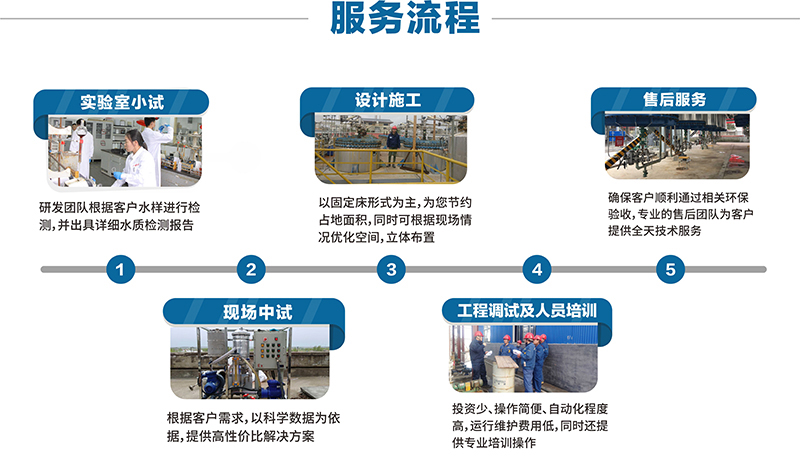
(3) Conduct experiments on sampling samples of wastewater generated on the enterprise site, and design adsorption processes based on the experiments. The matching degree between wastewater and processes is 100%;
(4) The equipment occupies less land, has a compact structure, and requires less investment in civil engineering and equipment; The desorption agent is applied multiple times and concentrated step by step, resulting in high drug utilization and low operating costs;
(5) It can be implemented in module component form, flexibly adjusted according to production capacity, and easy to install;
(6) Advanced and mature technology, no secondary pollution, relying on strong technical support and rich engineering application experience to provide high-quality services.

 CN
CN EN
EN
 es
es