Recently, the Ministry of Ecology and Environment issued the "Comprehensive Treatment Plan for Volatile Organic Compounds in Key Industries".
The goal is to establish and improve the VOCs pollution prevention and control management system by 2020. Significant progress should be made in VOCs treatment in key regions and industries, achieving the "13th Five-Year Plan" target of a 10% reduction in VOCs emissions. This will also help control greenhouse gas emissions and promote continuous improvement in ambient air quality.
Current Major Issues in VOCs Treatment
Since the implementation of the “Air Pollution Prevention and Control Action Plan,” China has continuously strengthened VOCs pollution prevention and control efforts, issuing VOCs pollution prevention and control work plans and setting emission standards for industries such as refining and petrochemicals.
Some regions have formulated local emission standards and strengthened the basic capacity building for VOCs monitoring, control, reporting, and statistics, making some progress. However, VOCs treatment work remains weak, mainly manifested as:
| Main Issues That Exist |
| Insufficient source control measures | The use of organic solvents and other raw and auxiliary materials containing VOCs is an important source of VOCs emissions. Currently, there is a significant lack of source substitution measures for low VOCs content raw and auxiliary materials in China |
| The problem of unorganized emissions is prominent | Although the Air Pollution Prevention and Control Law and other regulations require the closure of unorganized VOCs emissions, currently large and widespread enterprises have not taken effective control measures, especially small and medium-sized enterprises with poor management level, low collection efficiency, and prominent emission problems |
| Simple and inefficient pollution control equipment | The VOCs governance market in our country started relatively late, with low entry barriers and insufficient regulatory capabilities. The quality of pollution control facilities varies greatly, with prominent phenomena such as ineffective governance. Some enterprises, due to non-standard design and system mismatch, have not achieved the expected pollution control effects even if they choose efficient governance technologies |
| Irregular operation management | Some enterprises adopt activated carbon adsorption technology, but do not replace the adsorption materials for a long time; Some enterprises adopt combustion and condensation treatment technologies, but the operating temperature cannot meet the design requirements; Some companies have carried out leak detection and repair (LDAR) work, but have not operated according to regulations |
| Inadequate monitoring and surveillance | The VOCs monitoring work in China is still in its early stages, and the quality of self-monitoring by enterprises is generally not high. Problems such as unreasonable point settings, non-standard sampling methods, and weak representativeness of monitoring periods are prominent |
Control Ideas and Requirements
01
Vigorously Promote Source Substitution
By using low-VOCs content coatings such as water-based, powder, high-solids, solvent-free, and radiation-curable coatings, low-VOCs content inks such as water-based, radiation-curable, and plant-based inks, low-VOCs content adhesives such as water-based, hot-melt, solvent-free, radiation-curable, modified, and biodegradable adhesives, and low-VOCs content, low-reactivity cleaning agents, we can replace solvent-based coatings, inks, adhesives, and cleaning agents, reducing VOCs generation from the source.
02
Comprehensively Strengthen Unorganized Emission Control
Focus on controlling five types of emission sources: storage, transfer, and transportation of VOCs-containing materials (including VOCs-containing raw and auxiliary materials, VOCs-containing products, VOCs-containing waste, and organic polymer materials), equipment and pipeline component leaks, open liquid surface evaporation, and process emissions. Measures such as equipment and site sealing, process improvement, and effective waste gas collection should be taken to reduce unorganized VOCs emissions.
03
Promote the Construction of Suitable and Efficient Pollution Control Facilities
When enterprises build new pollution control facilities or retrofit existing ones, they should reasonably choose treatment technologies based on the concentration, composition, air volume, temperature, humidity, and pressure of the emitted waste gas, as well as production conditions. Enterprises are encouraged to use a combination of multiple technologies to improve VOCs treatment efficiency.
For low-concentration, large-volume waste gas, concentration technologies such as zeolite rotor adsorption, activated carbon adsorption, and wind reduction and concentration should be used to increase VOCs concentration before purification. For high-concentration waste gas, solvent recovery should be prioritized. If recovery is difficult, high-temperature incineration or catalytic combustion technologies should be used. Oil and gas (solvent) recovery should use technologies such as condensation + adsorption, adsorption + absorption, or membrane separation + adsorption.
04
Deeply Implement Fine Management and Control
Localities should focus on local ambient air quality improvement needs, based on O3 and PM2.5 source analysis, combined with industry pollution emission characteristics and VOCs photochemical reactivity.
Determine the key industries and key pollutants for VOCs control in the region, taking into account the control of odorous pollutants and toxic and hazardous substances, and propose effective control plans to improve the precision, targeting, and effectiveness of VOCs treatment.
Haipu VOCs Adsorbent Products
The research team of Haipu Functional Materials has successfully developed a series of VOCs adsorbent products based on the characteristics of volatile organic waste gases.
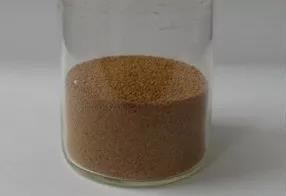
The adsorbents are divided into three types based on different application scenarios and treatment targets:
Benzene Adsorbents: HDV336 for the recovery and compliant emission of benzene, toluene, xylene, and other benzene waste gases.
Halogenated Hydrocarbon Adsorbents: HDV536 for the recovery and compliant emission of dichloromethane, dichloroethane, and other halogenated hydrocarbon waste gases.
Ester Adsorbents: HDV330 for the recovery and compliant emission of ethyl acetate and other ester waste gases.
The advantages of Haipu VOCs adsorbent products are mainly reflected in the following points:
Haipu VOCs adsorbent products can handle a wide variety of organic waste gases, efficiently removing harmful components from the waste gas with a high removal rate, strictly controlling the pollutant content in the exhaust.
Haipu VOCs adsorbents can adsorb and recover effective components from the waste gas, improving resource utilization.
The related supporting equipment for VOCs adsorbent products requires low investment and operating costs, and the process is safe and reliable.
Application Effects of Haipu VOCs Adsorbent Products
Relying on the excellent performance of VOCs adsorbent products and their supporting combination processes, Haipu has helped many customers meet their VOCs treatment needs.
VOCs Adsorbent Application Case 1
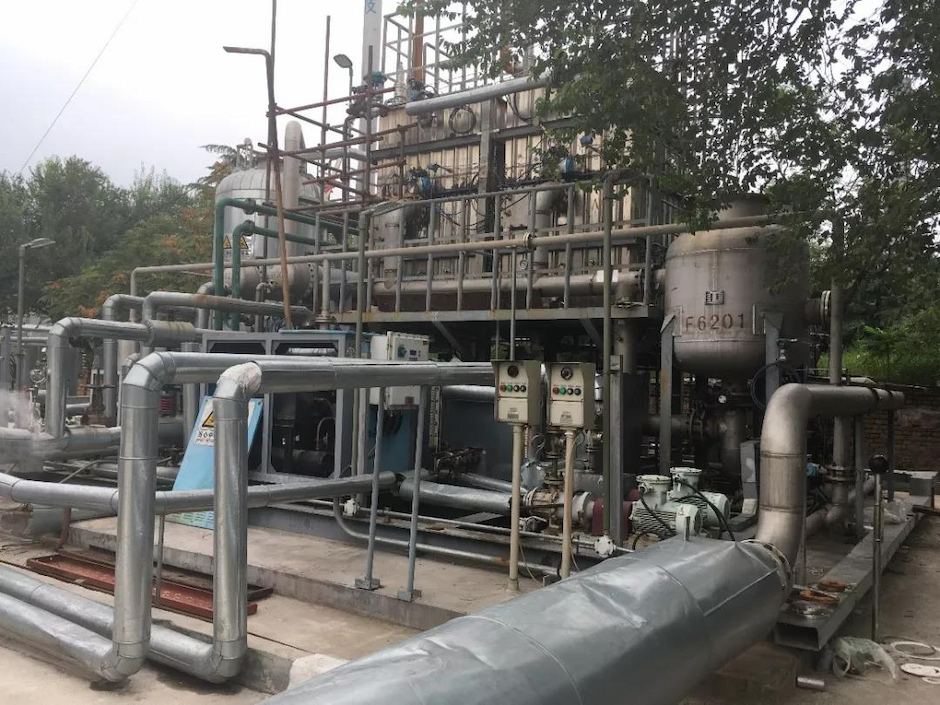
A chemical company with 2000m³/h dichloromethane waste gas uses Haipu VOCs adsorbents for adsorption treatment, recovering most of the dichloromethane components from the waste gas. This allows the company to recover 1296kg of dichloromethane daily, increasing the company's annual economic benefit by 983,400 yuan.
| Air volume | Concentration of dichloromethane in the intake air | Dichloromethane emission concentration |
| 2000m³/h | 30000mg/m³ | ≤40mg/m³ |
VOCs Adsorbent Application Case 2
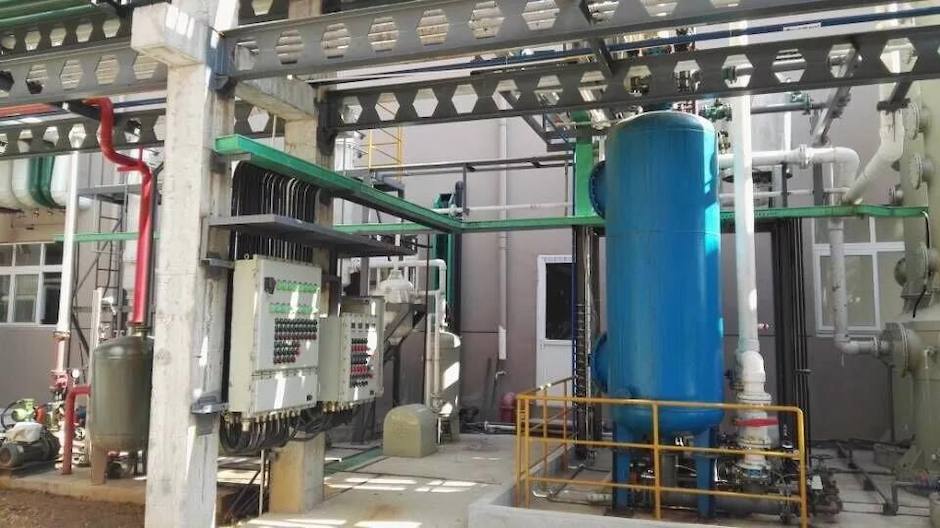
A biopharmaceutical company with 12000m³/h toluene waste gas uses Haipu VOCs adsorbents for adsorption treatment, recovering most of the toluene from the waste gas. This increases the company's annual economic benefit by 4,083,800 yuan.
| Air volume | Inlet toluene concentration | Toluene emission concentration |
| 12000m³/h | 8700mg/m³ | ≤40mg/m³ |
VOCs Adsorbent Application Case 3
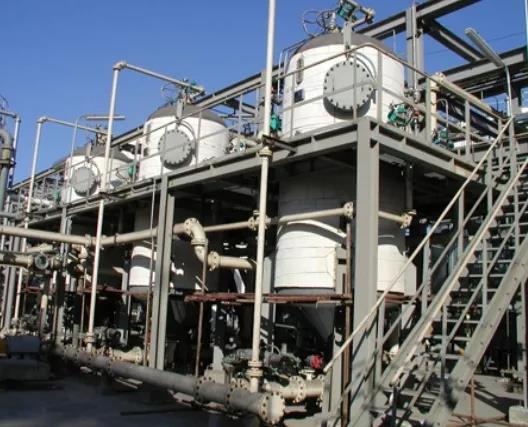
A petrochemical company needed to address non-compliant 3000mg/m³ toluene waste gas.
After comparison and investigation, they chose Haipu VOCs adsorbents for adsorption treatment. The toluene content was reduced to 5mg/m³ after treatment, allowing the company to recover about 50 tons of toluene annually, with significant and stable results.
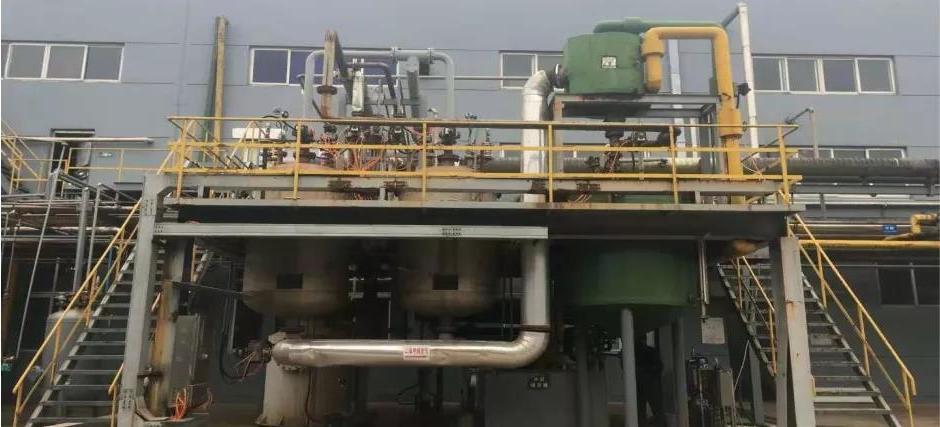
VOCs Adsorbent Application Case 4
A company's production workshop generates 3000m³/h dichloroethane waste gas with a concentration of 30000mg/m³.
After comprehensively comparing the feasibility, investment and operating economics, convenience, and safety and reliability of various treatment technologies, the company decided to use Haipu VOCs adsorbents for adsorption treatment.
After treatment, the dichloroethane content was reduced to ≤30mg/m³, ensuring that the exhaust could be integrated into the subsequent RTO system.
| Air volume | Intake dichloroethane concentration | Emission concentration of dichloroethane |
| 3000m³/h | 30000mg/m³ | ≤30mg/m³ |

 CN
CN EN
EN
 es
es