PMIDA is the main raw material for producing broad-spectrum post emergence herbicides, and is also an important intermediate in the pesticide, pharmaceutical, rubber, electroplating, and dye industries. If PMIDA is mixed with water and heated with excess hydrogen peroxide in the presence of equimolar sulfuric acid, glyphosate can be produced with a yield of 90% -95%. Glyphosate is a non selective, residue free herbicide that is highly effective against perennial rooted weeds and is widely used in rubber, mulberry, tea, orchard, and sugarcane fields.
PMIDA and glyphosate are not the same pesticide product. PMIDA is just an intermediate of glyphosate, which can be converted into glyphosate under certain conditions.
Treatment methods for wastewater from the production of glyphosate
Glyphosate is currently one of the most widely used herbicides, and glyphosate is one of the intermediates in the production of glyphosate. When using the IDA method for the production of PMIDA, a large amount of hydrochloric acid and sodium hydroxide are required, resulting in the discharge of a large amount of wastewater containing high concentrations of sodium chloride during the production process. How to effectively recover glyphosate from wastewater containing high concentrations of sodium chloride and ensure that the treated wastewater meets discharge requirements is a technical problem that urgently needs to be solved in the industry.
At present, most enterprises generally use methods such as calcium oxide precipitation, membrane filtration, or distillation concentration for the treatment of glyphosate wastewater, which all have some shortcomings, such as:
(1) When using calcium oxide precipitation, the precipitation rate of glyphosate in wastewater generally does not exceed 90%. The content of phosphorus, carbon, nitrogen, and COD (chemical oxygen demand) in the precipitated wastewater far exceed the required discharge standards.
(2) When using membrane filtration method, although its treatment effect is good, due to its slow processing speed, one.
It is generally difficult to achieve a daily processing capacity of about 100 tons or more; Especially the used nanofiltration membrane cannot be regenerated, so this method has a high cost of treatment and cannot effectively recover PMIDA from wastewater, which can easily lead to resource waste.
When using distillation concentration method, this method also faces the problems of slow treatment speed, high cost, and inability to effectively recover PMIDA from wastewater.
1. Source of PMIDA wastewater
PMIDA, also known as N - (phosphonomethyl) iminodiacetic acid, with the chemical formula C5H10NO7P, is an intermediate of glyphosate, a highly efficient, low toxic, and broad-spectrum herbicide.
There are two main ways to synthesize glyphosate in industry: glycine method and iminodiacetic acid (IDA) method. The former is a traditional production technology in China, while the latter is the main process for producing glyphosate abroad (especially in Europe, America, and other regions).
There is basically no wastewater generated during the oxidation stage of PMIDA in production, but a large amount of wastewater containing aldehydes, phosphines, and salts is generated during the production of PMIDA. About 5 tons of wastewater are generated for every ton of PMIDA produced.
Due to limitations in water treatment technology, most domestic enterprises discharge large amounts of untreated wastewater, resulting in serious resource waste and environmental pollution.
2. Characteristics of PMIDA wastewater
In the IDA production process of glyphosate, the main components of the wastewater generated from the mother liquor of glyphosate are as follows:
The wastewater from the mother liquor of PMIDA has the characteristics of large discharge volume, high toxicity, strong acidity (pH=0.6~1), high concentration of pollutants, high salinity, and high content of difficult to degrade compounds. Therefore, the treatment of this wastewater is difficult.
3. Haipu New Technology
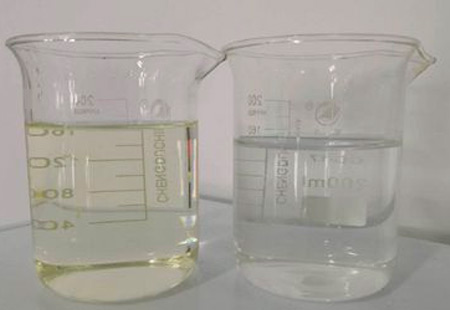
The Haipu adsorption+RRP process (wastewater resource utilization) can selectively adsorb and enrich the effective components in glyphosate wastewater, and achieve the recovery and utilization of effective components through desorption process. The treated wastewater can be discharged to meet the standard through biochemical treatment.
Haipu adsorption+process core special adsorption materials can selectively adsorb glyphosate in wastewater, achieving efficient adsorption and complete desorption of glyphosate. The content of glyphosate in the desorbed wastewater is greatly reduced, and glyphosate is adsorbed and recovered, returned to the production process for use, realizing the resource utilization of wastewater.
4. Technical advantages
The Haipu adsorption+RRP process (wastewater resource utilization) can efficiently remove substances such as glyphosate and glyphosate from wastewater, with a high removal rate. The adsorbed water can be treated biochemically to meet the standard or according to the needs of the enterprise.
Recyclable glyphosate and glyphosate in wastewater can improve resource utilization and increase the economic benefits of enterprises.
Low equipment investment, low operating costs, advanced and reliable technology, and no secondary pollution.
Module component form, high degree of automation, simple operation.
5. Adsorption inlet and outlet water data and effectiveness
| Name | Water volume (m³/d) | Glyphosate (mg/L) | Shuangganteng (mg/L) |
| Device water inlet | ~500 | ~24000 | ~11600 |
| Device effluent | ~500 | <1400 | <1 |
| Desorption solution 1 | ~100 | ~56000 | >40000 |
| Desorption solution 2 | ~100 | ~61100 | >40000 |
Table 1 Adsorption Inlet and Outlet Water Data
Jiangsu Haipu Functional Materials Co., Ltd. is located in the beautiful Suzhou Industrial Park and is a high-tech enterprise dedicated to the research and development of high-performance adsorbents, catalysts, and process applications. Jiangsu Haipu is committed to providing internationally leading products, technologies, and overall solutions for industries such as environmental protection, new energy, chemical and pharmaceutical industries.
With advanced products and technological advantages, Haipu Company has gradually gained support and recognition from customers in various industries and governments at all levels. Haipu's comprehensive solutions for wastewater, waste gas, and waste acid have been established in dozens of demonstration applications in leading enterprises in industries such as petrochemicals, agrochemicals, pharmaceuticals, and electroplating. The technical team led by Dr. Cai won the 7th Suzhou Industrial Park Leading Talent Award in 2013, the 2015 Suzhou Leading Talent Award, and the 9th Suzhou Industrial Park Leading Talent Award in 2015. In 2018, it was approved as the Suzhou Adsorption and Catalytic Functional Nanomaterials Engineering Technology Research Center. Haipu has also been rated as a national high-tech enterprise for two consecutive times. Through years of independent research and development, with a series of high-performance adsorbents and catalysts as the core, combined with self-developed process technology, Haipu has become a professional supplier of green and environmental protection solutions.
 CN
CN EN
EN
 es
es