Custom Particle Size Phenolic Microspheres for Application-Specific Production | HaipuPhenolic microspheres are used in applications where particle geometry, thermal behavior, chemical resistance, and processing consistency all matter. For manufacturers working with filtration media, carbon materials, catalysts, composites, friction materials, or other specialty products, the particle size of the resin is not simply a specification on a datasheet. It can influence mixing, dispersion, packing, reaction behavior, carbonization, and the consistency of the finished material.
This is why Custom Particle Size Phenolic Microspheres can be valuable when standard resin grades do not fit a particular production process. Instead of adjusting an established process around an off-the-shelf material, manufacturers can work with a resin supplier to define particle size and other material characteristics around the actual application.
For buyers, however, customization should go beyond requesting a target particle size. Particle size distribution, resin chemistry, thermal properties, moisture, bulk behavior, packaging, and batch-to-batch consistency can all affect production. A capable Phenolic Resin Microspheres Manufacturer should therefore be able to translate an application requirement into measurable product specifications and then maintain those specifications at production scale.
Why Particle Size Customization Matters for Phenolic Microsphere Applications
Particle size affects how phenolic microspheres behave before, during, and after processing. When particles are incorporated into a formulation, smaller and larger particles do not necessarily move through the process in the same way. Differences in particle size can influence flow, dispersion, surface contact, packing density, and the amount of resin exposed to surrounding materials.
For example, a formulation that requires uniform dispersion may benefit from a controlled particle size distribution rather than simply using the finest available resin. In another application, a larger particle size may be more practical because it provides different handling or processing characteristics. The right specification depends on what happens to the resin during the customer's manufacturing process.
Particle size can also become important after thermal treatment. In applications where phenolic microspheres are carbonized or converted into carbon-based materials, the starting particle characteristics can affect the structure and uniformity of the resulting material. This makes particle control particularly relevant when the microspheres are used as a precursor rather than as the final material.
The objective, therefore, is not to make the particle size as small or as large as possible. It is to establish a particle size range that supports the required processing behavior and final material performance.
Key Particle Size and Material Specifications for Custom Phenolic Microspheres
When discussing Custom Particle Size Phenolic Microspheres with a supplier, particle size should be treated as one part of a broader specification. A useful technical discussion begins with the customer's process and then identifies which material properties need to be controlled.
Particle Size and Particle Size Distribution
The requested particle size should be accompanied by a clear definition of how the size is measured. A nominal average or median value alone may not adequately describe the material. Two batches can have a similar median particle size while having noticeably different proportions of fine and coarse particles.
For this reason, buyers should discuss the desired particle size distribution as well as the central particle size. Depending on the application, the supplier may need to control the percentage of particles below or above specific size limits.
Resin Chemistry and Crosslinking
Particle size cannot be separated from resin chemistry. Phenolic microspheres with different resin structures or curing characteristics may behave differently during heating, blending, or subsequent chemical treatment.
The supplier should therefore understand whether the customer needs a specific phenolic resin composition, curing state, or thermal behavior in addition to the physical particle specification.
Moisture and Handling Characteristics
Moisture can affect powder handling, storage stability, mixing, and downstream processing. For applications involving controlled thermal treatment, moisture may also influence the initial processing stage.
Bulk density, flow behavior, and packaging conditions may also need to be considered when the resin is purchased in significant quantities. These factors become increasingly important when a customized material moves from laboratory testing into regular production.
Thermal and Chemical Properties
Depending on the end use, buyers may need information about thermal stability, decomposition behavior, carbon yield, chemical resistance, or compatibility with other materials. The relevant specifications should be established according to the actual process rather than selecting a long list of unnecessary parameters.
How Particle Size Distribution Affects Processing and Material Performance
Particle size distribution is often more useful for process control than a single average particle size. The distribution describes how particles are spread across different size ranges and can help explain why two otherwise similar resin batches behave differently during processing.
| Particle Characteristic | Potential Processing Effect | What Buyers Should Evaluate |
|---|
| Fine particle fraction | Can influence surface contact, dispersion, and powder handling | Whether fines affect flow, dust generation, or formulation consistency |
| Median particle size | Provides a useful reference for the central particle population | How consistently the median is maintained between batches |
| Coarse particle fraction | Can influence mixing uniformity and packing behavior | Whether oversized particles create processing or quality issues |
| Particle size distribution | Affects overall consistency and process repeatability | Specified measurement method and acceptable distribution range |
A narrow distribution is not automatically better for every application. Some manufacturing processes are designed around a broader particle population, while others require tighter control. The important point is consistency with the customer's process.
For Custom Particle Size Phenolic Microspheres, this means the specification should describe the particle population that actually works in production. A supplier that understands this distinction can help prevent problems that may not be visible when only a nominal particle size is considered.
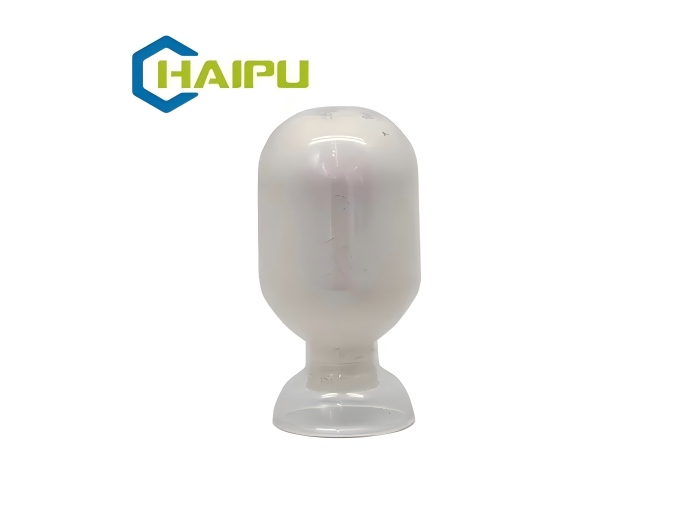
Matching Custom Phenolic Microspheres to Application-Specific Production Requirements
The most effective way to specify a customized phenolic microsphere is to start with the intended application. Instead of asking only for a particular particle size, buyers should explain how the resin will be processed, what other materials it will contact, and what properties the finished product needs to achieve.
Carbon Material Production
Phenolic microspheres can serve as precursors for carbon materials and other thermally processed products. In these applications, particle size and distribution can affect the uniformity of the starting material and the resulting carbon structure.
Manufacturers should consider particle size alongside carbonization conditions, desired final structure, and downstream processing requirements. A resin that performs well in a small laboratory batch may require further optimization before it can be used consistently in a larger production line.
Filtration and Adsorption Materials
When phenolic microspheres are used to produce filtration or adsorption materials, particle uniformity can influence packing and the resulting physical structure. The ideal specification depends on the intended filtration process and the properties required from the final material.
Friction and Composite Materials
In friction materials and engineered composites, phenolic resin may function as a binder or structural component. Particle size can affect blending with fillers and reinforcement materials, making consistent powder characteristics important for production repeatability.
Haipu works with industrial customers looking for resin materials tailored to specific processing requirements. Buyers can review available phenolic resin and microsphere products to understand the types of materials available for different applications.
From Sample Development to Consistent Large-Scale Production
Customization is most useful when it can be transferred successfully from laboratory trials to routine production. A sample that performs well during initial testing is only the beginning. The supplier must be able to reproduce the agreed material characteristics consistently once order quantities increase.
A practical development process usually starts with the customer's application requirements. The supplier and customer then establish measurable specifications covering particle size, particle size distribution, resin properties, and any application-specific parameters that affect performance.
After sample evaluation, the customer can assess the material under actual processing conditions. If the results indicate that the particle distribution, resin behavior, or another characteristic needs adjustment, the specification can be refined before regular production begins.
Once the target formulation is established, production consistency becomes the priority. A reliable Phenolic Resin Microspheres Manufacturer should have suitable process controls and quality inspection procedures to ensure that production batches remain within the agreed specifications.
This stage is particularly important for customers integrating customized resin into an established manufacturing process. Even relatively small changes in particle distribution or material properties can affect downstream processing when production volumes are high.
How to Evaluate a Custom Phenolic Microsphere Manufacturer for Reliable Supply
Finding a supplier capable of producing a customized sample is different from finding a supplier capable of maintaining the same specification over long-term commercial production. Buyers should therefore evaluate both technical development capability and manufacturing consistency.
A capable Phenolic Resin Microspheres Manufacturer should be able to discuss particle size using measurable specifications rather than relying on general descriptions such as “fine” or “uniform.” The supplier should also be able to explain how particle size is measured and how batch consistency is monitored.
Quality documentation is another important consideration. Depending on the application, buyers may need particle size test results, moisture information, resin property data, batch records, or other quality documentation. The exact documentation should reflect the customer's technical and regulatory requirements.
Supply capability also matters. A customized resin is only useful if the manufacturer can reproduce it reliably after the development stage. Buyers should discuss production capacity, packaging, lead times, quality control, and the process for managing future specification changes before entering a long-term supply relationship.
Haipu approaches customized phenolic resin development from both the material and application perspectives. For companies evaluating a new resin specification or looking for a production partner, you can contact Haipu to discuss your phenolic microsphere requirements and provide details about the intended application, target particle size, and processing conditions.
Conclusion
Particle size customization can make a meaningful difference when phenolic microspheres are being used in a specialized production process. The objective is not simply to specify a particular particle size, but to establish a complete material profile that supports consistent processing and final product performance.
Custom Particle Size Phenolic Microspheres should therefore be evaluated in terms of particle size distribution, resin chemistry, moisture, thermal behavior, handling characteristics, and batch consistency. These factors become especially important when the material is used for carbon production, filtration media, composites, friction materials, or other application-specific processes.
For buyers, the choice of a Phenolic Resin Microspheres Manufacturer should also take into account the supplier's ability to move from sample development to repeatable large-scale production. A clear technical specification, application testing, and consistent quality control provide a stronger foundation for long-term cooperation than particle size alone.
Frequently Asked Questions
1. Why customize the particle size of phenolic microspheres?
Particle size customization can improve compatibility with a specific mixing, molding, carbonization, filtration, or composite production process. The appropriate size depends on the intended application.
2. Is particle size distribution as important as average particle size?
Yes. Average particle size does not show how particles are distributed across different size ranges. Controlling the distribution can improve batch-to-batch processing consistency.
3. What information should I provide when requesting custom phenolic microspheres?
Useful information includes the target particle size, particle size distribution, application, processing conditions, required resin properties, and any specifications related to moisture or thermal behavior.
4. Can custom phenolic microspheres be produced for large-scale manufacturing?
Yes. Custom resin development can be transferred from laboratory samples to commercial production when the manufacturer has suitable process controls and quality management procedures.
5. How should I evaluate a Phenolic Resin Microspheres Manufacturer?
Evaluate the manufacturer's customization capability, particle size control, quality consistency, testing methods, production capacity, technical support, and ability to maintain specifications during long-term supply.
6. Can Haipu help develop application-specific phenolic microspheres?
Haipu can discuss application requirements, particle size specifications, and production needs with industrial customers to determine a suitable phenolic resin solution.

 CN
CN EN
EN
 es
es