From radioactive waste to fruit juice purification, ion exchange resins demonstrate remarkable versatility as molecular filters. At Haipu, we engineer specialized resins that target specific contaminant types across diverse industries.
Functional resins serve as precision tools for molecular separation - extracting valuable resources from acids, capturing airborne pollutants, improving food quality, and purifying hazardous liquids. Their adjustable pore structures and surface chemistries enable customized solutions for industrial challenges.
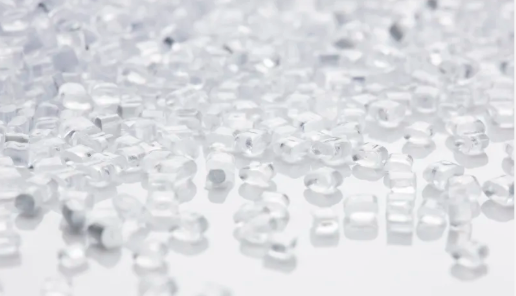
Let's examine four critical scenarios where Haipu's tailored resins create value across industry verticals.
Acid recycling: Transforming industrial waste into resources
Spent acids from metal processing and chemical production pose serious environmental risks if improperly disposed. Haipu's acid purification resins provide an innovative approach to transform this hazardous waste into reusable resources through selective ion exchange. The WR-3 resin demonstrates exceptional performance in sulfuric acid recycling with its remarkable chemical stability, maintaining structural integrity even in concentrated acids up to 80°C. Field applications show consistent metal ion removal efficiency exceeding 95% for iron, copper and nickel contaminants, while preserving the acid strength for direct reuse in production processes. At a lead-acid battery recycling facility, this technology reduced acid procurement costs by $380,000 annually while cutting hazardous waste generation by 85%, demonstrating both economic and environmental benefits.
The acid recovery process involves multiple precisely controlled stages. First, the contaminated acid passes through resin columns where metal ions are selectively captured through ion exchange sites specifically designed for transition metals. The purified acid then flows directly back into production lines, while the loaded resin undergoes regeneration using a specialized eluent solution. This closed-loop system achieves up to 100 regeneration cycles without significant performance degradation, making it a sustainable long-term solution. The technology has been successfully implemented across battery manufacturing, steel pickling, and electronic component production where acid recycling was previously considered technically unfeasible.
VOCs removal: Capturing airborne pollutants at source
Industrial operations face increasing challenges in controlling volatile organic compound emissions as environmental regulations become more stringent globally. Conventional solutions often prove inadequate for capturing diverse VOC mixtures efficiently. Haipu's advanced macroporous adsorption resin addresses this challenge through their unique combination of high surface area (800-1200 m²/g) and tailored surface chemistry that enables both physical adsorption and chemical interactions with organic compounds. In pharmaceutical manufacturing applications, these resins demonstrated 99.5% removal efficiency for acetone from ventilation exhaust streams, while maintaining the capacity to recover over 90% of captured solvents through thermal regeneration at moderate temperatures.
System design plays a crucial role in maximizing resin effectiveness for VOC control. Typical installations involve multiple adsorption towers operating in rotation, with one unit actively capturing pollutants while others undergo regeneration or standby. The resin's hydrophobic nature ensures preferential adsorption of organic vapors even in humid conditions, solving a common problem with other adsorbents. Real-world installations have proven these systems can maintain consistent performance for 3+ years with proper maintenance, far exceeding the lifespan of conventional activated carbon solutions. Case studies from paint manufacturing facilities show the technology effectively handles complex VOC mixtures while reducing operating costs by 40% compared to thermal oxidation alternatives.
Food processing: Creating clearer, better-tasting products
Modern consumers increasingly demand food products with cleaner labels and natural flavors, creating new challenges for food processors. Haipu's food-grade FP-30 resins meet this need through selective removal of undesirable compounds without altering essential nutritional components. In citrus juice processing, this technology removes up to 96% of bitter naringin while preserving the natural vitamin content and authentic flavor profile. The resin's uniform pore structure specifically targets pigments and bitter compounds through physical entrapment and weak chemical interactions, a process far gentler than traditional chemical treatments that can damage delicate aromas.
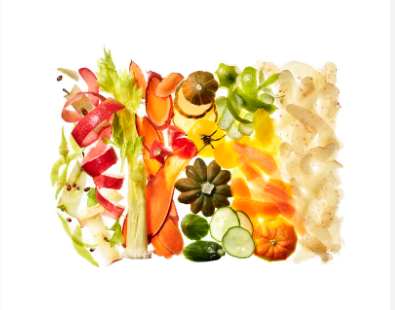
Juice clarification involves passing the raw product through resin columns in a carefully controlled temperature and flow rate regime. The process not only improves sensory qualities but also increases product yield by 10% compared to traditional filtration methods, representing significant economic benefits for processors. Rigorous testing has confirmed the resin meets all international food safety standards, including FDA and EFSA requirements for food contact materials. Beyond juices, the technology has shown excellent results in tea extract purification, sugar decolorization, and plant protein isolation, demonstrating remarkable versatility across food applications.
Nuclear/ultrapure water: Meeting extreme purity requirements
Stringent water purity requirements in nuclear power and semiconductor manufacturing demand advanced treatment solutions. Haipu's NUW series mixed-bed ion exchange resins achieve parts-per-trillion purity levels through their exceptionally low leakage rates (<0.1 ppb) and high radionuclide removal efficiency (>99.9%). In nuclear applications, these resins effectively capture radioactive isotopes like cesium-137 and cobalt-60 from cooling water systems while withstanding radiation exposure that would degrade conventional ion exchangers. The spherical bead structure ensures optimal flow characteristics even at high service flow rates of 50-100 bed volumes per hour, critical for large-scale water treatment systems.
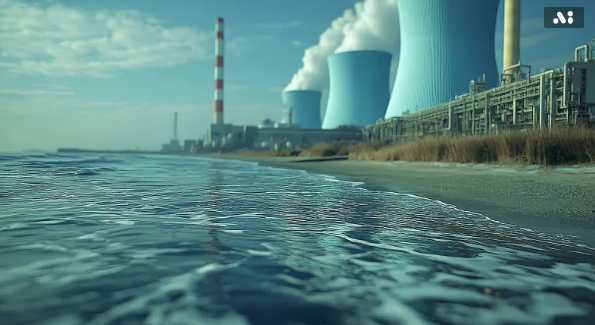
Pre-packaged resin cartridges simplify system maintenance in radiation-controlled areas, minimizing operator exposure. Performance data from reactor facilities show the technology consistently meets ASTM D5127 Type E-1 specifications for nuclear-grade water purity with an operational lifespan exceeding 18 months in continuous service. Similar success has been achieved in semiconductor manufacturing where even trace ionic contamination can ruin entire production batches. The resin's exceptionally high total exchange capacity and minimal organic leaching make it ideal for ultrapure water production in sensitive electronics fabrication.
About the Author
Dr. Sofia Christopher
Technical Director, Haipu Functional Materials
A 15-year veteran in separation science, Dr. Christopher leads application development for industrial resin solutions, holding 9 patents in functional polymer design.
References
U.S. EPA. (2022). Control Techniques for VOC Emissions. EPA-452/R-22-003. www.epa.gov
IAEA. (2021). Application of Ion Exchange for Radioactive Waste Management. IAEA-TECDOC-2015. www.iaea.org
Food Chemicals Codex. (2023). Food-Grade Processing Aids Standards. FCC 14th Edition.
Cheremisinoff, N.P. (2020). Industrial Gas Hazardous Waste Treatment. Elsevier. ISBN 978-0128199213.
China Environmental Science Press. (2022). Acid Recycling Technology Guidelines. CES-2022-STD-045.

 CN
CN EN
EN
 es
es