Choosing the right separation material is an important step for manufacturers involved in purification, extraction, enrichment, and recovery processes. Among various adsorption materials available today, macroporous adsorption resin has become a widely used option because it offers adjustable adsorption performance, good regeneration ability, and stable operation in many industrial environments.
However, selecting a suitable resin grade requires more than comparing adsorption capacity data. Engineers and purchasing teams need to consider the characteristics of target compounds, pore structure, polarity, regeneration conditions, and long-term operating costs. A properly selected macroporous adsorption resin can improve separation efficiency while helping companies maintain consistent product quality and production stability.
For industrial users, Haipu provides adsorption resin solutions designed for different separation requirements. Understanding how resin properties influence application performance can help companies make more informed decisions before investing in large-scale production.
Understanding Macroporous Adsorption Resin and Its Role in Industrial Separation
A macroporous adsorption resin is a synthetic polymer material with a developed porous structure that enables selective adsorption of organic compounds from liquid solutions. Unlike ion exchange resins, which mainly depend on ionic interactions, macroporous adsorption resin works through physical adsorption mechanisms such as surface interaction, molecular diffusion, and hydrophobic attraction.
The internal pore network provides a large contact area between the resin and the solution, allowing target molecules to be captured and concentrated efficiently. Because the adsorption process does not permanently consume functional groups, the resin can usually be regenerated and reused, making it suitable for continuous industrial operations.
In practical applications, the performance of a resin depends greatly on the relationship between the resin structure and the properties of the substances being separated. Molecular size, polarity, concentration, and solvent conditions all influence adsorption results.
Industries commonly using macroporous adsorption resin include pharmaceutical manufacturing, natural product extraction, food ingredient purification, fine chemical processing, and environmental treatment. In these fields, adsorption resin is often used to remove impurities, enrich valuable components, or recover useful compounds from complex mixtures.
Among different resin grades, D101 macroporous resin is frequently selected for industrial separation processes because of its balanced adsorption characteristics and suitability for many weakly polar and non-polar compounds. It is commonly considered for applications involving flavonoids, polyphenols, pigments, and other organic substances.
Key Factors to Consider When Selecting Macroporous Adsorption Resin
The selection of a macroporous adsorption resin should begin with a clear understanding of the separation objective. A resin that performs well in one production process may not achieve the same results in another application. Several technical factors should be evaluated before making a final decision.
Target Compound Characteristics
The chemical properties of the target compound directly influence resin selection. Molecular weight, polarity, solubility, and molecular structure determine how easily a substance can enter the resin pores and interact with the adsorption surface.
For example, non-polar resins are generally suitable for hydrophobic organic compounds, while more polar resin types may perform better when separating compounds with stronger polar groups. Choosing a resin according to the target material helps improve selectivity and reduce unnecessary adsorption of unwanted components.
Pore Structure and Surface Area
The pore structure of a macroporous adsorption resin affects how molecules move inside the resin and how efficiently adsorption occurs. Smaller molecules may easily access smaller pores, while larger molecules often require a resin with a larger pore diameter.
A higher surface area can provide more adsorption sites, but maximum surface area does not always mean better performance. The balance between pore size, molecular diffusion, and target compound characteristics is usually more important than a single technical value.
Adsorption Capacity and Regeneration Performance
Industrial users should evaluate not only how much material a resin can adsorb but also how effectively the resin can be regenerated. A resin with excellent adsorption capacity but poor regeneration efficiency may increase operating costs over time.
For long-term production, stable adsorption-desorption cycles are essential. This is particularly important in industries where the resin needs to operate continuously or be reused for multiple production batches.
Chemical Stability and Mechanical Strength
Production environments can involve different solvents, temperatures, and chemical conditions. A reliable resin should maintain its physical structure and adsorption performance during repeated operation.
Mechanical strength is also important because resin particles experience pressure, fluid flow, and repeated regeneration during industrial use. Poor mechanical stability may shorten service life and increase replacement frequency.
How Resin Properties Influence Separation Efficiency and Application Performance
The efficiency of a separation process is closely related to the physical and chemical characteristics of the resin. Understanding these relationships allows engineers to choose a resin that matches actual production requirements.
| Resin Property | Influence on Separation | Selection Consideration |
|---|
| Pore Size Distribution | Affects molecular diffusion and accessibility of adsorption sites | Select according to the size and structure of target compounds |
| Polarity | Determines interaction strength between resin and adsorbed substances | Match resin polarity with compound characteristics |
| Surface Area | Influences available adsorption sites | Evaluate together with selectivity and regeneration ability |
| Mechanical Strength | Impacts resin durability during operation | Important for large-scale continuous production |
| Regeneration Performance | Affects reuse efficiency and operating expenses | Consider cleaning methods and long-term stability |
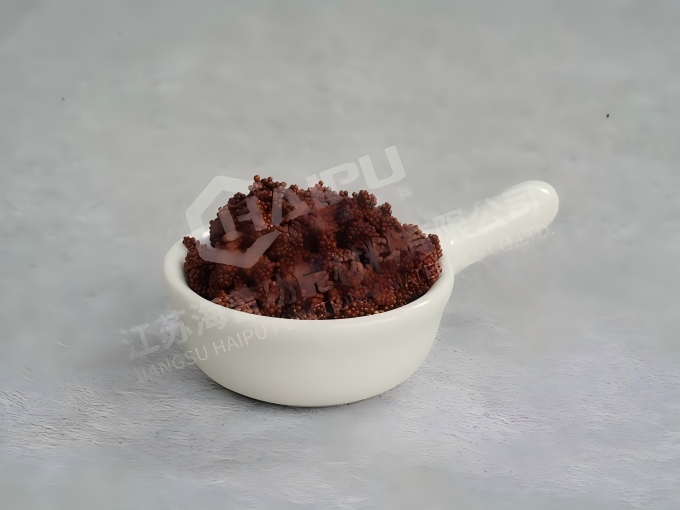
For example, d101 macroporous resin provides a practical balance between adsorption performance and operational stability, which is why it is often considered for various industrial purification and enrichment processes. However, final resin selection should always be based on application testing and process requirements.
Choosing the Right Macroporous Adsorption Resin for Different Industrial Applications
Different industries have different separation challenges, and resin selection should reflect the specific production environment.
Pharmaceutical and Natural Product Extraction
In pharmaceutical and botanical extraction processes, manufacturers often need to separate valuable active ingredients from complex mixtures. A suitable macroporous adsorption resin can help concentrate target compounds while reducing impurities.
For natural extracts containing flavonoids, polyphenols, and similar compounds, resin polarity and adsorption selectivity play a major role in achieving high-purity results.
Food Ingredient Purification
Food manufacturers use adsorption resin technology for processes such as decolorization, purification, and ingredient recovery. In these applications, resin stability, cleanliness, and regeneration performance are key considerations.
Fine Chemical and Environmental Applications
In fine chemical production and wastewater treatment, adsorption resin is often used to remove specific organic compounds or recover valuable materials. These applications usually require strong chemical resistance and reliable performance under challenging operating conditions.
Haipu develops adsorption resin solutions for different industrial separation needs. Customers can review available macroporous adsorption resin products to understand different resin options and select solutions suitable for their applications.
Macroporous Adsorption Resin vs Other Adsorption Materials: Key Differences and Selection Considerations
| Material | Main Characteristics | Advantages | Common Applications |
|---|
| Macroporous Adsorption Resin | Synthetic polymer resin with adjustable pore structure | Selective adsorption, regeneration capability, application flexibility | Pharmaceuticals, food extraction, chemicals, environmental treatment |
| Activated Carbon | Carbon-based adsorption material with high surface area | Strong general adsorption performance | Water purification, odor removal, decolorization |
| Silica Gel | Polar inorganic adsorption material | Effective adsorption of moisture and polar substances | Drying applications and chromatography |
| Ion Exchange Resin | Polymer resin containing ionic functional groups | Strong ionic separation capability | Water softening and ion removal |
Compared with other adsorption materials, macroporous adsorption resin offers greater flexibility because resin properties can be designed for different separation targets. Activated carbon may provide broad adsorption capacity, while ion exchange resin is more suitable for ionic substances. The appropriate choice depends on the characteristics of the process and the required separation result.
How to Evaluate a Reliable Macroporous Adsorption Resin Supplier for Long-Term Cooperation
Choosing a resin supplier is a long-term business decision. Product quality, technical support, and supply stability all influence the success of an industrial separation project.
A reliable supplier should understand not only resin manufacturing but also practical application requirements. Technical recommendations should consider the customer's raw materials, process conditions, regeneration methods, and expected production goals.
Haipu focuses on providing adsorption resin solutions for industrial customers and supporting application development through professional technical communication. Consistent product quality and application-focused service help customers reduce selection risks and improve production reliability.
For companies evaluating a new resin project or looking for technical advice on existing applications, they can contact Haipu for professional resin selection support and discuss specific separation requirements.
Conclusion
Selecting the right macroporous adsorption resin requires careful consideration of target compounds, pore structure, adsorption performance, regeneration efficiency, and operating conditions. The best resin choice is not always the one with the highest single performance value, but the one that provides reliable separation results throughout the entire production cycle.
Products such as d101 macroporous resin demonstrate how balanced adsorption properties can support different industrial separation applications. However, successful implementation depends on matching resin characteristics with actual process requirements.
By working with an experienced adsorption resin manufacturer like Haipu, industrial users can evaluate suitable resin options, improve separation efficiency, and build more stable long-term production processes.
Frequently Asked Questions
1. What is macroporous adsorption resin mainly used for?
Macroporous adsorption resin is mainly used for purification, enrichment, separation, and recovery of organic compounds in industries such as pharmaceuticals, food processing, chemicals, and environmental treatment.
2. Why is d101 macroporous resin commonly used in industrial applications?
D101 macroporous resin is commonly used because it provides stable adsorption performance and is suitable for many weakly polar and non-polar compound separation processes.
3. How do I select the right macroporous adsorption resin?
The selection should consider the target compound, polarity, molecular size, pore structure, regeneration requirements, and operating environment.
4. Can macroporous adsorption resin be regenerated and reused?
Yes. Most industrial adsorption resins can be regenerated through suitable cleaning and desorption processes, allowing repeated use.
5. What is the difference between macroporous adsorption resin and activated carbon?
Macroporous adsorption resin provides more adjustable adsorption properties and better selectivity, while activated carbon generally offers broader adsorption capacity.
6. What should buyers consider when choosing an adsorption resin supplier?
Buyers should evaluate product consistency, technical support, manufacturing capability, application experience, and long-term supply reliability.

 CN
CN EN
EN
 es
es