1. Characteristics of municipal wastewater
Municipal sewage is a mixture of various domestic sewage, industrial wastewater, and urban rainfall runoff collected through sewer systems.
Domestic sewage is the water discharged from people's daily lives. It is water discharged from living facilities such as kitchens, toilets, bathrooms, and laundry rooms in households, public facilities (restaurants, hotels, theaters, sports venues, offices, schools, and shops), and factories. The water quality characteristics of this type of sewage are high organic matter, such as starch, protein, oil, etc., as well as inorganic substances such as nitrogen and phosphorus. In addition, it also contains pathogenic microorganisms and a large amount of suspended solids. Compared to industrial wastewater, the quality of domestic sewage is generally more stable and the concentration is lower.
Industrial wastewater refers to the wastewater discharged during the production process, including production process wastewater, circulating cooling water flushing wastewater, and comprehensive wastewater. Due to differences in industrial production processes, raw materials, and water usage conditions of equipment, the properties of industrial wastewater vary greatly. Compared to domestic wastewater, industrial wastewater has significant differences in water quality and quantity, high concentration, and high toxicity. It is not easy to treat through a universal technology or process, and often requires it to be treated to a certain extent in the factory before discharge.
Rainfall runoff is formed by precipitation or melting of ice and snow. For cities that separately install sewage and rainwater pipelines, rainfall runoff flows into the rainwater pipeline. For cities that use rainwater and sewage combined drainage pipelines, rainfall runoff can be treated together with urban sewage. However, when the amount of rainfall exceeds the transport capacity of the interception main pipe or the treatment capacity of the sewage treatment plant, a large amount of rainwater and sewage mixture overflows, causing more serious pollution to the water body.
2. Current situation of municipal wastewater treatment
2.1 Current situation of municipal wastewater treatment
There are many methods for treating municipal wastewater, which can be divided into physical treatment methods, chemical treatment methods, physical and chemical treatment methods, biological treatment methods, etc. according to their principles of action.
2.1.1. Physical and chemical pretreatment methods
The physical treatment method is to use physical actions to separate the main suspended pollutants in sewage, without changing the chemical properties of the substances during the treatment process. Typical physical processing methods include precipitation, filtration, centrifugal separation, air flotation, etc.
2.1.2. Chemical treatment methods
Chemical treatment methods use chemical reactions to separate or recover pollutants from wastewater, or convert them into harmless substances. Typical chemical treatment methods include neutralization, coagulation, oxidation-reduction, etc.
2.1.3. Physical and chemical treatment methods purify wastewater through physical and chemical processes.
2.1.4. Biological treatment methods
Biological treatment is a method of using microorganisms to remove dissolved and colloidal organic matter from water. Biological treatment methods can be divided into two categories: aerobic biological treatment (mainly including activated sludge method, biofilm method, etc.) and anaerobic biological treatment.
4) Adsorption method
In the late 20th century, with the successful development of structurally improved ion exchange resins, adsorption resins, and composite functional resins, resin adsorption methods were widely used in the treatment and resource utilization of chemical wastewater. Jiangsu Haipu Functional Materials Co., Ltd. has synthesized adsorbents with different physical and chemical properties for municipal wastewater treatment, and achieved good treatment results. The adsorbents synthesized by the company can not only effectively remove COD from municipal wastewater, but also remove indicators such as color in wastewater, and the wastewater can be discharged stably and meet the standards.
3. Industry customer demand
The characteristics of municipal wastewater determine that the COD of this type of wastewater cannot be discharged stably and meet the standard through traditional biochemical treatment methods. It has low impact load resistance and due to its large water volume and direct discharge into rivers, once the COD exceeds the standard, it will have a great impact on the environment. The adsorption method can withstand impact loads well and achieve stable COD discharge in the effluent. Therefore, the adsorption method developed by Haipu functional materials can be used to treat this type of wastewater, achieving the optimal treatment effect and economic cost, which is a development direction in dye wastewater treatment.
The needs of municipal wastewater enterprise customers for wastewater treatment include the following three points:
(1) Efficiently and stably remove COD, chromaticity, and other pollutants from wastewater below the discharge limit;
(2) Low investment cost, low operating cost, and convenient equipment operation and maintenance;
(3) Advanced and reliable technology, with no secondary pollution.
4. Introduction to Haipu Customized Process
Jiangsu Haipu Functional Materials Co., Ltd. is located in Suzhou Industrial Park. It is a national high-tech enterprise that uses special adsorbents and catalysts as its core technology, supporting the development of application processes, technical services, engineering implementation, etc., to solve related environmental problems for customers. Haipu's technical team won the Suzhou Industrial Park Leading Talent Award in 2013 and 2015, and the Gusu Leading Talent Award in 2015. Jiangsu Haipu Functional Materials Co., Ltd. was rated as a national high-tech enterprise twice in 2015 and 2018, and was approved as the Suzhou Adsorption and Catalytic Functional Nanomaterial Engineering Technology Research Center in 2018. Jiangsu Haipu Functional Materials Co., Ltd. has a leading technological level in the treatment of adsorption materials. The supporting adsorption treatment process is efficient and stable, and has solved multiple environmental problems for many leading domestic enterprises in the industry.
The principle of the Haipu adsorption process is to use the special adsorption materials developed by our company to selectively adsorb the components or substances to be removed. When the adsorption is saturated, a specific desorption agent is used to desorb the adsorption material, allowing it to regenerate. This process is continuously repeated. The conventional process diagram for treating wastewater by adsorption method is shown in Figure 4-1.
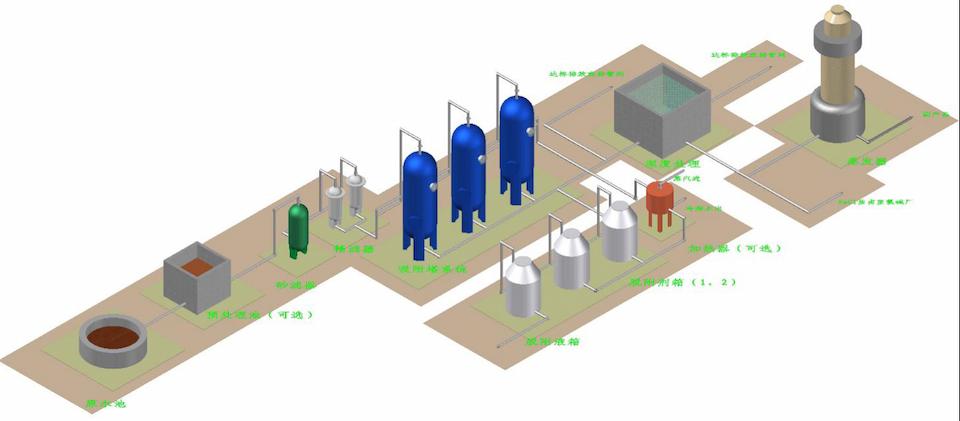
Figure 4-1 Conventional process diagram for adsorption treatment of wastewater
When using Haipu's adsorption process to treat municipal wastewater, the wastewater is pre filtered to remove suspended and particulate matter, and then enters the adsorption tower for adsorption. The special adsorption material filled in the adsorption tower can adsorb organic matter in the wastewater on the surface of the material, ensuring that the effluent COD and other indicators continue to meet the discharge standards. After adsorption saturation, first use a dilute alkaline solution to desorb the organic matter on the adsorbent material, and transfer the organic matter into the desorption solution. Then, rinse the residual alkaline solution on the surface of the adsorbent material with a small amount of soft water, and evaporate or treat the desorption solution. The washing solution contains trace amounts of adsorbed substances and can be used as dilution water for dilute alkali. The adsorbed effluent is wastewater with COD lower than the discharge limit, which can be directly discharged or reused in the front-end production line. The process flow of municipal wastewater adsorption treatment is shown in Figure 4-2.
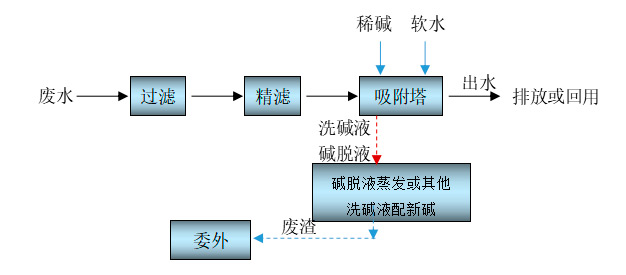
Figure 4-2 Adsorption treatment process flow of municipal wastewater
5. Process treatment effect
The use of adsorption technology to treat municipal wastewater can effectively remove COD and chromaticity from the wastewater. The specific treatment data are shown in Tables 5-1 to 5-2.
Table 5-1 Data on COD Removal by Wastewater Adsorption
| Raw water COD content | COD content in effluent | Compliance rate |
| 88 mg/L | 28mg/L | 100% |
| 90mg/L | 33 mg/L | 100% |
| 86mg/L | 25 mg/L | 100% |
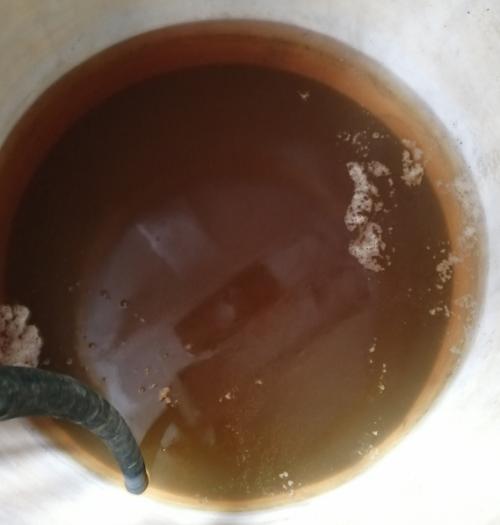
A municipal sewage treatment plant in Shandong requires that the COD content in the treated wastewater be less than 50mg/L, and the color should be colorless and transparent. The experimental treatment effect shows that using adsorption treatment can stabilize the COD in the wastewater to be less than 50mg/L. While ensuring that the customer's requirements are met, a certain safety margin is left, which can effectively prevent the water quality fluctuation of the incoming wastewater from causing the effluent to not meet the standard. The treatment effect is shown in the following figure.
The production process of this enterprise generates 500 tons of municipal wastewater per hour. After adsorption treatment, the COD in the wastewater can meet the requirements of direct discharge standards.
6. Core advantages of craftsmanship
At present, the treatment methods for municipal wastewater have their own shortcomings in terms of treatment effectiveness and operating costs.
Physical methods usually add coagulants such as aluminum salts, iron salts, polyaluminum, polyiron, and polyacrylamide to enhance the precipitation effect. The influencing factors of this method include the pH of the wastewater, the type and dosage of coagulants, etc.
The operating cost of biotechnology is relatively low, but its impact resistance is small. Once the microorganisms fail, the cultivation time is long, and it cannot stably meet the emission standards.
The adsorption method can effectively remove organic matter from municipal wastewater below the discharge limit, with simple operation and high degree of automation, making it an economical and effective method for treating municipal wastewater. The advantages of adsorption method are as follows:
(1) Stable and compliant emissions can effectively alleviate environmental pressure;
(2) Conduct experiments on sampling samples of wastewater generated on site, based on technology, and design adsorption processes based on experiments. The matching degree between wastewater and processes is 100%;
(3) The equipment occupies less land, has a compact structure, and requires less investment in civil engineering and equipment; The desorption agent is applied multiple times and concentrated step by step, resulting in high drug utilization and low operating costs;
(4) It can be implemented in module component form, flexibly adjusted according to production capacity, and easy to install;
(5) Advanced and mature technology, no secondary pollution, strong technical support, and rich engineering application experience.
7. Case Introduction
500 t/h Municipal Wastewater Treatment Project of a Municipal Wastewater Treatment Plant in Shandong Province
The company uses our adsorption process to treat the dye wastewater generated during its production process. Experiments have shown that the COD content in the wastewater has decreased from 90mg/L to below 50mg/L. The treated wastewater has a particularly low COD content and can be directly discharged.
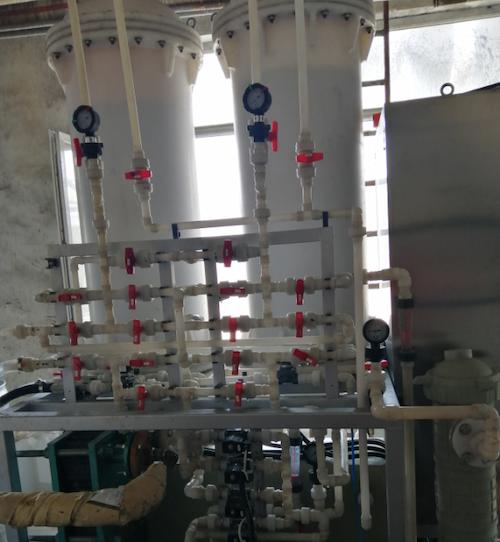
Figure 7-1 On site application of adsorption tower
 CN
CN EN
EN
 es
es