Industrial parks are clusters of local industries, formed by several different enterprises in a fixed area designated by the government, and are a way for the government to reasonably layout industries. In such industrial communities, member units are not simply "clustered", but rather obtain greater environmental, economic, and social benefits through joint management of environmental and economic matters. At present, the number of various industrial parks that have been built or are under construction in China has exceeded 9000, and the industrial wastewater discharge accounts for about 45% of the total national wastewater discharge. Compared to the sewage from urban sewage treatment plants, industrial parks have complex industrial structures, large changes in water quality and quantity, high pollutant concentrations, multiple types of pollutants, and toxic and difficult to degrade characteristics. Wastewater treatment systems often lack targeted design and management experience, which poses significant challenges to water pollution control in industrial parks.
1. Sources and characteristics of industrial park wastewater
The wastewater in industrial parks comes from different types of production lines within the park. Even for production lines of similar types, the discharge of wastewater can vary greatly due to differences in production conditions, product types, equipment performance, and management levels. In order to more accurately grasp the water quality and discharge volume of wastewater in the industrial park, it is necessary to fully investigate the products, production processes, scale, management level, drainage system, discharge rules, internal sewage treatment facilities, and wastewater reuse of all enterprises in the park. Only by fully understanding these basic information can the comprehensive water quality and discharge volume of the industrial park be determined and used as the main basis and data source for centralized treatment.
The integrated distribution and industrial structure of comprehensive industrial parks. Currently, the wastewater discharge from sewage treatment plants in chemical industrial parks in China mainly has the following characteristics:
1) Large water volume, generally above 10000 tons/day;
2) The composition is complex and varied, and the chemical industrial park collects numerous enterprises. Due to changes in the production of products, the discharge of wastewater also changes, and chemical reactions may occur between the complex wastewater components;
3) The water quality is unstable and has a large fluctuation coefficient.
2. Main treatment technologies for wastewater in the park
2.1 Preprocessing
Looking at the actual situation of wastewater treatment in industrial parks in recent years, pretreatment before centralized wastewater treatment is the key to ensuring the normal operation of wastewater treatment facilities in the park, and it is also the biggest characteristic that distinguishes industrial park wastewater treatment from individual enterprises. Through pretreatment, substances that hinder subsequent treatment can be removed from the wastewater or certain adverse factors can be eliminated, which can greatly improve the efficiency and quality of wastewater treatment in the park's sewage treatment plants. Pre treatment of heavy metals and toxic and harmful pollutants. The heavy metals or toxic pollutants contained in industrial park wastewater have toxic effects on the biological treatment of wastewater, affecting the normal growth and reproduction of microorganisms. Therefore, wastewater containing heavy metals or toxic pollutants should be pre treated in relevant enterprises before entering the park wastewater treatment plant. To reduce the concentration of toxic and harmful pollutants, so that this part of the wastewater enters the park treatment plant for mixing and dilution without affecting biological treatment.
Removal of mud, sand, and large particulate impurities. Industrial wastewater often contains large suspended particles such as mud and sand, as well as impurities, which can cause sedimentation in the wastewater treatment facilities and pipelines, blockage and wear of lifting equipment, and affect the normal operation of treatment structures in the park. For this reason, industrial wastewater should first be subjected to grid, sand settling, and sedimentation pretreatment to intercept mud, sand, and impurities in the wastewater.
Setting of regulating pool. The amount of wastewater in industrial parks often varies with the production plans and product changes of enterprises in the park, with a large coefficient of non-uniformity in water quantity, and the quality of wastewater is diverse and complex. In order to adapt to the variability of water and pollutant loads, industrial park wastewater treatment plants should be equipped with regulating tanks of sufficient capacity.
Neutrality treatment. Some strongly alkaline or acidic wastewater in industrial parks should be neutralized before entering the sewage treatment plant.
2.2 Biological treatment technology
Due to the different types of industries in different industrial parks, the quality of wastewater varies greatly. In the process of centralized treatment, targeted treatment processes need to be adopted based on the actual water quality of the wastewater. Considering the cost of treatment, most of the wastewater in industrial parks in China still uses biological treatment methods. However, with the improvement of national standards for effluent quality, simple biological treatment processes are no longer able to meet the requirements for effluent quality, especially for the removal rate of difficult to degrade toxic substances in industrial wastewater, which is relatively low. Therefore, a combination of physical, chemical, and biological methods must be used to effectively treat industrial wastewater. Wastewater from food industry parks generally has a high content of suspended solids, oils, and organic matter, and is often treated using a combination of coagulation pretreatment, anaerobic treatment, and aerobic treatment processes. The wastewater from industrial parks such as chemical and textile industries has the characteristics of complex composition, high toxicity, high concentration of organic matter, high color, and many biologically recalcitrant substances. It often requires a combination of anaerobic aerobic biochemical treatment and physicochemical deep treatment technology to meet the standards. The commonly used physicochemical methods include adsorption, coagulation, advanced oxidation, electrolysis, etc. The smelting wastewater discharged from metallurgical industrial parks mainly contains pollutants such as suspended solids, petroleum, heavy metals, fluorides, volatile phenols, and cyanides, which often require a combination of multiple physical and chemical processes to achieve better treatment effects. If the integrated technology of coagulation, sand filtration, activated carbon adsorption, microfiltration, and reverse osmosis is used to treat vanadium smelting wastewater, good removal effects can be achieved; The use of microelectrolysis flocculation coupling technology to treat lead-zinc smelting wastewater can achieve good removal effects of Cd2+, Pb2+, Zn2+, Cu2+, and total arsenic.
2.3 Deep processing technology
In recent years, achieving the circular utilization of water resources in industrial parks has also been an important development goal, and some advanced treatment technologies have been applied. Currently, the most commonly used are ecological treatment engineering and membrane technology. Ecological treatment mainly uses artificial wetlands and oxidation ponds to treat the effluent of sewage treatment plants. It is generally used in areas with sufficient land area, and attention should be paid to anti-seepage measures to prevent pollution of soil and groundwater. With the development of membrane materials and the decrease in costs, membrane technology has been widely applied in the field of industrial wastewater treatment. For example, research and application on secondary and deep treatment of textile printing and dyeing wastewater have shown that membrane combination systems have good removal effects on organic matter, chromaticity, and hardness in secondary effluent, and the effluent can meet the water quality requirements of industrial park printing and dyeing reuse water.
3. Haipu Upgrading Treatment Plan
On April 16, 2015, the State Council issued the "Ten Measures for Water", which emphasized the control of water pollution and required that the discharge standards of sewage treatment plants be raised to Level A. For the upgrading project of the sewage treatment plant in the park, there are two key factors:
1) Low cost control. Chemical parks generally adopt BOT, PPP and other modes of construction, requiring low cost control;
2) The processing difficulty is high, and chemical industrial parks generally use biochemical methods for treatment. After treatment, the effluent is generally below CODcr300mg/l, and the residual organic matter is difficult to degrade and highly stable, making the processing difficulty high.
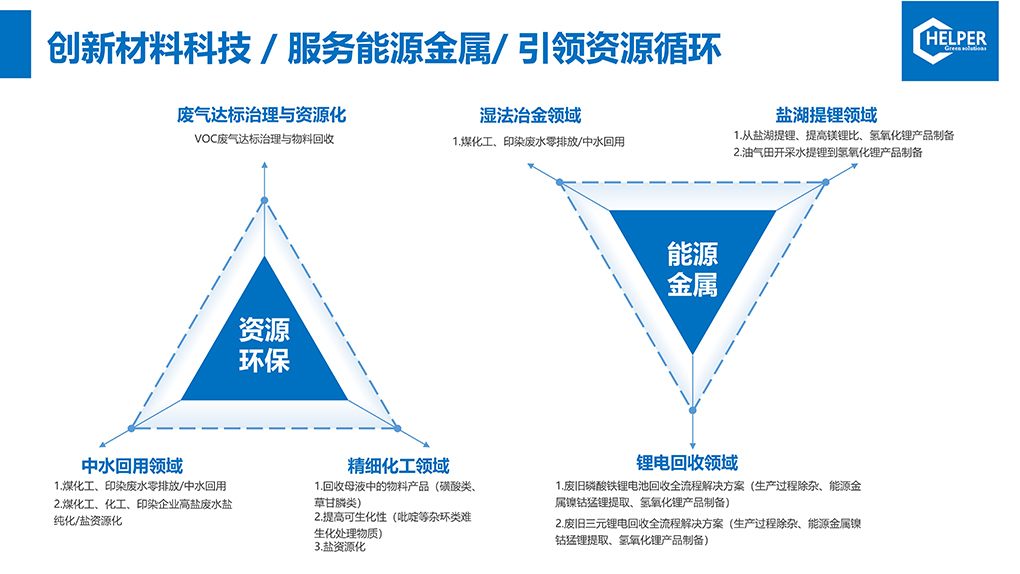
Jiangsu Haipu Functional Materials Co., Ltd. is a high-tech enterprise dedicated to the research and development of high-performance adsorbents, catalysts, and their process applications. With a series of independently developed high-performance adsorbents and catalysts as the core, combined with independently developed process technology, Haipu has become a professional solution provider in the fields of environmental governance and resource recycling.
Advantages of Haipu's bidding scheme:
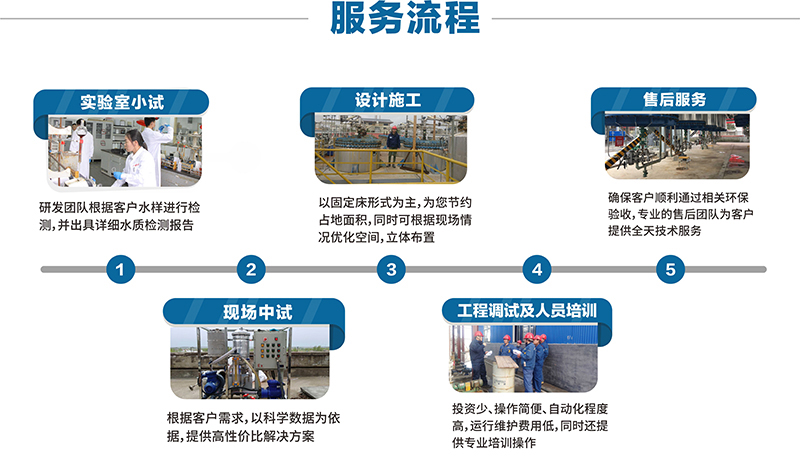
(1) Simple process, easy operation, low labor intensity, small footprint, and low investment. Low operating costs, stable and reliable treatment effects, and can withstand certain water quality fluctuations and impacts.
(2) Mild usage conditions, long equipment lifespan, simple maintenance, and minimal subsequent investment. This process produces no hazardous waste and no secondary pollution, making it a green and environmentally friendly solution.
(3) The upgrading effect is good, with strong removal effect on difficult to degrade benzene rings and heterocyclic organic compounds, and the process can be flexibly adjusted according to water quality.
4. Application Cases
Case: Wastewater decolorization and COD removal project in a certain printing and dyeing chemical park wastewater treatment plant: COD concentration is around 400mg/L, treatment requirements are COD<80mg/L, and color removal is required. After being treated by the Haipu adsorption process, the chromaticity is basically removed, and the COD is reduced to within 80mg/L, which is stable and meets the standard.
Table 1 Comparison of Raw Water and Outlet Water
| Source | pH | COD | Appearance |
| Absorb incoming water | 7.5 | 384mg/L | Yellow |
| Effluent | 6.8 | 60mg/L | Colourless |

 CN
CN EN
EN
 es
es