1. Background of Ammonia Nitrogen Wastewater Treatment
With the continuous improvement of our people's living materials and industrial and agricultural production levels, the discharge of nitrogen containing wastewater has also increased sharply. High concentration nitrogen-containing wastewater has certain toxicity to humans, animals, and plants, seriously endangering the ecological environment. Therefore, the treatment of ammonia nitrogen wastewater has become a global issue that urgently needs to be addressed.
1) The source of ammonia nitrogen wastewater treatment
Among numerous polluted water bodies, wastewater containing ammonia nitrogen is a major form of sewage. Ammonia nitrogen is the main form of nitrogen pollution in water bodies, mainly in the form of ammonium ions and free ammonia molecules. It mainly comes from three aspects: industrial wastewater, agricultural wastewater, and domestic wastewater. Among them, the discharge of ammonia nitrogen wastewater in industrial wastewater is the highest. According to China's pollution source survey statistics, industries such as petroleum, metal smelting, chemical industry, and food processing are the main industries for ammonia nitrogen wastewater discharge, accounting for 85.9% of the ammonia nitrogen discharge in industrial wastewater.
2) The hazards of ammonia nitrogen wastewater treatment
Ammonia nitrogen is the main form of nitrogen pollution in water bodies, and the ammonia nitrogen in various wastewater mainly exists in two forms: organic ammonia nitrogen and inorganic ammonia nitrogen. Organic ammonia nitrogen mainly exists in the form of organic compounds such as alcohol amines, amides, fatty amines, and aromatic amines. Inorganic ammonia nitrogen mainly refers to ammonia nitrogen that exists in the form of ammonium ions under acidic conditions, partially in the form of free ammonia molecules under alkaline conditions, and partially in the form of ammonium ions. Many studies have shown that ammonia nitrogen is a major pollutant that causes eutrophication of water bodies, and the high concentration of ammonia nitrogen discharged into Rivers and Lakes will cause some harmful aquatic organisms to multiply in an anaerobic environment, affect the living environment of fish in the water, and even cause poisoning or death of fish, causing some damage to the aquaculture industry. Moreover, when the concentration of ammonia nitrogen in water is high, substances harmful to human health such as nitrate and nitrite will be produced in the water.
3) Current situation of ammonia nitrogen wastewater treatment
The new technology for treating ammonia nitrogen wastewater is still in the research stage. So far, the treatment technologies for ammonia nitrogen wastewater mainly include biological treatment and physicochemical treatment. Biological treatment methods mainly include A/O process, A 2O process, nitrification denitrification process, SBR process, anaerobic ammonium oxidation process, UCT process, etc; The physical and chemical treatment methods mainly include breakpoint chlorination, ion exchange, advanced oxidation, chemical precipitation, and blow off.
At present, the treatment methods for high concentration ammonia nitrogen in industrial wastewater mainly use physical and chemical methods for pretreatment, and other methods for subsequent treatment. Although good treatment effects can be achieved, there are still problems such as scaling and secondary pollution.
The biological method has the advantages of simple operation, stable effect, no secondary pollution, and economy. However, its disadvantages include a large footprint, treatment efficiency that is easily affected by temperature and toxic substances, and high requirements for operation and management. At the same time, the inhibitory effects of certain substances on microbial activity and reproduction should be considered in industrial applications. In addition, high concentrations of ammonia nitrogen have inhibitory effects on the biological nitrification process.
2. Haipu Ammonia Nitrogen Wastewater Treatment Plan
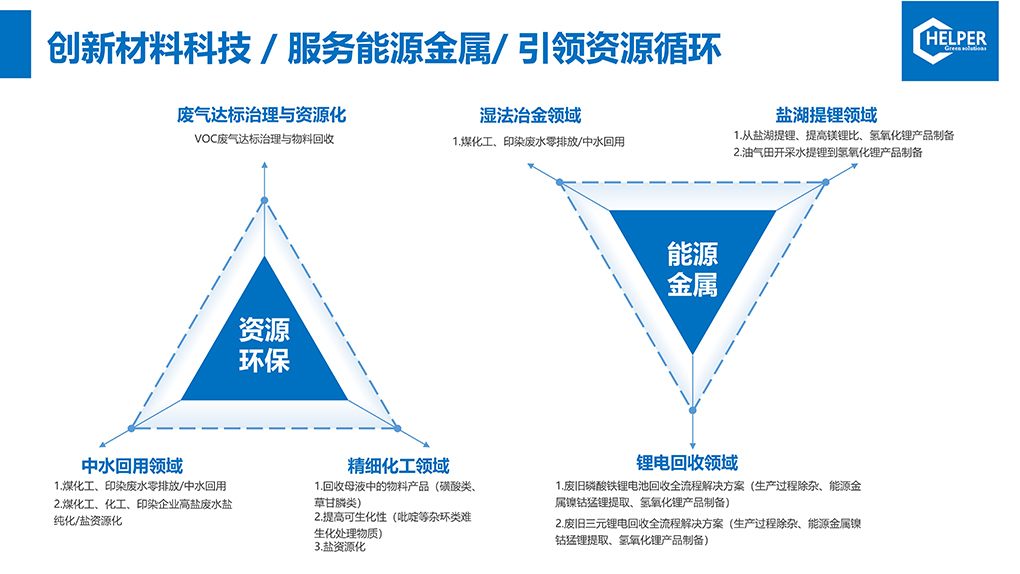
Jiangsu Haipu Functional Materials Co., Ltd. is a high-tech enterprise dedicated to the research and development of high-performance adsorbents, catalysts, and their process applications. With a series of independently developed high-performance adsorbents and catalysts as the core, combined with independently developed process technology, Haipu has become a professional solution provider in the fields of environmental governance and resource recycling. At the same time, taking it as our responsibility to help industrial enterprises meet environmental standards and achieve sustainable development through resource utilization, we adopt modular lean production and develop engineering solutions based on research and development data. Relying on independently developed high-performance adsorbents and rigorous and comprehensive process development, Haipu has accumulated many treatment cases in wastewater treatment, solving development problems for many enterprises and creating value.
The use of adsorption method to treat ammonia nitrogen wastewater can efficiently remove ammonia nitrogen from the wastewater, meet the requirements of enterprises, and reduce the pressure of subsequent wastewater treatment. The advantages of adsorption method include:
(1) Efficiently remove ammonia nitrogen from wastewater and strictly control the concentration of ammonia nitrogen in the treated wastewater.
(2) Greatly reduce the cost of wastewater treatment for enterprises.
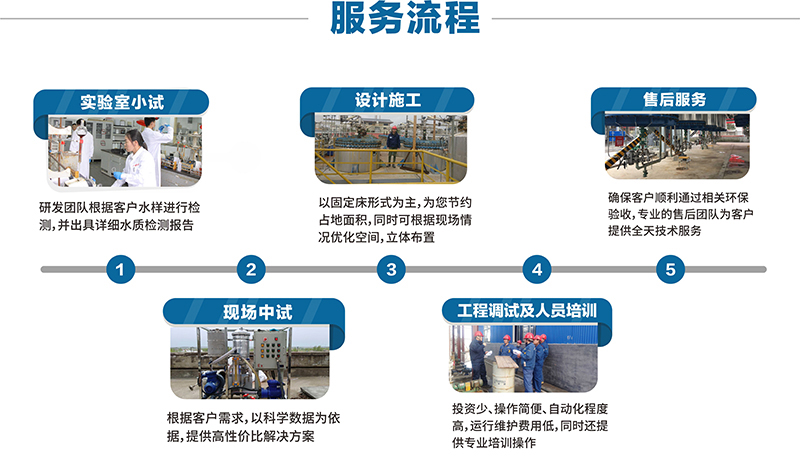
(3) Conduct experiments on the sampling samples of waste acid generated on the enterprise site, based on technology, and design adsorption processes based on experiments. The matching degree between wastewater and processes is 100%.
(4) The equipment occupies less land, has a compact structure, and requires less investment in civil engineering and equipment; The desorption agent is applied multiple times and concentrated step by step, resulting in high drug utilization and low operating costs.
(5) It can be implemented in module component form, flexibly adjusted according to production capacity, and easy to install.
(6) Advanced and mature technology, no secondary pollution, strong technical support, and rich engineering application experience.
3. Application case of ammonia nitrogen wastewater treatment
Case: The concentration of ammonia nitrogen in the wastewater produced by a certain enterprise is around 450mg/L. After biochemical treatment, the ammonia nitrogen cannot be effectively removed, and the concentration reaches 150mg/L. After treatment with the Haipu adsorption process, the ammonia nitrogen is greatly reduced, and the removal rate reaches over 90%.
Table 1 Comparison of Raw Water and Outlet Water
| Source | Amount of water | NH3-N | Appearance |
| Absorb incoming water | 300m³/d | 445mg/L | Light yellow, turbid |
| Effluent | 300m³/d | 27mg/L | Light yellow, clear |
| Removal rate | 94% |
 CN
CN EN
EN
 es
es