Abstract: This article mainly introduces the current treatment status of electroplating wastewater containing heavy metals, various electroplating wastewater treatment methods and their advantages and disadvantages. Among these methods, adsorption method is elaborated in detail, and some engineering application cases are listed to demonstrate the advantages of adsorption method in treating electroplating wastewater containing heavy metals and utilizing metal ions in resources, which meets the sustainable development requirements of enterprise resource utilization, reduction and harmlessness.
Keywords: electroplating wastewater; Resource utilization; Adsorption method; Electroplating wastewater treatment
Preface:
The composition of wastewater generated in electroplating production is very complex. In addition to cyanide (CN -) and acidity, heavy metals are a potentially hazardous type of wastewater in the electroplating industry, which seriously harm the environment and human health. The main sources of electroplating wastewater include: plating cleaning water, plating solution filtration and washing water, discharge of waste plating solution, waste liquid caused by "running, emitting, dripping, and leaking" during process operations and equipment, and wastewater generated from washing equipment, flooring, etc. The wastewater contains heavy metal ions and must be treated to meet discharge standards.
The treatment of electroplating wastewater is widely valued both domestically and internationally. Currently, there are various treatment technologies available on the market, which eliminate and reduce pollutant emissions by transforming toxic wastewater into non-toxic, harmful wastewater into harmless, recycling precious metals, and recycling water. With the rapid development of the electroplating industry and the increasing demand for environmental protection, the treatment of electroplating wastewater has entered the stage of clean production technology, total quantity control, and integration of circular economy. Resource recycling and closed-loop circulation are the mainstream directions of development.
The commonly used methods for treating electroplating wastewater in China include chemical, biological, physicochemical, and electrochemical methods. Chemical methods rely on oxidation-reduction reactions or neutralization precipitation reactions to decompose toxic and harmful substances into non-toxic and harmless substances, or directly remove heavy metals from wastewater through precipitation or air flotation. The disadvantage is that the dosage of chemicals is large, producing a large amount of solid waste and increasing the salt content in the wastewater. Biological method is a new technology for treating electroplating wastewater: some microbial metabolites can change the valence state of heavy metal ions in the wastewater, and the microbial community itself also has strong biological flocculation and electrostatic adsorption effects, which can adsorb metal ions, allowing heavy metals to enter the sludge cake after solid-liquid separation, thereby achieving standard discharge or reuse of wastewater; The main advantage of this method is that the project operation cost is not high, but the biological growth environment is not easy to control, often resulting in a large number of poisoning deaths due to changes in water quality. The reaction efficiency between functional bacteria and metal ions in wastewater is not high, and the consumption of culture medium for cultivating bacterial strains is high, resulting in high treatment costs. Electrochemical methods such as electrolysis, primary cell method, electrodialysis, electrocoagulation air flotation, etc. The physical chemical method is widely used in industry, which uses methods such as ion exchange, membrane separation, or adsorbents to remove impurities from electroplating wastewater.
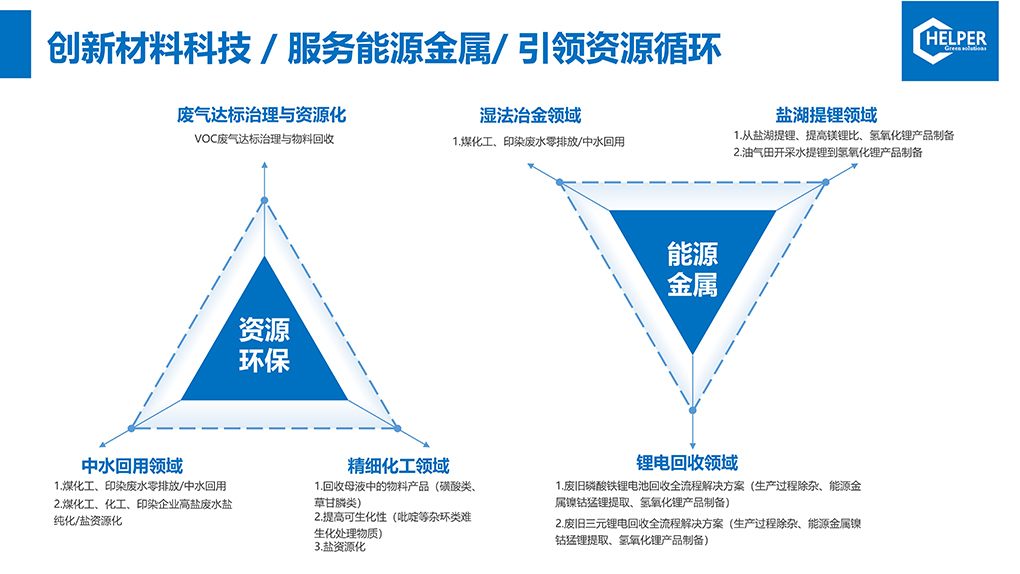
The most widely used adsorbent currently is activated carbon, mainly used for wastewater containing chromium and cyanide. Its characteristics are gentle treatment and regulation, safe operation, and deep purification of treated water that can be reused. However, this method has the problems of complex activated carbon regeneration and inability to directly recycle the regeneration solution back to the plating tank. The adsorption capacity is small and not suitable for wastewater with high harmful substance content. To solve this problem, Haipu Functional Materials has independently developed various heavy metal nano adsorption materials, which have the advantages of large adsorption capacity, renewable use, and long service life. In addition, when applied in engineering, the adsorption end can be designed modularly, which can be flexibly adjusted according to production capacity, save land, compact structure, and have the advantages of high automation, short process flow, simple operation, and low energy consumption. This makes up for the shortcomings of adsorption methods and expands their application in electroplating wastewater treatment. It has multiple wastewater treatment cases in the electroplating industry.
Requirements for Electroplating Wastewater Treatment
At present, the overall wastewater discharge standards for electroplating enterprises mainly refer to the national "Pollutant Discharge Standards for Electroplating Industry" (GB21900-2008), which stipulates that existing facilities shall implement the water pollutant discharge concentration limits specified in Table 1 from January 1, 2009 to June 30, 2010, and newly established enterprises shall implement the water pollutant discharge concentration limits specified in Table 2. According to the requirements of environmental protection work, in areas where the national development density is already high, the environmental carrying capacity is beginning to weaken, or the environmental capacity is small, the ecological environment is fragile, and serious environmental pollution problems are prone to occur and special protection measures need to be taken, the pollutant discharge behavior of facilities shall be strictly controlled. Facilities in the above areas shall implement the advanced control technology limits for water pollutant discharge specified in Table 3, and special discharge limits for water pollutants shall be implemented. Regional scope, time, As stipulated by the competent administrative department of environmental protection under the State Council or the provincial people's government.
Table 1 Water Pollution Emission Limits for Existing Enterprises
| Serial Number | Contaminants | Emission Concentration Limit | Location of Pollutant Emission Monitoring |
| 1 | Total chromium (mg/L) | 1.5 | Workshop or production facility wastewater discharge outlet |
| 2 | Hexavalent chromium (mg/L) | 0.5 | Workshop or production facility wastewater discharge outlet |
| 3 | Total nickel (mg/L) | 1 | Workshop or production facility wastewater discharge outlet |
| 4 | Total cadmium (mg/L) | 0.1 | Workshop or production facility wastewater discharge outlet |
| 5 | Total silver (mg/L) | 0.5 | Workshop or production facility wastewater discharge outlet |
| 6 | Total lead (mg/L) | 1 | Workshop or production facility wastewater discharge outlet |
| 7 | Total mercury (mg/L) | 0.05 | Workshop or production facility wastewater discharge outlet |
| 8 | Total copper (mg/L) | 1 | Enterprise wastewater discharge outlet |
| 9 | Total zinc (mg/L) | 2 | Enterprise wastewater discharge outlet |
| 10 | Total iron (mg/L) | 5 | Enterprise wastewater discharge outlet |
| 11 | Total aluminum (mg/L) | 5 | Enterprise wastewater discharge outlet |
| 12 | PH value | 6~9 | Enterprise wastewater discharge outlet |
| 13 | Suspended solids (mg/L) | 70 | Enterprise wastewater discharge outlet |
| 14 | Chemical oxygen demand (CODCr, mg/L) | 100 | Enterprise wastewater discharge outlet |
Table 2 Water Pollution Discharge Limits for Newly Established Enterprises
| Serial Number | Contaminants | Emission Concentration Limit | Location of Pollutant Emission Monitoring |
| 1 | Total chromium (mg/L) | 1 | Workshop or production facility wastewater discharge outlet |
| 2 | Hexavalent chromium (mg/L) | 0.2 | Workshop or production facility wastewater discharge outlet |
| 3 | Total nickel (mg/L) | 0.5 | Workshop or production facility wastewater discharge outlet |
| 4 | Total cadmium (mg/L) | 0.05 | Workshop or production facility wastewater discharge outlet |
| 5 | Total silver (mg/L) | 0.3 | Workshop or production facility wastewater discharge outlet |
| 6 | Total lead (mg/L) | 0.2 | Workshop or production facility wastewater discharge outlet |
| 7 | Total mercury (mg/L) | 0.01 | Workshop or production facility wastewater discharge outlet |
| 8 | Total copper (mg/L) | 0.5 | Enterprise wastewater discharge outlet |
| 9 | Total zinc (mg/L) | 1.5 | Enterprise wastewater discharge outlet |
| 10 | Total iron (mg/L) | 3 | Enterprise wastewater discharge outlet |
| 11 | Total aluminum (mg/L) | 3 | Enterprise wastewater discharge outlet |
| 12 | PH value | 6~9 | Enterprise wastewater discharge outlet |
| 13 | Suspended solids (mg/L) | 50 | Enterprise wastewater discharge outlet |
| 14 | Chemical oxygen demand (CODCr, mg/L) | 80 | Enterprise wastewater discharge outlet |
Table 3 Special Emission Limits for Water Pollution
| Serial Number | Contaminants | Emission Concentration Limit | Location of Pollutant Emission Monitoring |
| 1 | Total chromium (mg/L) | 0.5 | Workshop or production facility wastewater discharge outlet |
| 2 | Hexavalent chromium (mg/L) | 0.1 | Workshop or production facility wastewater discharge outlet |
| 3 | Total nickel (mg/L) | 0.1 | Workshop or production facility wastewater discharge outlet |
Cases of electroplating wastewater treatment
2.1 Electroplating Enterprise Wastewater Deep Nickel Removal Treatment Project
A certain electroplating enterprise that produces standard parts and fasteners has a wastewater treatment capacity of 20t/d. The original wastewater treatment of the enterprise adopts the Fenton oxidation combined with chemical precipitation method, but the nickel content in the effluent has not reached the stable standard, which limits the production capacity. Jiangsu Haipu uses nano adsorbent materials to deeply remove nickel from the wastewater. The nickel content in the effluent is less than 0.05mg/L, far below the discharge requirement of the enterprise (0.1mg/L). Solving the problem of excessive nickel in the enterprise wastewater is beneficial to the sustainable development of the enterprise.
Table 4 Adsorption treatment effect of nickel containing wastewater
| Inlet concentration (mg/L) | Outlet concentration (mg/L) | Removal Rate |
| 1.2 | 0.05 | 95.80% |
| 1.2 | 0.04 | 96.60% |
| 1.2 | 0.05 | 95.80% |
2.2 Electroplating Industry Park Waste Acid Zinc Removal Treatment Project
A certain standard parts industrial park generates zinc containing waste acid during the plating production process, with a waste acid treatment capacity of 100t/d. The original treatment method of the enterprise is high-temperature roasting to recover hydrochloric acid, which consumes a lot of energy. Jiangsu Haipu uses nano adsorption materials to remove zinc from the wastewater, and the zinc content in the effluent is less than 1500mg/L, meeting the enterprise's requirements for waste acid reuse.
Table 5 Adsorption treatment effect of zinc containing waste acid
| Inlet concentration (mg/L) | Outlet concentration (mg/L) | Removal Rate |
| 8000 | 1200 | 85% |
| 8000 | 1300 | 83.70% |
| 8000 | 1250 | 84.30% |
2.3 Waste acid and lead removal treatment project for metal processing enterprises
A steel wire rope and steel pipe production enterprise generates lead containing waste acid during the production process, with a treatment capacity of 50t/d. The original treatment method of the enterprise was outsourced as hazardous waste, which resulted in high treatment costs. Jiangsu Haipu used nano adsorption materials to remove lead from the wastewater, and the lead content in the effluent was less than 50mg/L. The treated waste acid can be reused in the production line, achieving high economic value.
Table 6 Adsorption treatment effect of lead containing waste acid
| Inlet concentration (mg/L) | Outlet concentration (mg/L) | Removal Rate |
| 2000 | 25 | 98.75% |
| 2000 | 28 | 98.60% |
| 2000 | 24 | 98.80% |
2.4 Treatment project for iron removal and resource utilization of passivation solution in electroplating enterprises
A certain electroplating processing enterprise serving the electronics and communication industries generates 1000 cubic meters of passivation solution wastewater every day, which contains a large amount of iron, chromium, zinc, etc. Using Jiangsu Haipu's nano adsorbent material, the electroplating solution was subjected to deep iron removal treatment. The iron content in the effluent was reduced to below 0.5mg/L, and some zinc was removed. The treated passivation solution can be reused in production, greatly increasing the economic benefits of the enterprise.
Table 7 Iron removal effect of passivation solution
| Inlet iron concentration (mg/L) | Iron concentration in effluent (mg/L) | Iron removal rate |
| 520 | 0.39 | 99.93% |
| 520 | 0.19 | 99.96% |
Conclusion
Electroplating, petrochemicals, and pharmaceuticals are the three major polluting industries in the world today. It can be said that the standard discharge of electroplating wastewater treatment in the 20th century was not thorough. The trend in the development of electroplating wastewater treatment in the 21st century should be to completely eliminate pollution and strive for zero discharge. In the future treatment of electroplating wastewater, we should start from reality, choose reasonable treatment methods, carry out economically effective comprehensive prevention and control of electroplating wastewater, strive for the coordination and unity of environmental benefits, economic benefits, and social benefits, and truly achieve clean production. The high separation efficiency special adsorbent produced by Jiangsu Haipu Functional Materials Co., Ltd. has been widely used in the treatment and resource utilization of electroplating wastewater. It has the advantages of recycling, turning harm into benefit, and recycling water. In the future, it will definitely solve problems for more and more electroplating enterprises and make more contributions to pollution control.

 CN
CN EN
EN
 es
es