China is a major producer and user of pesticides, with low technological content, outdated production processes, and aging equipment, resulting in low utilization of raw materials and significant losses. Pesticide production wastewater has always been toxic, high in concentration, and difficult to treat, making pesticide wastewater treatment a key focus of social attention.
In China, pesticide wastewater is mostly composed of organic phosphorus pesticides, with a wide variety, complex production processes, numerous by-products, large emissions, heavy color, unpleasant odor, and difficult biodegradability. The treatment of pesticide wastewater is fraught with difficulties.
It can be summarized as the following points.
(1) The concentration of organic matter is high: the COD of comprehensive pesticide wastewater before treatment is usually between several thousand mg/L and tens of thousands of mg/L, while the COD of synthetic wastewater during pesticide production can reach tens of thousands of mg/L, sometimes even hundreds of thousands of mg/L.
(2) The composition of pollutants is complex: pesticide production involves many organic chemical reactions, and many wastewater not only contains raw materials, but also many by-products and intermediate products.
(3) Highly toxic and difficult to biodegrade: Chlorpyrifos production wastewater contains compounds such as trichloropyridinol and diethylaminopyrimidinol, which are difficult to degrade by microorganisms. At the same time, some wastewater not only contains pesticides and intermediates, but also toxic substances such as benzene rings, phenols, arsenic, mercury, etc., which inhibit biodegradation.
(4) Odor and irritant odor: It is irritating to the respiratory tract and mucous membranes of humans, and in severe cases, can cause poisoning symptoms, endangering physical health.
(5) Unstable water quality and quantity: Due to unstable production processes and operational management issues, a large amount of wastewater per ton of product is discharged, which poses certain difficulties for wastewater treatment.
Treatment technology for pesticide wastewater
Pesticide wastewater is mainly composed of organic phosphorus wastewater. In recent years, its treatment has mainly focused on decomposing and removing organic sulfur and phosphorus from wastewater, which can be roughly divided into physical treatment, chemical treatment, and biological treatment. Physical treatment methods include adsorption, extraction, gas extraction, coagulation and sedimentation, while chemical treatment methods include oxidation, reduction, hydrolysis, and other methods.
Physical methods
Physical methods include adsorption, stripping, blow off, flocculation, sedimentation, extraction, ultrasonic treatment, etc.
Adsorption method
Adsorption is the process of a substance adhering to the surface of another substance. The commonly used adsorbents in the wastewater treatment industry include macroporous resin, activated carbon, fly ash, and bentonite. Among them, macroporous resin and activated carbon are limited in use due to their high prices, and there are issues with activation and regeneration. Although the adsorption effect of fly ash is not as good as the former, it is easy to treat and cost-effective, and can achieve the effect of treating waste with waste. Currently, it is widely used.
Stripping and Blowoff Method
Gas extraction and stripping method is the process of blowing gas into wastewater to convert dissolved gases or volatile substances into gas, thereby purifying the wastewater.
Flocculation and sedimentation method
Flocculation sedimentation is a method of separating large particles from water by adding coagulants to disrupt the stability of suspended particles in wastewater, eliminate repulsive forces between particles, allow particles to come into contact and adsorb together, and then use coagulants for bridging and net trapping. This method is widely used in wastewater treatment due to its simple operation and low cost. There are two main types of existing flocculants: inorganic flocculants and organic flocculants. Inorganic flocculants mainly include aluminum sulfate, polyaluminum chloride, and polymeric iron sulfate, while organic flocculants mainly include polyacrylamide and formaldehyde dicyandiamide.
Extraction method
Using extraction agents that are insoluble in water but can effectively dissolve pollutants, allowing them to come into full contact with wastewater, and utilizing the different solubility of pollutants in water and solvents to achieve the goal of separating and purifying wastewater. Commonly used methods include chelation extraction and liquid membrane extraction.
Ultrasonic treatment method
The principle of ultrasonic technology is to generate cavitation effect through ultrasonic action to accelerate the thermal motion of molecules, destroy the stability of organic particles, and enable more effective coagulation with coagulants. Difficult to degrade organic pollutants are decomposed into small molecules that are acceptable to the environment, thereby improving the biodegradability of wastewater.
Chemical methods
Chemical methods refer to the removal of organic pollutants by adding chemical reagents or conducting chemical reactions to pesticide wastewater. They include conventional chemical oxidation methods, combustion methods that are rarely used due to their high energy consumption and tendency to produce secondary pollutants, and rapidly developing methods such as supercritical water oxidation, electrochemical oxidation, and photocatalytic degradation in recent years.
Ozone oxidation method
Ozone has a high oxidation-reduction potential in water and strong oxidation ability. It can partially break the cyclic or long-chain molecules of toxic and difficult to biodegrade organic matter, thereby turning large molecules into small molecules and generating easily biodegradable substances, eliminating or reducing their toxicity, and improving the biodegradability of wastewater. Ozone can degrade organic phosphorus pesticide wastewater to a certain extent, but it can produce more toxic degradation products. Due to the complexity, high investment, and high power consumption of ozone production equipment, the cost of water treatment has increased, thereby limiting the application of this technology. Generally, it is combined with other oxidation technologies.
Fenton reagent oxidation method
The Fenton method utilizes Fe2+as a catalyst to oxidize and decompose H2O2 under acidic conditions, generating hydroxyl radicals that ultimately oxidize organic pollutants into water, carbon dioxide, inorganic acids, and salts. The biggest advantage of the Fenton reaction is that it does not cause secondary pollution to the environment. The study on the degradation of monocrotophos by Fenton reagent shows that Fenton reagent can achieve a high COD removal rate in a short period of time, and the reaction conforms to quasi first order reaction.
Wet oxidation method
It is an advanced oxidation technology that effectively treats high concentration, toxic, harmful, and biologically recalcitrant wastewater. Organic phosphorus pesticide wastewater is continuously exposed to air under high temperature and pressure, and toxic organic compounds are oxidized and decomposed into non-toxic substances. Organic phosphorus compounds are converted into H3PO4, while H2S and organic sulfur are oxidized into H2SO4.
Electrocatalytic oxidation method
Electrocatalytic oxidation treatment technology is an advanced electrochemical oxidation process that utilizes an external electric field to achieve the desired removal of pollutants or recovery of useful materials from wastewater through a series of designed chemical reactions, electrochemical processes, or physical processes in a specific electrochemical reactor. In the reaction process, direct oxidation and indirect oxidation generally occur simultaneously.
Photocatalytic oxidation method
TiO2, as an emerging photocatalyst, has attracted the interest of environmental workers in various countries. Under UV irradiation, rutile TiO2 can generate highly oxidative hydroxyl radicals, which can oxidize and degrade organic matter into CO2, H2O, and inorganic substances. The degradation rate is fast and there is no secondary pollution, providing a new approach for the degradation and treatment of organophosphorus pesticides.
Supercritical water oxidation method
Supercritical water oxidation technology (SCWO) is a new type of oxidation technology that can completely destroy the structure of organic pollutants. Its principle is to use supercritical water as a medium to oxidize and decompose organic matter. Due to the extremely low dielectric constant and good diffusion and transfer properties of supercritical water, organic pollutants and oxygen are completely miscible and undergo complete oxidation similar to incineration at supercritical water temperature>374.3 ℃ and pressure P>22Mpa. However, at present, there are still problems such as harsh reaction conditions (high temperature, high pressure), equipment corrosion, low solubility of solid particles, especially salt substances, under supercritical conditions, and easy blockage of reactor pipelines.
High performance adsorbents have the following advantages
Wide applicability and good practicality
This method can be applied to wastewater concentrations ranging from a few to several thousand ppm, and the adsorption is not affected by the inorganic salts contained in the solution. It can also be applied in non-aqueous systems.
High adsorption efficiency, easy desorption and regeneration
For pesticide wastewater, after adsorption, it can generally meet or approach the discharge standards, with a material adsorption rate of over 99%, without producing secondary pollutants, and can significantly reduce COD values. Common acid-base or organic solvents are used for desorption, and the desorption rate can generally reach 92%.
Stable performance and long service life
The material has high resistance to oxidation, acid and alkali, and organic solvents, and can be used for a long time below 150 ℃. Under normal circumstances, the annual material loss rate is less than 5%.
Beneficial for comprehensive utilization and turning waste into treasure
The raw material intermediates or products present in wastewater generally have higher prices. The adoption of this method can largely recycle and use, which will generate considerable economic benefits. Usually, the recycling value is equivalent to the daily operating expenses, and some have surplus.
Easy to operate, low energy consumption
Using this technology, the process is simple, no special equipment is required, the technology is easy to master, and the consumption of thermal and electrical energy is relatively low during operation.
Case Study
The waste salt of paraquat generated in the production of a certain enterprise is mainly ammonium chloride waste salt, which contains a large amount of paraquat, about 500ppm. After adsorption process treatment, the content of paraquat in the waste salt solution (40% dissolved) is greatly reduced to below 1ppm, thus meeting the conditions for reuse and transforming from hazardous waste to solid waste.
| Name | Paraquat content in 40% saline solution |
| Absorb incoming water | 477.9ppm |
| Adsorbed water | 0.7ppm |
| Removal rate | 99.85% |
In the production of a certain enterprise's products, the wastewater from ammonification reaction water washing and deamination contains a large amount of ammonia nitrogen and COD. After treatment with the Haipu adsorption process, the ammonia nitrogen and COD in the water are greatly reduced, and the removal rate reaches over 80%.
| Name | COD | Ammonia nitrogen |
| Absorb incoming water | 9600ppm | 1430ppm |
| Adsorbed water | 1440ppm | 216ppm |
| Removal rate | 85% | 84.90% |
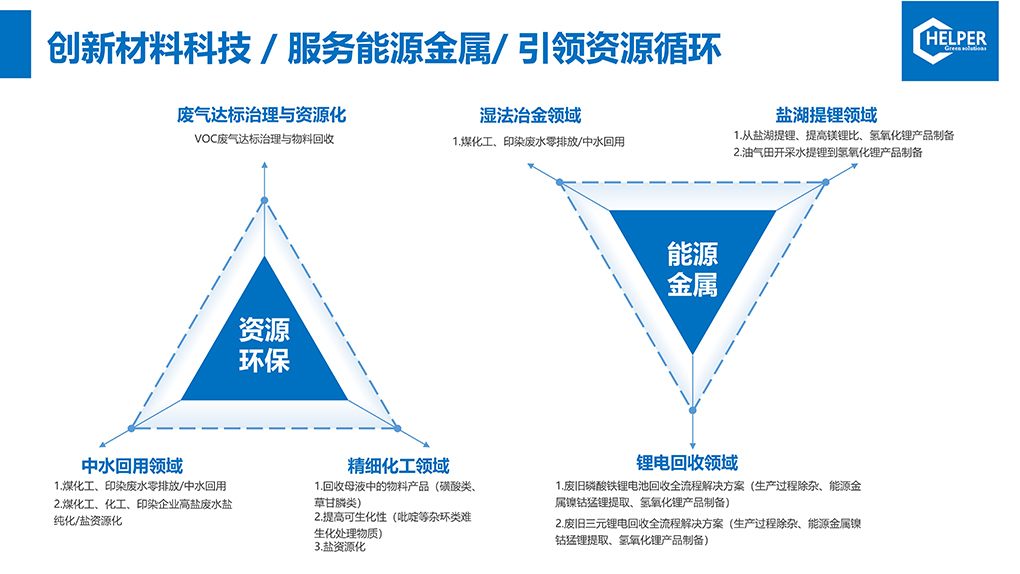
The above is an introduction to the relevant content. We hope it will be more helpful for everyone to understand this issue. If you are interested or need in this area, you can consult Jiangsu Haipu Functional Materials Co., Ltd., which is a high-tech enterprise specializing in the research and development of high-performance adsorbents, catalysts, and their process applications. With a series of independently developed high-performance adsorbents and catalysts as the core, combined with independently developed process technology, Haipu has become a professional solution provider in the fields of environmental governance and resource recycling. At the same time, taking it as our responsibility to help industrial enterprises meet environmental standards and achieve sustainable development through resource utilization, we adopt modular lean production and develop engineering solutions based on research and development data. Relying on independently developed high-performance adsorbents and rigorous and comprehensive process development, Haipu has accumulated many treatment cases in pesticide wastewater treatment, solving development problems for many enterprises and creating value.

 CN
CN EN
EN
 es
es