The printing and dyeing industry is a major energy and water consumer, with the national discharge of printing and dyeing wastewater accounting for about 35% of the total industrial wastewater discharge. It has the characteristics of large drainage volume, complex pollutant composition, fast changes in water quality and quantity, and poor biodegradability. At present, relevant data shows that the reuse rate of printing and dyeing wastewater in China is only about 10%. Therefore, upgrading wastewater discharge standards and implementing reclaimed water reuse not only save a large amount of fresh water, but also directly reduce wastewater discharge, which is an important lever for achieving total pollution control and energy conservation and emission reduction, and is of great significance for promoting the sustainable development of the printing and dyeing industry.
1 The current status of treatment and recycling technology for printing and dyeing wastewater in China
1.1 Lack of efficient processing and recycling technologies
The development of China's textile industry started relatively late, but the printing and dyeing industry has developed rapidly. In the early stage of economic construction, China did not give sufficient attention to the deep treatment and recycling of water. After China's accession to the World Trade Organization, with the continuous development of China's textile printing and dyeing industry, the amount of water resources and wastewater discharge gradually increased. Only then did the deep treatment and recycling of wastewater in the printing and dyeing industry receive attention from various levels of society. The current research on the treatment and recycling technology of printing and dyeing wastewater in China is still in its early stages, and many recycling technologies are still in the experimental process, lacking practical applications. Moreover, the current processing and recycling technologies have low efficiency, with an effective rate of only about 50%, which cannot meet the needs of wastewater treatment and recycling in the textile printing and dyeing industry.
1.2 Lack of key technology research
The deep treatment and recycling of wastewater in the printing and dyeing industry mainly focuses on meeting the standards for wastewater treatment. Physical methods such as separation, adsorption, oxidation, and biological treatment technologies and processes are usually used for deep treatment and recycling of wastewater. However, research on key technologies such as salinity and hardness in the printing and dyeing industry wastewater is relatively weak, especially in terms of the impact of water quality on the wastewater treatment and recycling system, and there is still a lack of systematic understanding. Therefore, there is still great room for development in the deep treatment and recycling of printing and dyeing wastewater in China.
2 Main technologies for deep treatment and recycling of printing and dyeing wastewater
2.1 Physical Processing and Recycling Technology
2.1.1 Adsorption treatment technology
In the process of using adsorption treatment technology to deeply treat and recover wastewater from the printing and dyeing industry, it is necessary to pass the wastewater through a filter bed composed of adsorbents, and use the porous structure of the adsorbents to adsorb and filter pollutants in the wastewater. Activated carbon is usually used as the main adsorbent in adsorption treatment. Activated carbon has a porous structure, and its adsorption function is greatly affected by the surface area of activated carbon. The larger the surface area, the stronger the adsorption function. Activated carbon adsorbents also have strong decolorization performance. However, activated carbon adsorbents also have some drawbacks, mainly manifested in their insufficient adsorption capacity for water-based dyes. In addition, the market purchase price of activated carbon is usually high, which increases the cost of printing and dyeing wastewater treatment and limits the application of advanced wastewater treatment.
2.1.2 Membrane Separation Technology
Membrane separation technology utilizes the differences in filtration performance of membranes for different substances, and commonly used membrane separation technologies in the deep treatment and recycling of wastewater in the printing and dyeing industry include microfiltration, ultrafiltration, nanofiltration, and reverse osmosis. Microfiltration and ultrafiltration are often used in the pre-treatment of nanofiltration and reverse osmosis.
2.1.3 Micro flocculation direct filtration method
Micro flocculation direct filtration technology has become the main wastewater treatment and recovery process in developed countries, and this technology has a good effect on colored water quality at low temperatures. Micro flocculation direct filtration technology is a process of adding coagulants to printing and dyeing wastewater before it is filtered through a filter tank. After the reaction is completed by the filter material, sedimentation and interception are carried out to achieve deep treatment of the wastewater. This technology has high processing efficiency and good economic benefits. This process technology can be independently applied to wastewater treatment in the printing and dyeing industry, or integrated with other process technologies to achieve better post-treatment effects.
2.2 Advanced oxidation treatment and recovery technology
2.2.1 Chemical oxidation technology
Chemical oxidation technology is the use of chemical oxidants in the deep treatment of printing and dyeing wastewater to thoroughly decolorize the wastewater, change the water quality of the wastewater, and improve the biodegradability of the wastewater. This method has a good color removal effect, and the equipment used is relatively simple with limited footprint. Moreover, through the optimization of equipment production technology and process improvement, automation control can be achieved, reducing manual operation costs and improving economic benefits in operation. However, this technology has a higher cost of oxidants and is more suitable for treating small amounts of wastewater.
2.2.2 Photocatalytic oxidation technology
Photocatalytic oxidation technology utilizes the strong oxidation ability of strong oxidants under UV radiation to achieve the treatment of printing and dyeing industry wastewater. This technology has a high degree of oxidation of industrial wastewater, does not cause secondary pollution, and has relatively low energy consumption. Photocatalysts usually use photosensitive semiconductors, which have ideal application effects. The disadvantage of photocatalytic oxidation technology is that the light transmission performance of the printing and dyeing industry wastewater itself is poor, and the light utilization rate is low, which restricts the application of photocatalytic technology in the deep treatment of printing and dyeing industry wastewater.
2.2.3 Electrochemical oxidation technology
Electrochemical oxidation technology utilizes the highly oxidative properties of free radicals to degrade pollutants in printing and dyeing industry wastewater. The formation of free radicals occurs in a fixed reactor through chemical reactions under the influence of an external electric field. Electrochemical oxidation technology for treating printing and dyeing industry wastewater has the characteristics of flexible operation, and this technology is easy to operate without causing pollution to the environment.
2.3 Biological treatment and recycling technology
2.3.1 Aerated Biological Filter (BAF)
This technology was developed in the 1980s, using a new type of biofilm to treat wastewater from the printing and dyeing industry. This technology has a wide range of applications in industrial wastewater treatment, with good performance in deep wastewater treatment, micro polluted water treatment, and difficult to degrade organic matter treatment. The process principle is to use filter media to intercept pollutants in wastewater and be biodegraded and transformed by the filter media. The dissolved organic matter in the wastewater is removed, and the generated sludge is retained in the filtration layer, achieving the explanation and filtration treatment of sewage. This technology has a relatively stable effect on treating wastewater, and the treated water quality is good. However, after treating wastewater, the filter material is not easy to clean, and a large amount of water is used for cleaning.
2.3.2 Mobile Bed Biofilm Reactor (MBBR)
The mobile biofilm reactor is a relatively new type of sewage purification equipment, which can achieve continuous operation without blockage, and does not require backwashing after use. This technology has shown good application effects in the experimental research stage of domestic water and industrial wastewater. The mobile bed biofilm reactor combines the advantages of biofilters and fluidized beds, with simple construction and operation. Moreover, the mobile bed biofilm reactor has a high removal efficiency of organic matter, making it suitable for the deep treatment of industrial waste in small and medium-sized printing and dyeing enterprises. At present, China is still in the research stage of this technology, but based on some experimental results from abroad, this technology has good development prospects.
2.3.3 Membrane Bioreactor (MBR)
Membrane bioreactor consists of membrane separation unit and biological treatment unit, and is a new type of water treatment technology. This technology replaces the terminal secondary sedimentation tank in traditional biological treatment technology with membrane components, utilizing high activated sludge concentration to maintain biological treatment load, and reducing site occupation in industrial wastewater treatment. Membrane bioreactor has a good retention effect on microorganisms and has high application value in the deep treatment of industrial wastewater. It is one of the more practical technologies in the current deep treatment of industrial wastewater.
3 Haipu customized solutions
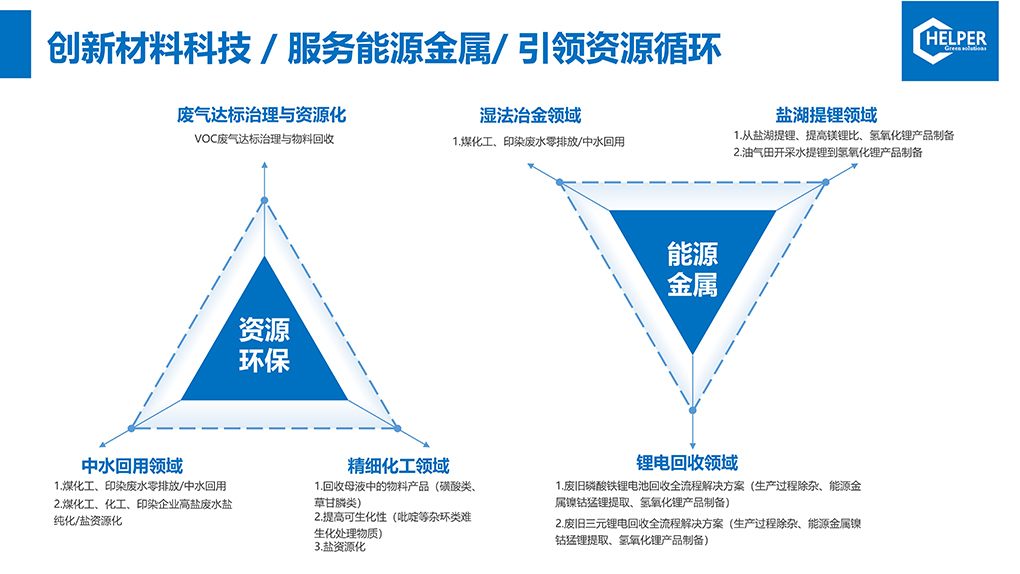
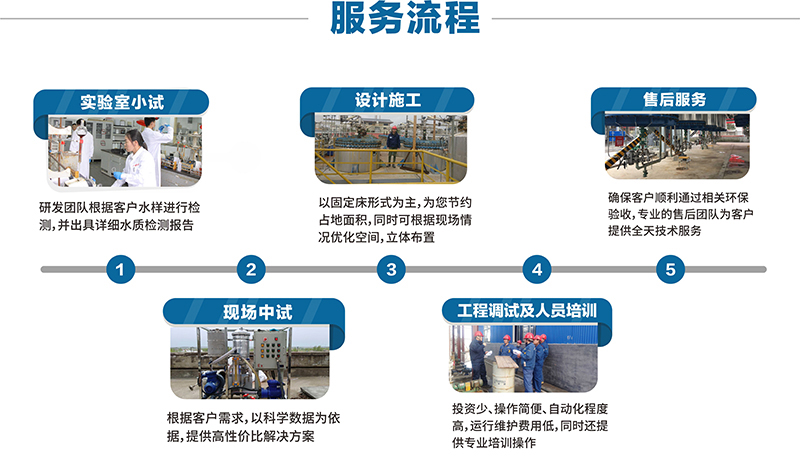
Jiangsu Haipu Functional Materials Co., Ltd. is a high-tech enterprise dedicated to the research and development of high-performance adsorbents, catalysts, and their process applications. With a series of independently developed high-performance adsorbents and catalysts as the core, combined with independently developed process technology, Haipu has become a professional solution provider in the fields of environmental governance and resource recycling. At the same time, taking it as our responsibility to help industrial enterprises meet environmental standards and achieve sustainable development through resource utilization, we adopt modular lean production and develop engineering solutions based on research and development data. Relying on independently developed high-performance adsorbents and rigorous and comprehensive process development, Haipu has accumulated many treatment cases in wastewater treatment, solving development problems for many enterprises and creating value. Its advantages include:
Efficiently remove organic and colored substances from wastewater to achieve water reuse;
Special adsorbent materials have high absorption capacity and concentration ratio, low equipment investment, and low operating costs;
Automated control, easy operation, convenient maintenance, and long service life.
4 Haipu cases
The production process of a textile production, printing and dyeing, clothing processing and sales enterprise can generate about 2000 tons of wastewater per day. The existing wastewater treatment technology of the enterprise exceeds the COD standard of the biochemical tail water, which cannot meet the reuse standard. According to the production needs of the enterprise, Haipu has designed a process for 2000 tons of biochemical wastewater, which can adsorb and remove the vast majority of organic matter. The water after adsorption treatment is colorless and clear, with COD reduced to below 50mg/L, meeting the enterprise's requirements and can be directly reused.

 CN
CN EN
EN
 es
es