Characteristics and Sources of Fluorine and Salt Containing Wastewater
Fluoride is one of the trace elements required by the human body to maintain normal physiological activities. Excessive or insufficient intake of fluoride from the outside can affect health. Long term consumption of water with a fluoride concentration below 1.0 mg/L is prone to dental caries, while on the other hand, long-term consumption of high fluoride water is prone to systemic chronic diseases characterized by fluorosis and fluorosis, and even causes damage to the human brain and nerves. In order to protect the human living environment, the study of fluoride removal from fluorine-containing wastewater is an important task in the fields of environmental protection and hygiene both domestically and internationally.
With the rapid growth of industrial economy, a large amount of industrial wastewater has been generated, some of which contain a large amount of salt (such as F-, Cl-, SO42- plasma), belonging to high salt wastewater. Although there are different definitions of high salt wastewater in industrial production at present, such as high salt wastewater referring to saline wastewater with a salt mass fraction greater than 1%; Another commonly used term is high salt wastewater, which refers to wastewater containing organic matter and at least a total dissolved solids (TDS) mass fraction greater than 3.5%. However, regardless of the definition, the treatment of high salt wastewater remains a difficult problem that chemical companies must solve. High salt wastewater is one of the most difficult types of wastewater to treat. Currently, measures are being taken to address salt containing wastewater.
The main methods include biological methods, physical methods, and physicochemical methods. Among them, biological methods mainly utilize halophilic bacteria through domestication and cultivation to treat saline wastewater, which can be further divided into activated sludge method, contact oxidation method, anaerobic treatment method, etc; The physical and chemical methods are divided into evaporation method (evaporation cooling crystallization and evaporation thermal crystallization), ion exchange method, incineration membrane treatment, etc. By comparing and analyzing the current industrial treatment methods, a reasonable way to treat high salt wastewater is found, and the problem of fluoride corrosion in industry is fundamentally solved.
Research progress on fluoride containing wastewater treatment technology
At present, fluorine-containing industrial wastewater treated both domestically and internationally has complex and diverse components, and there are various treatment methods available. The commonly used methods include adsorption and precipitation, as well as reverse osmosis, ion exchange resin, electrocoagulation, electrodialysis, and so on.
2.1 Precipitation method
2.1.1 Chemical precipitation method
The chemical precipitation method is to add a certain amount of chemical reagents to fluorine-containing wastewater, so that they can form fluoride precipitates with the fluoride in the wastewater or use co precipitation to adsorb fluoride ions. Then, filtration or natural sedimentation methods are used to separate the precipitate from the water, achieving the purpose of fluoride removal. The most commonly used method is limestone precipitation, and its reaction equation is
Ca2++2F-→CaF2↓
Although the chemical precipitation method is simple and cost-effective, it has the problem of secondary pollution and the treatment effect is not ideal. The fluoride content in the effluent is 15-30 mg/L, which makes it difficult to meet the national first-class discharge standard. In addition, it has defects such as slow sedimentation of sludge, long treatment cycle for large flow discharge, and unsuitability for continuous discharge. This method is generally only used for the pre-treatment of fluoride removal in drinking water, and further treatment is required to meet the national fluoride content standards for drinking water.
2.1.2 Coagulation precipitation method
The coagulation precipitation method is a method of removing fluoride by using F- in water to form complex precipitates with cations such as A13+, Fe3+, Mg2+, etc. The selected coagulants are generally inorganic coagulants such as alum, polyiron, and polyaluminum, as well as organic coagulants, including polyacrylamide and natural high molecular weight compounds (such as cellulose, starch, lignin, and chitosan). Different coagulants have different defluorination effects due to their different mechanisms of action.
In the actual processing, lime is usually used together with alum, that is, lime is first added to form a precipitate, and then alum is added to form Al (OH) 3 for flocculation, and the two work together to achieve a good defluorination effect. The removal efficiency of fluoride is highest when the pH value is between 5.5 and 7.5.
The coagulation precipitation method can treat wastewater with high fluoride content, which is economical, practical, simple in equipment, and easy to operate. However, it has problems such as large dosage of coagulant, generation of difficult to treat waste residue, unstable defluorination effect, increasing trend of sulfate ions after defluorination, and large amount of dissolved aluminum in the treated water.
2.2 Adsorption method
Adsorption method is to remove fluorine-containing wastewater by passing it through a device equipped with a fluorine adsorbent. Fluorine is exchanged with other ions or groups in the adsorbent and left on the adsorbent, while the adsorbent is regenerated to restore its exchange capacity. Due to the fact that adsorption process is a surface reaction based on contact method, adsorption method is usually only suitable for the treatment of low fluoride wastewater, or for the deep treatment of pre treated wastewater with fluoride content reduced to 15-30 mg/L.
The adsorption method has a good effect on the deep treatment of fluorine-containing wastewater, but its practicality is limited due to problems such as bed loss, low adsorption capacity, and complex bed regeneration and regeneration liquid treatment. The main direction of future research on adsorption based fluoride removal is to develop efficient new adsorbents to overcome the shortcomings of traditional adsorbents with small saturation adsorption capacity. In addition, it is necessary to strengthen research on the selectivity of adsorbents, regeneration of adsorbents, and adsorption mechanisms.
2.3 Other methods
In addition to the two main methods mentioned above, many researchers have also conducted extensive research in areas such as reverse osmosis, electrocoagulation, ion exchange resin, and electrodialysis. For special fluorine-containing wastewater, some new methods have been applied and achieved good results.
2.3.1 Reverse osmosis method
Reverse osmosis technology is widely used in seawater desalination, ultrapure water preparation, and other fields, but there are few reports on the treatment of fluorine-containing wastewater. The reason is that reverse osmosis technology is a molecular level treatment technology that needs to prevent suspended solids from contaminating the reverse osmosis membrane, and industrial wastewater has numerous impurities, so complex pretreatment is required before treatment. In addition, reverse osmosis equipment is expensive and consumes a large amount of electricity.
2.3.2 Electrocoagulation method
The electrocoagulation method uses the intermediate products of different forms of hydroxides formed during the hydrolysis process of aluminum ions dissolved into the solution by aluminum plate electrodes under the action of a direct current electric field as adsorption media to adsorb F - and fluoride complexes in water. The electrocoagulation method can reduce the F-concentration of low concentration fluorine-containing wastewater to below 2 mg/L.
Although the electrocoagulation method has simple equipment and easy operation, it has a high water production cost and poor treatment effect on wastewater with high fluoride content, making it difficult to promote at present.
2.3.3 Ion exchange resin method
The ion exchange resin method utilizes the ion exchange interaction between resin and solution to remove fluoride. The exchange capacity and fluoride removal efficiency of ion exchange resin method are relatively low, and the resin price is expensive and the regeneration cost is high, so there are no industrial examples yet.
2.3.4 Electrodialysis method
Electrodialysis is a type of membrane separation technology, which operates by utilizing the selective permeability of ion exchange membranes to selectively migrate anions and cations in water under the action of an external direct current electric field. Ionic exchange membrane is formed by ion exchange resin, so electrodialysis is actually another application form of ion exchange resin method.
The electrodialysis device is complex, consumes a large amount of electricity, requires high maintenance intensity, and has strict technical requirements for operators. In addition, the presence of high priced metal ions in the water can easily cause membrane poisoning and damage to the electrodes.
There are many methods for treating fluorine-containing wastewater, among which the precipitation method has a simple process and is easy to operate. However, the amount of chemicals used is relatively large, which can cause secondary pollution; Adsorption method has certain treatment effects on various types of wastewater, and the sources of adsorption materials are wide. If it can effectively improve the adsorption capacity of adsorbents and solve the problem of adsorbent regeneration, it should have good development prospects; Other new methods have more complex processes and higher operating costs, and are currently only suitable for the treatment of some special fluorine-containing wastewater. Developing new functional materials and combining various methods to achieve efficient treatment and resource utilization of fluorine-containing wastewater without generating secondary pollution is the future direction of fluorine-containing wastewater treatment technology.
Fluorine corrosion problem
At present, the use of evaporation and incineration technology to treat high salt wastewater has shown good treatment effects. However, there are also drawbacks in the treatment process, such as the increasingly prominent problem of equipment corrosion, and many equipment's actual lifespan cannot reach the design lifespan. Therefore, the issue of high salt wastewater treatment equipment has also been taken seriously. The commonly used industrial equipment is made of stainless steel, which is inexpensive and well formed. However, due to the high chlorine content and strong corrosiveness of high salt wastewater, there are anti-corrosion requirements for equipment materials. In order to prevent equipment corrosion, alternative materials with better anti-corrosion performance, such as titanium metal materials and titanium metal alloys, are being considered. Titanium metal materials and titanium metal alloys have the advantages of good corrosion resistance, light weight, and long service life, and have been widely used in evaporation and incineration treatment in recent years. Unfortunately, the good times did not last long. Many titanium and titanium alloy equipment found that corrosion still occurred after several years or even shorter periods of use. Through analysis and investigation of the cause, it was ultimately confirmed that the corrosion of the equipment was caused by fluoride ions contained in the wastewater. Due to the formation of a stable and strong adhesion oxide film on the surface of titanium, titanium alloys have excellent corrosion resistance in alkaline solutions, most organic acid solutions, inorganic salt solutions, and oxidizing media. However, in reducing acid solutions, fluoride easily combines with hydrogen ions to form hydrogen fluoride, which preferentially adsorbs on the surface oxide film of titanium materials, displacing oxygen atoms and causing soluble fluoride to form a passive film on the surface of titanium alloys, leading to corrosion and destruction. Among them, HF solution has the strongest corrosion effect on titanium metal. At the beginning, the fluorine content was very low and did not cause equipment corrosion. However, as the processing time increased, the fluorine content continued to rise through concentration and enrichment, exceeding the corrosion resistance of titanium metal materials, ultimately leading to fluorine corrosion. The main events that occur during fluoride corrosion process.
The reaction is as follows:
Ti2O3+6HF=2TiF3+3H2O
(1) TiO2+4HF=TiF3+2H2O
(2) TiO2+2HF=H2O+TiOF2
(3) Through the main reaction equation of fluoride corrosion, the mechanism of fluoride corrosion can be identified, thereby finding a solution to fluoride corrosion equipment.
Haipu processing plan
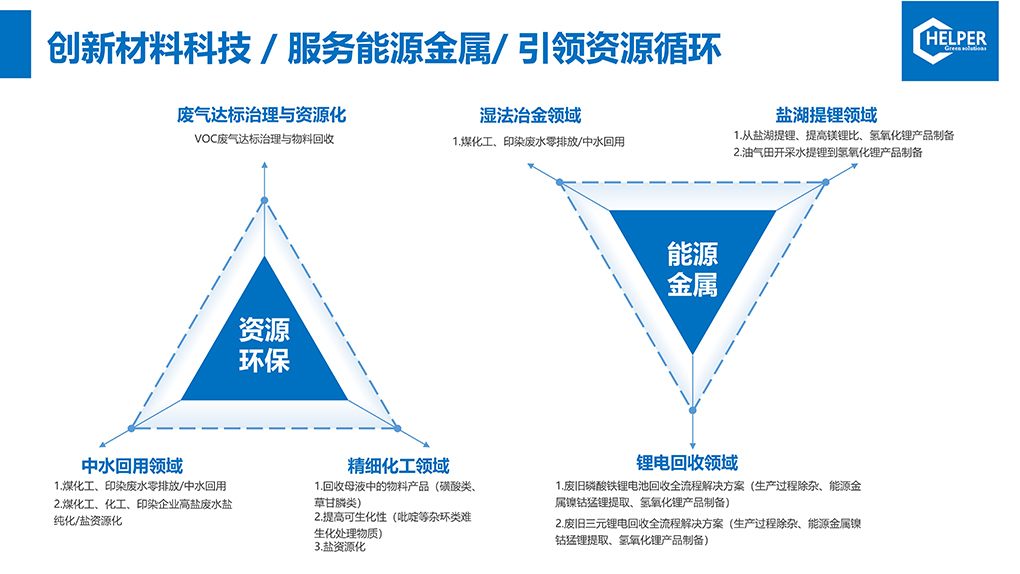
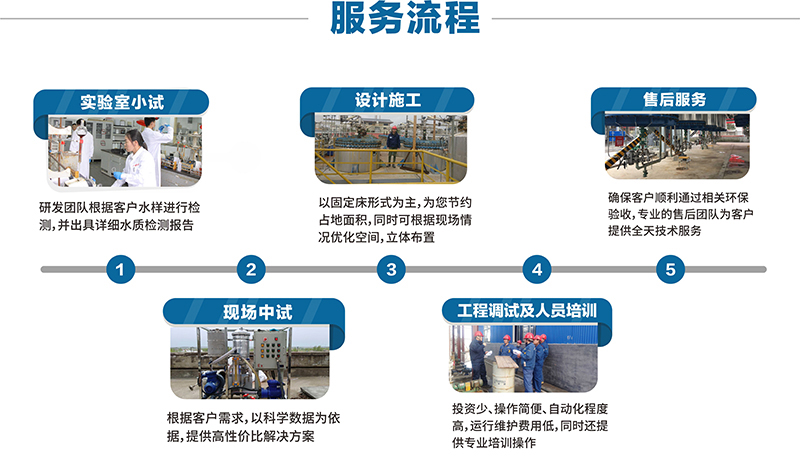
Jiangsu Haipu Functional Materials Co., Ltd. is a high-tech enterprise dedicated to the research and development of high-performance adsorbents, catalysts, and their process applications. With a series of independently developed high-performance adsorbents and catalysts as the core, combined with independently developed process technology, Haipu has become a professional solution provider in the fields of environmental governance and resource recycling. At the same time, taking it as our responsibility to help industrial enterprises meet environmental standards and achieve sustainable development through resource utilization, we adopt modular lean production and develop engineering solutions based on research and development data. Relying on independently developed high-performance adsorbents and rigorous and comprehensive process development, Haipu has accumulated many treatment cases in the deep treatment of fluorine-containing wastewater, solving development problems and creating value for many enterprises.
Haipu high-performance adsorbent has the following advantages:
Wide applicability and good practicality
This method can be applied to wastewater concentrations ranging from a few to several hundred ppm, and the adsorption is not affected by the inorganic salts contained in the solution. It can also be applied in non-aqueous systems.
High adsorption efficiency, easy desorption and regeneration
For fluorine-containing wastewater, after adsorption, it can generally meet or approach the discharge standards, with a material adsorption rate of over 95%, without producing secondary pollutants, and can significantly reduce the fluoride content. Common acid-base or organic solvents are used for desorption, and the desorption rate can generally reach over 92%.
Stable performance and long service life
The material has high resistance to oxidation, acid and alkali, and organic solvents, and can be used for a long time below 150 ℃. Under normal circumstances, the annual material loss rate is less than 5%.
Beneficial for comprehensive utilization and turning waste into treasure
The raw material intermediates or products present in wastewater generally have higher prices. The adoption of this method can largely recycle and use, which will generate considerable economic benefits. Usually, the recycling value is equivalent to the daily operating expenses, and some have surplus.
Easy to operate, low energy consumption
Using this technology, the process is simple, no special equipment is required, the technology is easy to master, and the consumption of thermal and electrical energy is relatively low during operation.
Haipu Handling Case
The 2000t/d fluorine-containing wastewater generated in the production of a certain enterprise in Hunan was treated by the Haipu adsorption process, and the fluoride content in the wastewater was reduced to below 20ppm, thus meeting the requirements for enterprise reuse.
| Name | Fluorine |
| Absorb incoming water | 714ppm |
| Adsorbed water | 17.8ppm |
| Removal rate | 97.50% |
| Processing capacity | 15 times the volume of the material |
Processing capacity 15 times the volume of the material
1.2 After treatment with the Haipu adsorption process, the fluoride content in the 600t/d fluorine-containing washing water of a certain enterprise in Shandong is greatly reduced, and no other metal ions or impurity ions that affect reuse are introduced, achieving a removal rate of over 90%.
| Name | Fluorine |
| Absorb incoming water | 65ppm |
| Adsorbed water | 3.2ppm |
| Removal rate | 95.10% |
| Processing capacity | 210 times the volume of the material |
1.3 A Beijing enterprise's 1500t/d circuit board fluorine-containing washing water is required to be reused without introducing other impurity ions or increasing the TDS of the effluent. After treatment with the Haipu adsorption process, the fluoride content in the water is less than 0.5ppm and meets other customer requirements.
| Name | Fluorine |
| Absorb incoming water | 12ppm |
| Adsorbed water | 0.38ppm |
| Removal rate | 96.80% |
| Processing capacity | 560 times the volume of the material |

 CN
CN EN
EN
 es
es