High fluoride groundwater is a typical low-quality water source widely distributed in arid and semi-arid areas of northern China.
The enrichment of fluoride in groundwater is not only influenced by climate, topography, geological structure, hydrogeology, but also closely related to human activities.
Fluoride is one of the essential trace elements for the human body. When the fluoride concentration in our drinking water is below 0.5 mg/L, it can cause dental caries.
When the fluoride concentration in drinking water exceeds 1 mg/L, it can cause dental fluorosis; When the fluoride concentration reaches 3-6 mg/L, bone fluorosis occurs.
Standards are becoming stricter, and there is an urgent need for good technology
With a large amount of fluoride being discharged into the natural environment, the pressure on environmental protection work in various regions is increasing day by day. In the assessment standards of river sections, the fluoride content in wastewater has also become an important monitoring indicator.
At the same time, various regions and industries have high standards and strict requirements for fluoride control policies.
As specified in the "Environmental Quality Standards for Surface Water" (GB 3838-2002), Class I-III fluorides should be ≤ 1.0mg/L, and Class IV-V fluorides should be ≤ 1.5mg/L. China's "Sanitary Standards for Drinking Water" (GB 5049-2006) stipulate that the fluoride concentration in the effluent from centralized water supply should be ≤ 1.0mg/L.
| Standard name | Regulatory limits | Application scope |
| Surface Water Environmental Quality Standards (GB 3838-2002) | 1 Class III fluoride ≤1mg/L
IV-V class fluoride ≤1.5mg/L | River water, lake water, and seawater management |
| Enterprises near key protected water sources |
| The company's wastewater is the largest source of water for receiving rivers |
| Areas with extremely depleted water resources |
| Economically developed regions |
| Standard for Drinking Water (GB 5049-2006) | Fluoride concentration ≤1mg/L | All drinking water plants |
In addition, local governments have continued to increase their comprehensive environmental law enforcement efforts, increase the proportion and frequency of spot checks on key river basins and industries, and strictly investigate and punish environmental violations such as excessive emissions and illegal discharge.
In addition, the main responsibility of enterprises for self-monitoring has been strengthened, and self-monitoring by enterprises has been standardized. For self-monitoring behaviors that do not comply with environmental monitoring management regulations and technical specifications, relevant enterprises will be required to rectify them in a timely manner.
With increasingly stringent emission standards, corresponding treatment technologies also need to be upgraded and iterated, and the market urgently needs a stable technology to achieve deep defluorination.
The currently used defluorination technology
Many industrial wastewater treatment sites, due to mismatched selection of removal technologies or limitations in the technology itself, ultimately fail to achieve the expected results despite spending time and effort.
The main removal methods currently used in the market include coagulation chemical precipitation, ion exchange, adsorption, electrochemical methods, etc.
| Method | Advantage | Shortcoming |
| Precipitation method | Simple process, suitable for the treatment of high concentration fluorine-containing wastewater | High investment volume, difficult to meet standards; large mud production and difficult dehydration |
| Ion exchange method | Simple operation and management, suitable for low to medium concentration fluoride water treatment | High cost of ion exchange resin and high cost of regeneration |
| Electrodialysis method | Simple preprocessing, suitable for small-scale defluorination systems | High infrastructure and operating costs, high requirements for operation and maintenance personnel |
| Nanofiltration/reverse osmosis method | Ro has a very high fluoride removal rate and is not affected by coexisting ions | High investment and operating costs; there is a problem with concentrated water treatment, and the operation is complex |
In order to meet the needs of enterprises for efficient, simple, and low-cost deep treatment of fluorine-containing wastewater, the adsorption method developed by Haipu based on special adsorption materials has significant application advantages in operating costs, operating efficiency, safety, and avoiding secondary pollution compared to other defluorination technologies.
Advantages of Fluorinated Resin Products and Adsorption Systems
Haipu has developed a defluorination resin based on the properties and treatment requirements of fluorine-containing wastewater, which has the advantages of fast adsorption speed, high capacity, and easy regeneration. It can achieve deep defluorination of large amounts of wastewater and effectively solve the problems of limited adsorption capacity and frequent regeneration of most adsorbents.
At the same time, the entire adsorption system with fluorine removal resin products as the core has technical advantages such as low equipment operating costs, low maintenance costs, and simple operation.
At present, Haipu's defluorination resin products and complete adsorption systems are widely used for defluorination of wastewater generated in chemical product production, battery production, metallurgical industry, phosphate fertilizer and fluoroplastic production, coal-fired power generation and other processes.
Practical application of defluorination resin and adsorption system
Haipu Application Case 1
The business scope of Anhui New Materials Technology Co., Ltd. includes the research and development, production, processing, and sales of precursors, positive electrode materials, and new energy materials.
The lithium sulfate liquid generated during the production process of the enterprise needs to undergo defluorination treatment. Based on the characteristics, difficulties, and treatment requirements of the liquid, our company's relevant specialized adsorption materials are selected for adsorption treatment of the liquid. The effluent can meet customer requirements, and the wastewater design indicators are shown in the table below.
| Indicator | Water volume (t/d) | Fluorine (mg/L) | Li: Na |
| Absorb incoming water | 200 | ~250 | 60.3:1 |
| Adsorbed water 1 | 200 | 0.5 | 82.9:1 |
| Adsorbed water 2 | 200 | 0.04 | 72.4:1 |
*Adsorption inlet and outlet water data
Haipu Application Case 2
A fine chemical enterprise in Shandong produces 400 tons/day of fluorine-containing biochemical wastewater during the production process, which is difficult to deeply treat. Jiangsu Haipu Company is commissioned to adsorb and treat the wastewater to meet the standards before discharging it. The system operates stably, and the wastewater treatment data is shown in the table.
| Batch | Fluorine content in raw water | Adsorption of effluent COD |
| 1 | 6.760mg/L | 0.06mg/L |
| 2 | 6.130mg/L | 0.2mg/L |
| 3 | 6.130mg/L | 0.15mg/L |
| 4 | 6.05mg/L | 0.05mg/L |
| 5 | 6.10mg/L | 0.07mg/L |
Haipu Application Case 3
A company produces 100 tons/day of wastewater with a pH of 9.5 and a fluoride content of 10.5mg/L during the production process, with a treatment requirement of ≤ 1mg/L.
For this purpose, our company uses nano hybrid fluoride removal adsorbent products to adsorb and separate fluoride ions in drinking water. The fluoride content after adsorption treatment is significantly reduced, which meets the customer's treatment requirements for this indicator.
| Fluorine content in raw water | Fluorine content in effluent | Removal rate |
| 10.5mg/L | 0.29mg/L | 97.24% |
| 10.5mg/L | 0.17mg/L | 98.38% |
| 10.5mg/L | 0.15mg/L | 98.57% |
| 10.5mg/L | 0.11mg/L | 98.95% |
Haipu Application Case 4
A mining enterprise produces groundwater with a fluoride content of about 1.4 mg/L during the process of mining ore. The enterprise requires that the fluoride content in the treated wastewater be less than 0.5 mg/L.
The experimental treatment effect shows that using Haipu nano hybrid fluoride removal adsorbent products for treatment, the fluoride ion removal rate in wastewater remains stable at over 92%, and the fluoride content in effluent can be controlled below 0.5 mg/L.
Keeping a certain safety margin while ensuring compliance with customer requirements can effectively prevent water quality fluctuations in the incoming wastewater from causing substandard effluent.
| Fluorine content in raw water | Fluorine content in effluent | Removal rate |
| 1.4mg/L | 0.04mg/L | 97.14% |
| 1.4mg/L | 0.10mg/L | 92.86% |
| 1.4mg/L | 0.08mg/L | 94.28% |
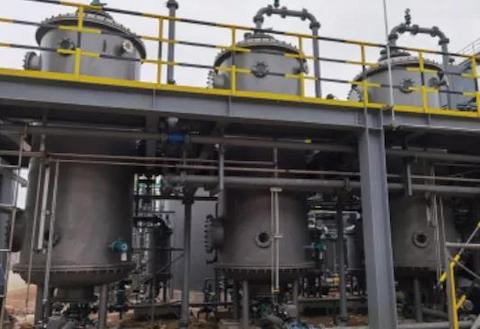
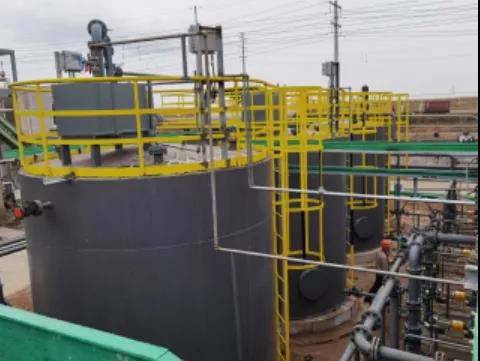
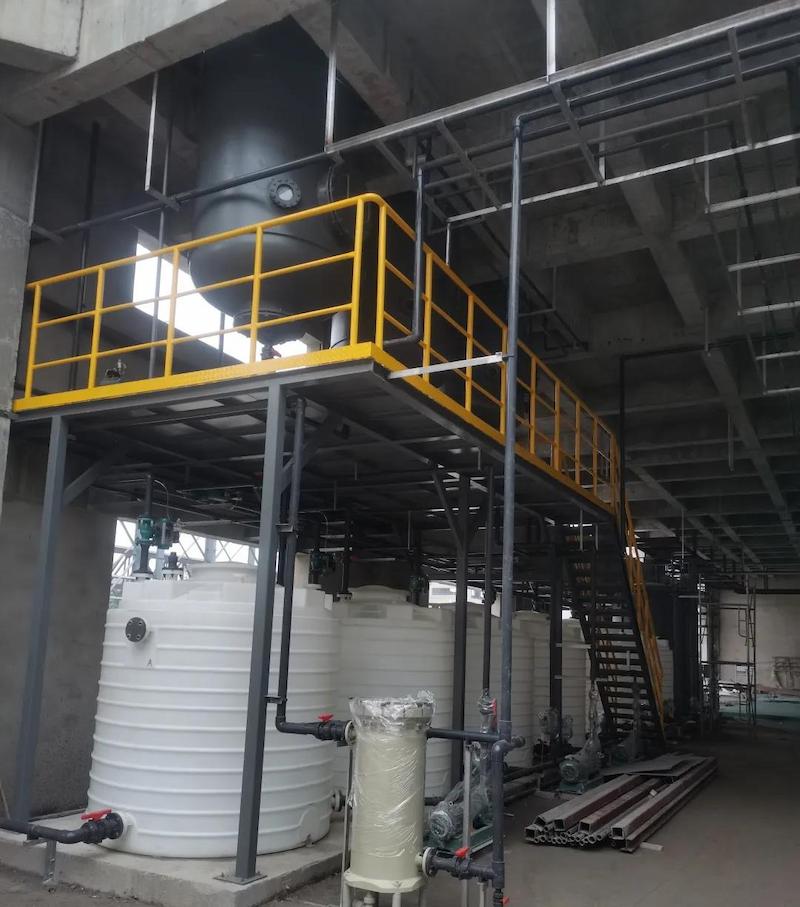
*Actual case of defluorination project

 CN
CN EN
EN
 es
es