Recently, nine departments, including the Ministry of Industry and Information Technology, jointly issued the "Implementation Plan for High-Quality Development of the Gold Industry (2025-2027)" (hereinafter referred to as the "Plan"). The Plan proposes to strengthen the green and efficient utilization of resources, low (non-)cyanide gold extraction, and green and low-carbon development, thus setting the direction for the industry's green and high-end transformation.
Implementation Plan for High-Quality Development of the Gold Industry (2025-2027)
(IV) Strengthen the green and efficient utilization of resources. Adhering to the principles of "source reduction, process control, end-of-pipe treatment, and resource utilization," promote green exploration, mining, and production; advance clean energy substitution; and construct green mines and green factories. Promote the co-processing and full-component utilization of cyanide slag, and support enterprises in accelerating technological transformation demonstrations such as cyanide gold extraction process upgrades, harmless backfilling of cyanide slag, and recycling of cyanide-containing wastewater. Support the comprehensive utilization of low-grade, difficult-to-treat, and associated resources, and improve the recovery rate of gold, silver resources, and associated valuable elements such as copper, lead, and zinc. Encourage the secondary resource development of gold tailings ponds, utilizing tailings to recover valuable metals and prepare building materials. Promote the recycling of gold and silver from waste electrical and electronic products, retired photovoltaic modules, gold and silver-containing waste catalysts, and waste gold and silver products. Establish and improve the gold recycling ledger and transaction reporting system, encourage gold refining enterprises to conduct entrusted recycling business with recycling enterprises, and improve the gold recycling market system. Support industry organizations in researching and formulating implementation standards and guidelines for the recycling of gold and other precious metals, and regulate the recycling behavior of individuals and enterprises. (The National Development and Reform Commission, the Ministry of Industry and Information Technology, the Ministry of Natural Resources, the Ministry of Ecology and Environment, the Ministry of Commerce, and the State Administration for Market Regulation are responsible according to their respective duties.)
(VIII) Strengthen the guiding role of standards. Focus on developing standards in areas such as deep-well mining, green and low-carbon technologies, digital empowerment, and new materials. Accelerate the transformation of scientific and technological achievements in green mining, low- (non-)cyanide gold extraction, comprehensive utilization of gold waste and residue, and gold nanocatalysts into standards. Strengthen the promotion and evaluation of standard implementation, using standards to guide the optimization and upgrading of the gold industry. Strengthen the coordination and integration of gold and silver new material standards with downstream design and application specifications. Promote the transformation of domestic gold-advantageous and distinctive standards into international standards, and accelerate the two-way transformation and mutual recognition of gold standards. Actively track the development trends of international rules on environmental, social, and governance (ESG) and responsible supply chain auditing, explore the establishment of a gold supply chain auditing standard system, and research and formulate guidelines for the responsible development of the gold industry. Strengthen the system integration and application of quality infrastructure, promote the construction of a national gold field metrology and testing center, and provide the gold industry with forward-looking metrology and testing services covering the entire traceability chain, the entire industrial chain, and the entire life cycle. (The Ministry of Industry and Information Technology, the National Development and Reform Commission, the Ministry of Commerce, the State Administration for Market Regulation, and the National Mine Safety Administration are responsible according to their respective duties.)
my country's gold resources suffer from a low proportion of high-grade gold mines, while its associated mineral resources are abundant but lack comprehensive utilization. Under the dual pressures of policy guidance and environmental protection, the limitations of cyanidation processes, such as CIP/CIL, are becoming increasingly apparent. How can we overcome the bottlenecks of traditional gold extraction processes and achieve efficient gold extraction and comprehensive resource utilization?
Haipu New Materials provides a full-chain green solution for the mining and smelting of gold and associated minerals through its independently developed resin adsorption technology. This helps companies improve gold recovery rates, reduce processing costs, achieve comprehensive recovery of associated metals, and reduce environmental pollution.
01Resin adsorption technology empowers traditional process innovation and cyanide-free transformation
Cyanide gold extraction: Resin replaces activated carbon for high-efficiency upgrade
In the traditional field of cyanide gold extraction, activated carbon is still widely used due to its low cost and simple operation. However, under the requirements of high-efficiency recovery and environmental protection, its technical shortcomings are significant:
Poor selectivity: Activated carbon easily adsorbs impurity ions, reducing its gold adsorption capacity and increasing subsequent refining costs.
Low adsorption efficiency: Activated carbon has a small adsorption capacity, and the high-temperature, high-pressure desorption process is energy-intensive, with large fluctuations in desorption rates, leading to the easy loss of precious metals.
Insufficient physical strength: It is easily pulverized and lost during recycling, increasing operating costs and solid waste treatment pressure.
The resin-slurry process is a significant innovation in cyanide gold extraction, involving the direct application of ion exchange resins to cyanide leaching slurries for gold adsorption. After cyanide leaching, gold in the slurry exists as an anionic complex [Au(CN)₂⁻], which is selectively adsorbed by macroporous bifunctional anion exchange resins.
Haipu's KF420 strong-base anion exchange resin selectively adsorbs [Au(CN)₂⁻] through multi-stage tandem adsorption, achieving a gold recovery rate >99%. The resin exhibits excellent wear resistance (wear rate <0.5%/cycle) and can operate stably in high-concentration slurries (50% solids).
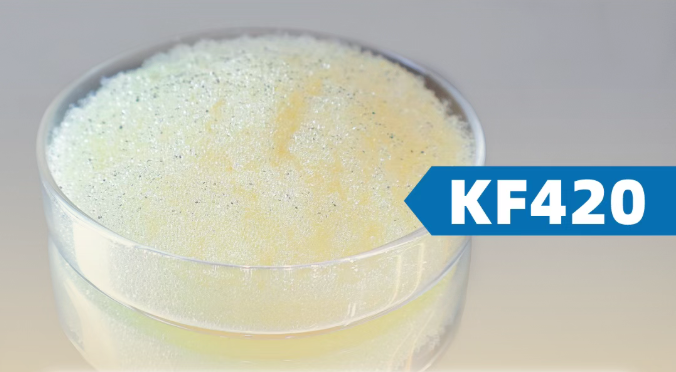
Stronger adsorption selectivity and superior anti-interference ability:Activated carbon's adsorption relies on the physical adsorption of its pore structure and the chemical adsorption of its surface functional groups. It easily adsorbs organic matter, sulfides, copper/iron and other impurity ions in the slurry, leading to "poisoning" (decreased adsorption capacity). In contrast, resins specifically bind to gold cyanide complexes ([Au(CN),]) through ion exchange groups (such as quaternary ammonium salt groups), resulting in weak adsorption capacity for other impurity ions. Especially in complex ores containing copper, arsenic and carbonaceous materials, resins have significantly better anti-pollution ability than activated carbon.
Higher Adsorption Capacity and Stronger Gold Loading Capacity:The adsorption capacity of resin is typically 3-5 times that of activated carbon. This means that less resin is needed for the same throughput, or in high-concentration gold ore slurries (such as flotation concentrate leaching solutions), frequent adsorbent replacements can be avoided, reducing adsorbent loss and operating costs. For high-grade slurries, resin can reduce the number of adsorbent cycles, lowering equipment load and energy consumption.
Higher desorption efficiency, more thorough gold recovery, and lower reagent consumption:Desorption by activated carbon requires high-temperature, high-pressure cyanide solutions, resulting in long desorption times (typically 12-24 hours) and low desorption rates (approximately 80-90%), leading to high residual gold levels. In contrast, resin desorption conditions are milder, often using low-concentration acid, alkali, or salt solutions. Desorption times are shorter (4-8 hours), and desorption rates can reach over 95%. Furthermore, it does not require high temperatures and pressures, significantly reducing energy consumption and reagent (cyanide) consumption. Resin desorption eliminates the need for large amounts of cyanide, reducing the use of highly toxic reagents and lowering environmental risks.
Higher mechanical strength and longer service life: Activated carbon has a porous and brittle structure, which is easily worn during the mixing tank or slurry transportation process, producing fine carbon particles (carbon powder), resulting in gold loss along with the fine carbon (loss rate of about 1-3%). Moreover, the service life of activated carbon is usually 3-6 months at a time. In contrast, resin is a cross-linked polymer particle (such as polystyrene-divinylbenzene skeleton), with high mechanical strength (wear resistance is 5-10 times that of activated carbon), low wear rate, and a service life of 1-2 years at a time, resulting in lower long-term replacement costs.
More efficient adsorption of fine gold particles: Activated carbon adsorption depends on pore structure, and its adsorption efficiency for fine gold-cyanide complexes (or colloidal gold) with a particle size of less than 0.1 μm is low (easily lost with the slurry); while the ion exchange of resin is not limited by pores and can directly react with gold-cyanide complexes in solution, with an adsorption rate of 5-10% higher for fine gold particles than activated carbon.
Cyanide-Free Gold Extraction: Special Resins Provide Adsorption Energy
Cyanide-free gold extraction, due to its environmental friendliness and safety, has become a research hotspot and development direction in the gold smelting field in recent years. Currently, mainstream cyanide-free gold extraction processes include the thiourea method, thiosulfate method, halogen method, and polysulfide method, the core of which lies in dissolving gold into soluble complexes using non-cyanide reagents. Depending on the gold complex, Haipu's special gold extraction material HP4080 can achieve efficient and selective adsorption. Furthermore, the resin exhibits excellent oxidation resistance and good regeneration performance, allowing for multiple cycles and effectively reducing processing costs, providing strong support for the stable operation of cyanide-free gold extraction processes.
Tailings Recycling: Turning Waste Resources into "Flowing Gold"
It's worth noting that resin adsorption technology also demonstrates significant advantages in gold recovery from tailings reprocessing. While mining tailings contain low levels of gold, their sheer volume leads to resource waste due to long-term accumulation. Traditional processes lack precision in treating low-concentration gold-bearing wastewater, whereas Hypotex gold resin, with its superior selective adsorption capacity, can precisely capture trace amounts of gold ions in tailings leachate, achieving efficient gold enrichment even in complex impurity systems. This significantly improves recovery rates, transforming tailings, previously considered "waste," into a usable resource.
02Valuable metals extracted from associated mineral resources through adsorption
Gold often occurs in close association with other metals such as copper, lead, and zinc. Globally, approximately 20% of gold is extracted from associated minerals, with copper ore being the primary source. In my country, 80% of associated gold comes from copper ore. Therefore, the effective development of associated minerals not only improves the comprehensive utilization rate of resources but is also a key lever for the mining industry to transform from "single mining" to "diversified value-added + green development," playing an irreplaceable role in ensuring resource security and enhancing industrial competitiveness.
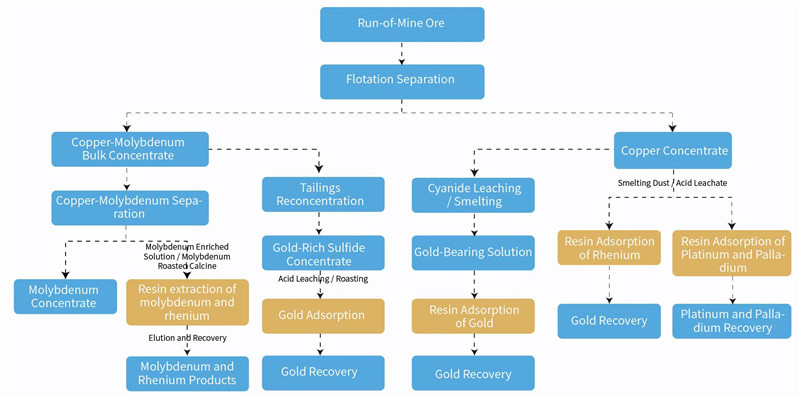
Simplified flowchart of copper ore associated metal extraction process
Gold Extraction from Associated Metals
Adsorption-based gold extraction, with its advantages of high selectivity, environmental friendliness, high efficiency recovery, and simplified process, has opened up a new path for the efficient and environmentally friendly extraction of gold and other associated metals. Adsorption materials possess abundant microporous structures and a large specific surface area, enabling them to preferentially adsorb gold complexes in solution, effectively avoiding interference from other metal ions and achieving efficient recovery of low-grade gold from associated minerals. Haipu Special Gold Extraction Chelating Resin HP4080 selectively recovers gold, exhibiting stronger affinity than other heavy metals, firmly binding them to functional groups to form a highly stable complex. Each liter of resin can adsorb approximately 150g of gold, fully utilizing potentially wasted associated gold resources.
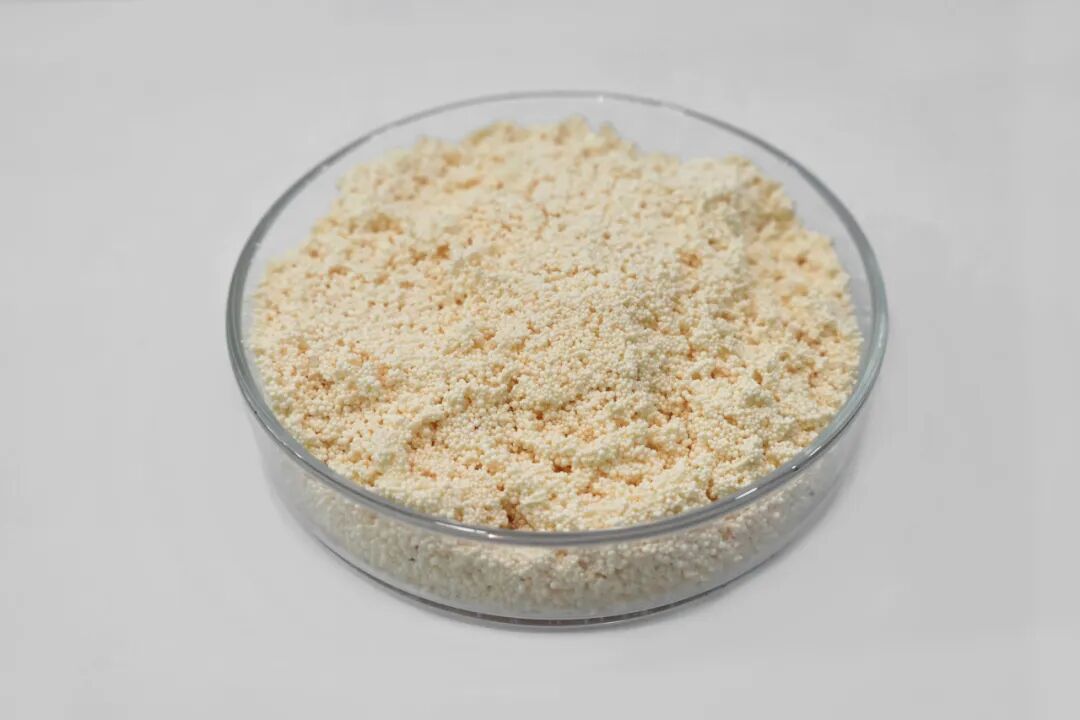
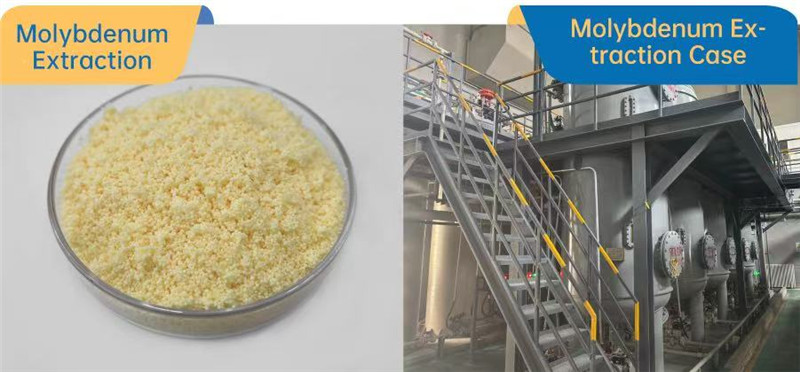
Associated Molybdenum Extraction
Haptech's HP1048 special adsorption resin can efficiently extract molybdenum from leachates, with a molybdenum recovery rate >99.99%, and approximately 240g of molybdenum can be adsorbed per liter of resin. HP1048 exhibits high selectivity and low impurity content, and the purified molybdenum products (e.g., ammonium molybdate) can directly meet downstream raw material standards, driving the industry towards high-end upgrading.
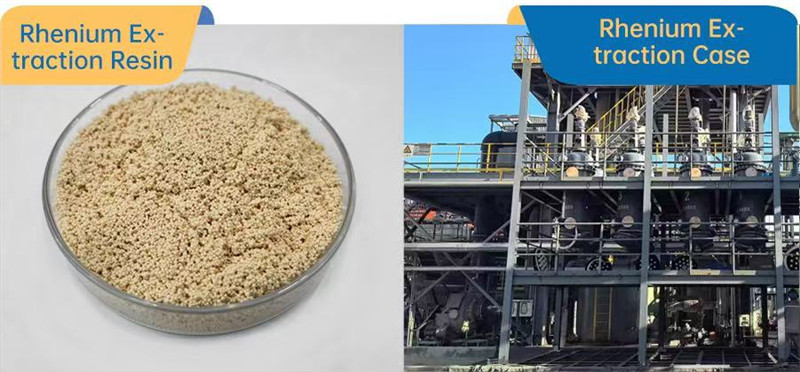
Rhenium Extraction by Associated Occurrence
Haptech's HP115 rhenium adsorbent material is a macroporous polystyrene framework modified with highly selective coordinating functional groups for rhenium ions. These coordinating groups form very stable complexes with rhenium while remaining inert to other anions, exhibiting rapid adsorption rates and high selectivity, with an adsorption capacity reaching 240 g/L. This helps companies explore new profit growth points in the rare metals field.
Extraction of Associated Precious Metals (Platinum, Palladium)
In addition to the metals mentioned above, copper mines often contain other associated precious metals (such as platinum and palladium). Transforming these "associated treasures" into usable resources and fully exploiting their mineral value is crucial for achieving a synergistic win-win situation for resources, the economy, the environment, and technological progress.
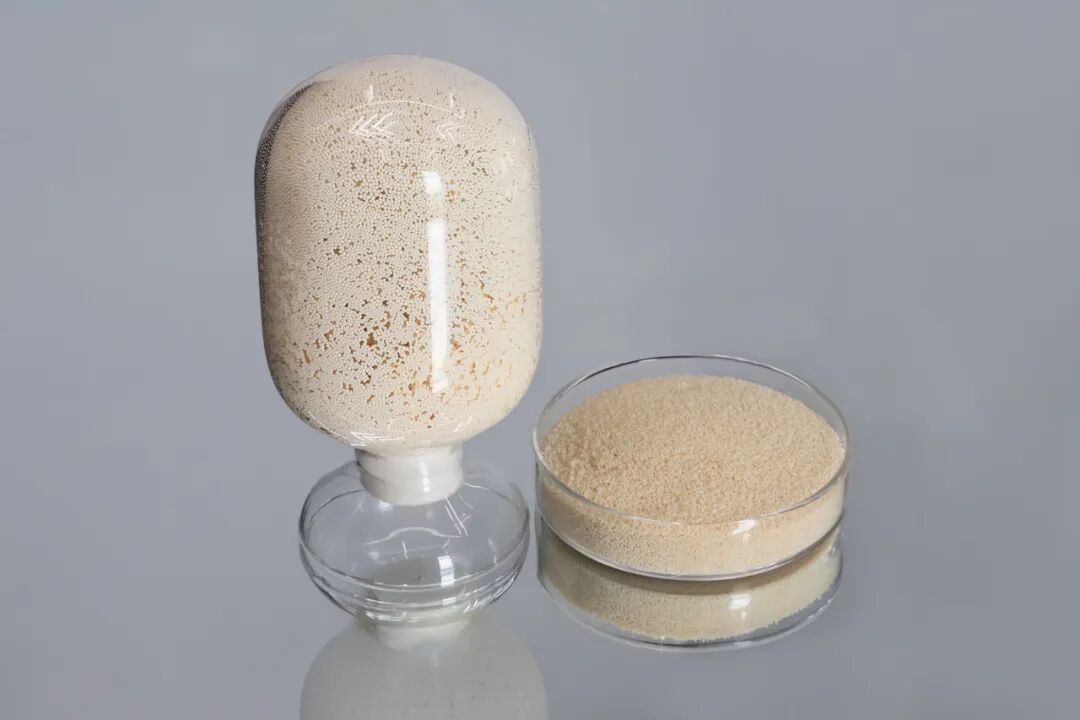
Haptech's HP4060 chelating resin can selectively recover precious metals, firmly binding them to functional groups to form highly stable complexes. Each liter of resin can adsorb approximately 60g of palladium/platinum. This allows for the effective utilization of associated precious metal resources, further enhancing the value of mineral resources.
03Deep impurity removal ensures efficient gold extraction and supports green production.
During the gold extraction process, in addition to the target gold ions (mainly [Au(CN)₂]⁻ complexes), a large number of interfering impurities exist, such as copper ([Cu(CN)₃]²⁻, [Cu(CN)₄]³⁻), iron ([Fe(CN)₆]³⁻, [Fe(CN)₆]⁴⁻), and zinc ([Zn(CN)₄]²). These ions compete with the gold complex ions for resin adsorption sites.
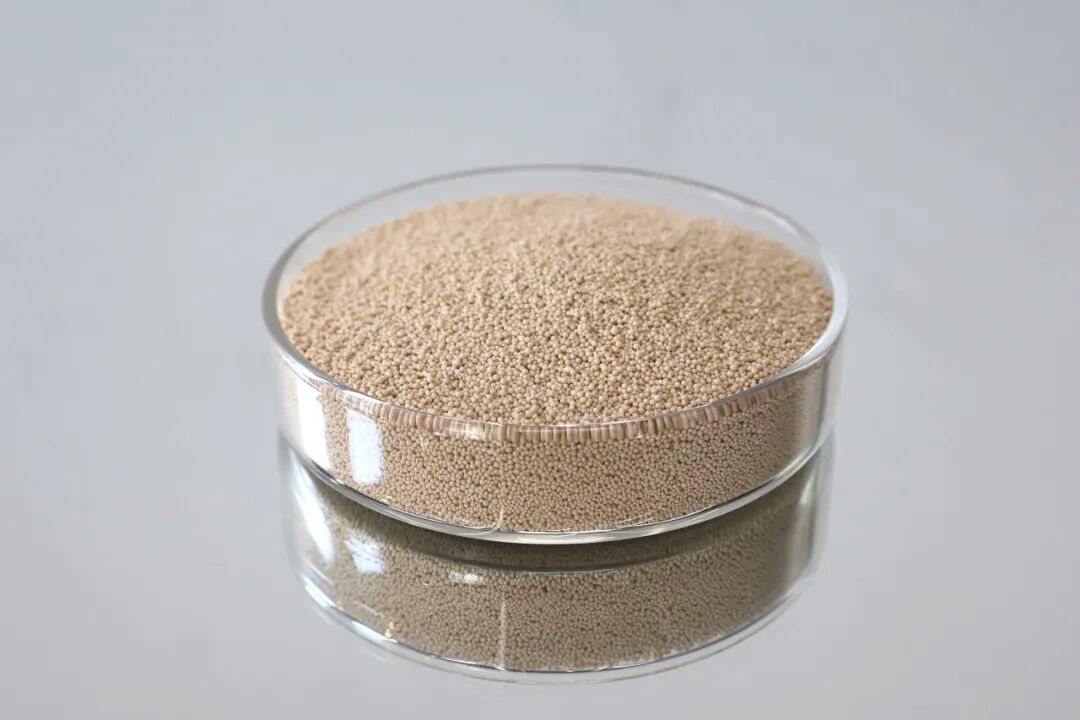
Haipu chelating resin HP4010, with its functional groups, can form stable chelates with metal ions such as Cu²⁺ and Fe³⁺. Its selectivity for copper and iron ions is far higher than that for gold, with an adsorption capacity of up to 1153 meq/L of resin for copper.
This technology effectively removes impurity ions, ensuring gold adsorption efficiency while reducing environmental pressure at the source and helping companies meet the environmental standards outlined in the plan.
The release of the "Implementation Plan for High-Quality Development of the Gold Industry (2025-2027)" has outlined a development path for the gold industry based on "technological breakthroughs, green transformation, and resource efficiency." Haipu resin adsorption technology, with its technological advantages in gold extraction from gold mines, recovery of associated resources, and multi-scenario recycling, is your ideal partner for achieving cyanide-free transformation, efficiency leaps, resource value-added, and green production.

 CN
CN EN
EN
 es
es