Metal wastewater refers to the wastewater containing heavy metals discharged from industrial production processes such as mining, metallurgy, machinery manufacturing, chemical engineering, electronics, and instrumentation. Heavy metal wastewater (such as cadmium, nickel, mercury, zinc, etc.) is one of the most serious industrial wastewater that pollutes the environment and poses the greatest harm to humans. Its water quality and quantity are related to the production process, so the treatment of heavy metal wastewater is particularly important.
1. Background introduction
With the rapid development of modern industrial industries and rapid economic growth, a large amount of wastewater containing heavy metals will be generated in industries such as electroplating, electronics, mineral processing, metallurgy, chemical engineering, and automobiles. Discharging wastewater containing heavy metals will cause serious damage to human health and industrial and agricultural production. In nature, heavy metal ions do not have the ability to self purify and biodegrade. Once heavy metal ions enter the natural environment, they can pollute water bodies, soil, and atmosphere, and can continuously accumulate through the food chain. They can even be absorbed by plants and pose a threat to human health through the food chain. With the increasing frequency of human industrial production, the mass concentration of heavy metal ions in wastewater discharged from industries such as chemical, metallurgical, and mining is far higher than the maximum allowable mass concentration, causing serious environmental pollution. Therefore, the development and innovation capabilities of wastewater treatment and wastewater resource utilization technology should be further valued.
2. The hazards of heavy metal wastewater
Heavy metal wastewater (such as cadmium, lead, arsenic, mercury, chromium) is one of the most serious types of industrial wastewater that causes environmental pollution and poses the greatest harm to humans. Most metal ions and their compounds are easily adsorbed by suspended particles in water and precipitate in the sediment layer at the bottom of the water, causing long-term pollution to the water body. The common heavy metals and their hazards are as follows:
Nickel and its compounds are toxic, mainly manifested in the inhibition of enzyme systems such as acid phosphatase. Nickel and its compounds have irritating effects on human skin, mucous membranes, and respiratory tract, which can cause dermatitis, tracheitis, and even pneumonia. The carbonyl nickel produced during smelting is more toxic and has been confirmed as an environmental carcinogen. Nickel has an accumulation effect and mainly exists in the spinal cord, brain, five organs, and lungs after entering the human body, mainly in the lungs. It can induce nasopharyngeal carcinoma and lung cancer. If a large amount of nickel salt is ingested by mistake, acute gastrointestinal irritation may occur, leading to vomiting and diarrhea.
Chromium mainly exists in two valence states, Cr3+and Cr6+, in the environment. Among them, the toxicity of Cr6+is about 100 times higher than that of Cr3+. Cr6+is a strong oxidant with strong carcinogenic, teratogenic, and mutagenic effects, such as inducing lung cancer and nasopharyngeal carcinoma. In addition, chromium also has a stimulating effect on the skin and mucous membranes, which can cause dermatitis, eczema, tracheitis, and rhinitis. Lead and its compounds are toxic to many systems in the human body; Copper itself has very low toxicity, and copper poisoning that usually occurs during copper smelting is mainly caused by the coexistence of arsenic and lead with copper; Zinc is one of the essential trace elements for the human body, but excessive zinc can have adverse effects on the body; The main impact of silver on the human body is silver deposition disease on the skin, which may also cause damage to other organs in the body. The lethal dose is 0.15~0.25g, which can cause instant death in the human body; Hydrogen fluoride has the highest toxicity among fluorides, mainly manifested in bone damage; Arsenic and arsenic containing compounds are toxic and accumulate in the human body as teratogenic and carcinogenic substances.
3. Current situation of heavy metal wastewater treatment
At present, the methods for treating heavy metal wastewater include chemical precipitation, electrolysis, solvent extraction separation, membrane separation technology, biological treatment, etc. However, the above treatment techniques all have certain drawbacks, such as the chemical precipitation method being affected by precipitants and environmental conditions. The effluent concentration of the precipitation method often does not meet the requirements, which often leads to secondary pollution; The extraction method has significant advantages, but the loss of solvents during the extraction process and the high energy consumption during the regeneration process make this method have certain limitations and greatly restrict its application.
There are few types of high-performance adsorption materials used to treat heavy metal ions in sewage, which greatly limits the selection of sewage treatment materials. In response to this, Haipu has developed a new type of material suitable for sewage treatment that has good adsorption efficiency, large adsorption capacity, and efficient desorption rate for heavy metal ions in sewage. It is of great significance to enrich sewage treatment materials and promote the development of sewage treatment.
4. Case study of heavy metal wastewater treatment
A certain electroplating enterprise in Jiangsu produces 3000t/d of wastewater, and heavy metals exist in the form of complex in the wastewater. After being treated by physical and chemical methods such as breaking the network and precipitation, the nickel still has a concentration of 0.8-2.0mg/L, which requires deep treatment to ensure compliance with emission standards.
After treatment with Haipu special heavy metal adsorbent, the effluent can stably meet the national discharge standard of nickel content ≤ 0.1mg/L.
Composition, water content, nickel ion appearance.
| Component | Water volume | Nickel ion | Appearance |
| Raw water | 3000t/d | 0.8~2mg/L | Light yellow |
| Effluent | 3000t/d | <0.1mg/L | Colourless |
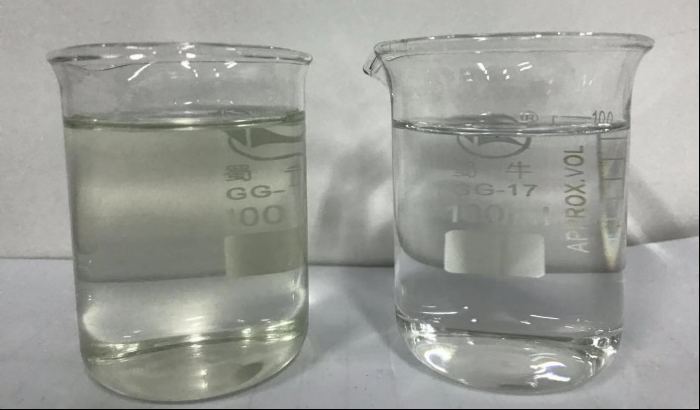
Figure 1. Left is raw water, right is effluent

 CN
CN EN
EN
 es
es