This article introduces the high adsorption method for treating phosphorus containing wastewater. Phosphorus is the direct cause of eutrophication in water bodies. Although the phosphorus moisture content in urban sewage is low, its wastewater treatment output is extremely large. If sewage is discharged immediately without resolution, water environment treatment will suffer from severe pollution. Phosphorus is an essential nutrient for the composition of plant bodies, and it itself has no toxic side effects. But when many nickel alloys and other trace elements are leaked together, the difficulty arises. With the continuous promotion of the strictest environmental inspections, enterprises that do not meet the standards for phosphorus containing wastewater treatment and discharge have been exposed in various regions, among which phosphorus discharge non-compliance is also one of the important issues.
1. Forms of phosphorus:
According to the form of phosphorus in water, it can be divided into secondary phosphorus wastewater, orthophosphate wastewater, and organic phosphorus wastewater. Secondary phosphorus wastewater is mainly generated in the electroplating industry. In the process of electroless nickel plating, a reducing agent is required to provide electrons to nickel ions in order to reduce them to nickel metal. In most electroless plating solutions, sodium hypophosphite is commonly used as a reducing agent, which leads to the presence of phosphorus in the cleaning wastewater, and the state of phosphorus is mostly hypophosphite. The phosphorus in wastewater that we usually refer to is orthophosphate, which is the most stable valence state of phosphorus and the most common phosphate. The TP in general wastewater is mainly orthophosphate, and the sources of phosphate are essential items in daily life, human excrement, natural water bodies, fossil fuels, etc. But with the development of modern industry, the production and synthesis of organic compounds are increasing day by day. The wastewater discharged from industries such as chemical, papermaking, rubber, dye and textile printing and dyeing, pesticides, coking, petrochemicals, fermentation, medicine and medical, and food often contains organic phosphorus compounds, causing environmental pollution, deterioration of surface water bodies, and threatening human health. Organic phosphorus compound pollution is increasingly receiving attention.
2. The main source of phosphorus containing wastewater
According to the source classification, it mainly comes from the chemical industry: 1) such as the paper industry, phosphate fertilizer industry, etc. 2) Biochemical pharmaceuticals: The main products are adenosine triphosphate and cyclic adenosine monophosphate, which are important raw materials and intermediates in the nucleoside pharmaceutical industry. 3) The production process of various detergents, agricultural fertilizers, and human excretion。
3. Treatment methods for phosphorus containing wastewater
3.1. Chemical precipitation method
The chemical precipitation method utilizes various cations to combine with phosphate ions in wastewater to form precipitation substances, thereby effectively separating phosphorus from the wastewater; Electrodialysis phosphorus removal is a type of membrane separation technology, which is only a method of concentrating phosphorus and cannot fundamentally remove phosphorus on its own; By adding chemical precipitants and generating insoluble precipitates with phosphates in wastewater, phosphorus can be separated, and the resulting flocs also have adsorption and removal effects on phosphorus. Common coagulants include lime, alum, ferric chloride, and mixtures of lime and ferric chloride. The main factors affecting such reactions are pH, concentration ratio, reaction time, etc. Chemical phosphorus removal is essentially a physical and chemical process, which has the advantages of stable and reliable treatment effect, simple operation, and high elasticity. Sludge will not release phosphorus again during the treatment and disposal process, and has strong resistance to impact loads. The disadvantage is that the chemical phosphorus removal method generates a large amount of water containing chemical sludge, which is difficult to treat. In addition, the cost of medication is relatively high, resulting in a higher concentration of residual metal ions and an increase in effluent color.
3.2. Biological enhanced phosphorus removal:
The utilization of polyphosphate accumulating bacteria in biological enhanced phosphorus removal is quite common. polyphosphate accumulating bacteria, also known as phosphorus absorbing bacteria or phosphorus removal bacteria, are a special type of bacteria in traditional activated sludge processes. Under aerobic conditions, they can excessively suck phosphorus from sewage into the body, resulting in a phosphorus content several times higher than that of ordinary bacteria. These bacteria are widely used in biological phosphorus removal. The adsorption capacity of biomass is relatively small.
Both methods have their own advantages and disadvantages, and neither can be used for phosphorus recovery. The adsorption method for phosphorus removal partially compensates for the shortcomings of the above methods. Adsorption method, as an efficient and low-cost method for removing specific solutes from low concentration solutions, is particularly suitable for the removal of harmful substances in wastewater. By using adsorption desorption method, the dual purpose of eliminating phosphorus pollution and recovering phosphorus resources can be achieved. By utilizing the large specific surface area provided by adsorbents, phosphorus can be separated from wastewater through adsorption, ion exchange, or surface precipitation processes on the adsorbent surface. Furthermore, phosphorus resources can be recovered through desorption treatment, turning waste into treasure. The adsorption method for phosphorus removal is simple and reliable in operation. The selection of phosphorus removal adsorbent requires meeting the following conditions: (1) high adsorption capacity; (2) High selectivity; (3) Fast adsorption speed; (4) Strong resistance to interference from other ions; (5) No harmful substances dissolved out; (6) Adsorbent regeneration is easy and its performance is stable. Jiangsu Haipu Functional Materials Co., Ltd. relies on self-developed high-performance adsorption materials and complete process equipment to provide feasible and reliable solutions for the treatment of wastewater in the production process of phosphorus containing wastewater.
Case 1: A certain enterprise in Zhejiang produces phosphogypsum, which mainly contains three types of impurities: phosphoric acid and its salts, fluoride, and organic matter. Insoluble impurities have little effect, while soluble phosphorus containing substances can corrode equipment and reduce the strength of gypsum. In addition, phosphogypsum also contains arsenic, copper, zinc, iron, manganese, lead, cadmium, mercury, and radioactive elements, all of which are extremely trace amounts, and most of them are insoluble solids. Its harmfulness can be ignored. Therefore, preprocessing is required before comprehensive utilization. After using calcium chloride to remove phosphorus, the company found that the calcium ion content in the water was high, which resulted in testing showing excessive nickel, causing unnecessary trouble. After pre-treatment with the Haipu adsorption process, the phosphorus in the wastewater is greatly reduced, creating conditions for its resource utilization, and connecting the resource utilization and harmless treatment of gypsum, ensuring the standard discharge of the effluent.
Table 1 Phosphorus containing wastewater treatment data
| Name | Phosphorus content | Appearance |
| Absorb incoming water | 223ppm | Colorless and turbid |
| Adsorbed water | 1.56ppm | Water clear |
| Removal rate | 99.30% |
|
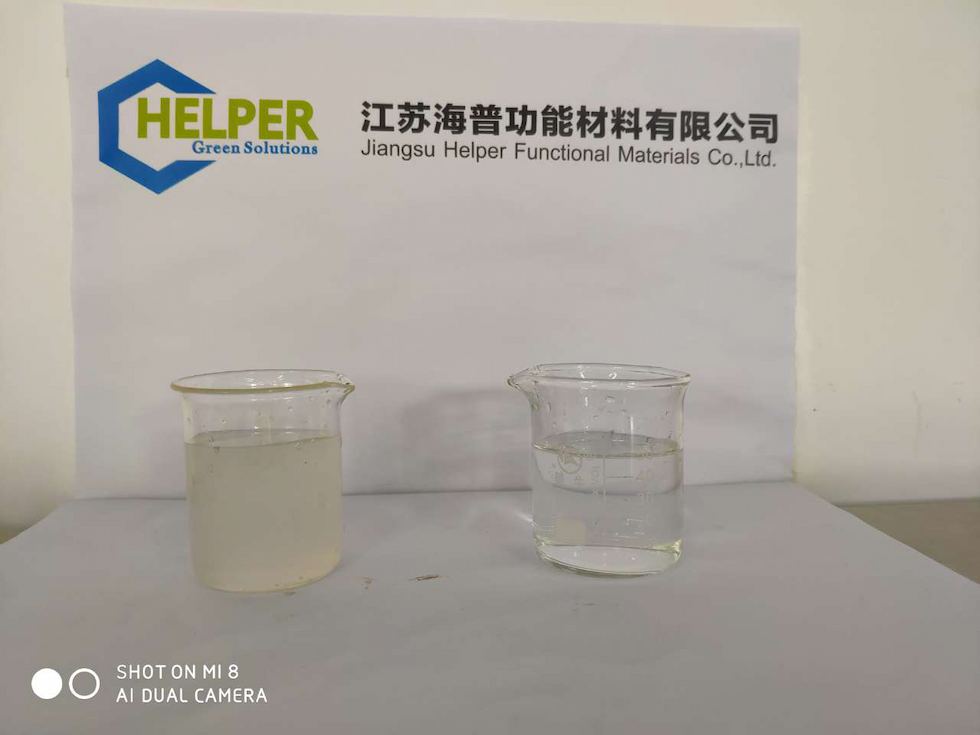
Figure 1 Water Discharge Effect (left for raw water, right for effluent)
Case 2: Vitamin B12 production wastewater belongs to high concentration and difficult to degrade organic wastewater, which is rich in organic phosphorus, protein, polysaccharides, and other decomposition products. Its composition is complex and has high chromaticity. Its COD can reach up to 20000-40000, and the ratio of BOD to COD is less than 0.3, indicating poor biodegradability. Due to these characteristics, traditional biochemical treatment systems have poor treatment effects and are difficult to degrade organic phosphorus in water, which often causes serious pollution to the environment. Jiangsu Haipu Functional Materials Co., Ltd. has developed special high-performance adsorption materials for this type of wastewater, which, together with supporting process equipment, can efficiently treat this type of phosphorus containing wastewater and meet customer needs.
Table 2 Phosphorus containing wastewater treatment data
| Name | Phosphorus content | Appearance |
| Absorb incoming water | 10.3ppm | Yellow, turbid |
| Adsorbed water | 0.75ppm | Water clear |
| Removal rate | 93% |
|
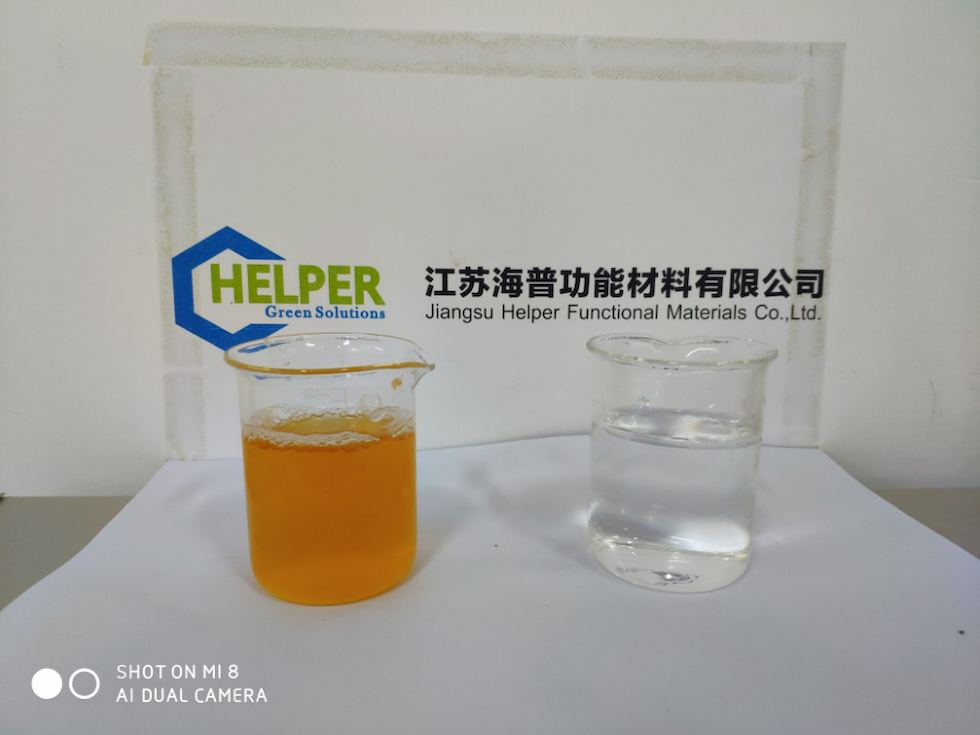
Figure 2 Water Discharge Effect (left for raw water, right for effluent)

 CN
CN EN
EN
 es
es